




What Gas Turbine Filter Media Does Hangzhou Super Material Offer?
Selecting the right filter media can help gas turbine operators manage airborne contaminants and protect equipment performance. Material choice should begin with the actual operating environment.
If you are researching Ltd. filter media reviews or comparing suppliers, Hangzhou Chaocai Materials Co., Ltd., also known as Hangzhou Super Material, offers materials supported by synthetic wet-laid and lamination technologies.
Its stated capabilities are relevant to gas turbine filtration, but buyers should request product-specific specifications and test results before deciding whether a material fits their application.
What Gas Turbine Filter Media Does Hangzhou Super Material Offer?
Hangzhou Super Material describes its business as developing and manufacturing high-performance filtration materials, including materials intended for gas turbine applications and other specialized filtration fields.
Its production platforms include fully synthetic wet-laid lines and several lamination processes. These capabilities support the production and development of synthetic media and laminated material structures.
However, the available company information does not identify individual gas turbine media grades, efficiency classes, fiber compositions, or standard product configurations. Those details require supplier confirmation.
For a buyer, the distinction matters: a manufacturing capability indicates what the company may be able to develop or produce, not the verified performance of every available material.
Ask for a current product list and technical data sheets to establish which grades are commercially available, which are under development, and which require customization.
Why Does Media Selection Matter for Gas Turbines?
A gas turbine draws large volumes of ambient air into its inlet. That air can contain dust, salt, industrial emissions, moisture, and other contaminants.
Particles that pass through the filtration system can contribute to compressor fouling or, depending on their characteristics, erosion. Certain contaminants can also increase corrosion risks.
These effects depend on the turbine, operating conditions, maintenance practices, and complete inlet system. Filter media is important, but it is only one part of that system.
At the same time, inlet pressure loss affects turbine operation. A more restrictive filter can impose an energy penalty, while inadequate filtration can increase maintenance exposure.
The practical objective is therefore not simply to select the highest stated efficiency. It is to balance filtration performance, airflow resistance, service life, and operating risk.
What Do Synthetic Wet-Laid and Lamination Capabilities Mean?
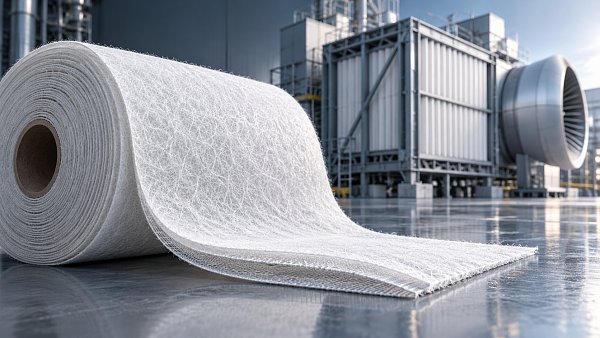
Wet-laid manufacturing forms a fibrous sheet from a liquid suspension. Fiber selection and processing conditions can influence the resulting sheet structure and its filtration characteristics.
Hangzhou Super Material identifies fully synthetic wet-laid production as one of its platforms. Buyers should confirm the fiber types, construction, and intended use of each proposed grade.
The company also lists PUR lamination, hot-melt adhesive lamination, solvent-based emulsion spray lamination, and ultrasonic lamination among its manufacturing capabilities.
Lamination joins material layers to create a composite. Depending on the design, individual layers may contribute filtration, mechanical support, or other functional properties.
These processes provide potential routes for developing different structures, but the existence of a production line does not establish that a particular construction meets turbine requirements.
For example, adhesive choice, layer bonding, and processing conditions can affect a composite. Request relevant durability and compatibility evidence for the exact material under consideration.
Also distinguish between a media manufacturer and a finished filter supplier. A tested media roll does not automatically guarantee the performance of a pleated cartridge or panel.
Which Performance Data Should Buyers Request?
Start with a data sheet that identifies the exact media grade, construction, intended application, test method, measurement conditions, and the units used for every reported value.
Efficiency is a central consideration. Request results across relevant particle sizes, including the test conditions and whether the figures describe the media or a complete filter element.
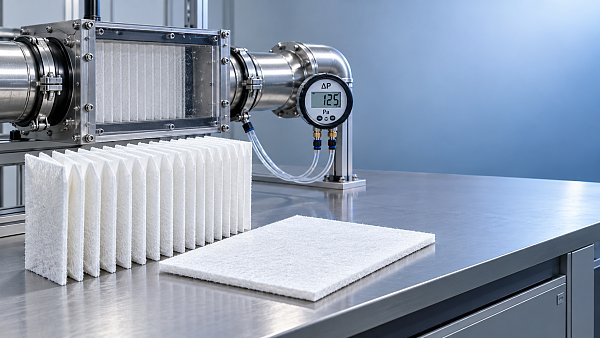
Airflow resistance is equally important. Compare initial pressure drop at the same face velocity, because figures measured at different airflow conditions are not directly comparable.
Request information about dust loading and pressure-drop development where available. A low initial resistance alone does not establish how the material will behave throughout service.
Mechanical properties matter during conversion and operation. Ask about thickness, basis weight, tensile strength, and any other measurements relevant to pleating, handling, and filter assembly.
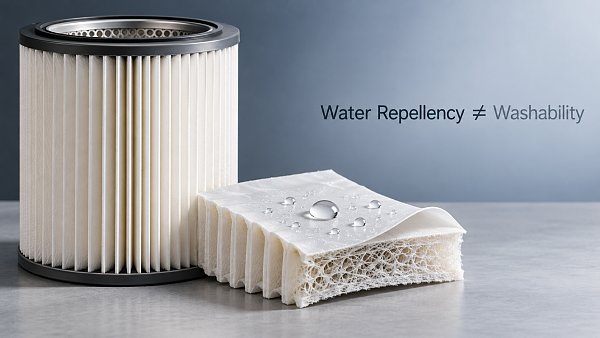
For wet or humid environments, discuss water exposure and any applicable wet-strength or water-repellency testing. Do not assume a material is moisture resistant without supporting results.
Where local contaminants include salt or industrial chemicals, describe the exposure and ask for compatibility information. A general claim of durability is not a substitute for application-specific evidence.
Finally, check production tolerances and consistency. A useful specification defines acceptable variation between batches, not just an attractive result from a single laboratory sample.
Which Testing Standards Are Relevant?
For gas turbine inlet systems, ISO 29461 addresses air intake filtration testing. Confirm the relevant part and test conditions when a supplier references this standard.
ISO 16890 classifies general ventilation filters by particulate matter efficiency. It may be useful context, but its results should not be treated as interchangeable with turbine-specific evaluations.
For high-efficiency particulate air filters, ISO 29463 and EN 1822 may also be relevant, depending on the product and procurement requirements. Confirm the specified test scope.
A certificate or report should identify the tested item, laboratory, test date, method, and conditions. Ask whether the report covers the proposed grade and current construction.
Independent testing can strengthen confidence, but neither a standard reference nor a laboratory result alone establishes suitability for every installation. Field conditions still need consideration.
How Should Different Operating Environments Affect the Choice?
In dry, dusty locations, buyers should examine particle loading, resistance growth, and replacement intervals. Dust composition and seasonal peaks can matter as much as average concentration.
Coastal sites may encounter airborne salt and moisture. Discuss the complete inlet arrangement, including upstream separation and drainage, as well as the media's verified performance under wet conditions.
Humid or fog-prone sites warrant attention to water handling and pressure loss during moisture exposure. Ask which tests represent the conditions the installation is likely to experience.
Industrial locations can present mixed contaminants, including fine particles and corrosive substances. Provide the supplier with known exposure data rather than relying on a broad site label.
Sites with seasonal changes may need a solution that performs across several conditions. Compare the expected annual operating profile instead of optimizing only for a short test period.
In every case, involve the turbine manufacturer or inlet system designer when setting requirements. Their limits and recommendations should guide the final system design.
How Can Filter Manufacturers Evaluate the Media?
Filter manufacturers should begin by sharing the intended element geometry, target airflow, pleat requirements, sealing method, operating environment, and desired performance range with the material supplier.
Request samples representative of normal production and document their grade and batch. Evaluate handling, pleat formation, bonding, dimensional stability, and compatibility with the intended assembly process.
Then test finished elements, not just flat media. Pleat spacing, edge seals, housing fit, and assembly quality can all influence actual filtration and pressure loss.
If initial results are promising, run a controlled trial with agreed acceptance criteria. Record airflow, pressure drop, inspection findings, and changes over a defined operating period.
Before approving a material, establish how the supplier will handle specification changes, traceability, nonconforming batches, and continuity of supply. Commercial reliability is part of technical qualification.
How Should Operators Compare Cost and Value?
Purchase price is only one component of filter economics. A useful comparison also considers replacement frequency, labor, disposal, pressure-loss effects, and potential maintenance consequences.
For example, a lower-priced element may be less economical if it requires frequent changes or creates substantially higher resistance during service. The reverse can also be true.
Build comparisons using the same airflow, operating hours, environmental assumptions, and replacement criteria. Otherwise, apparent savings may reflect inconsistent inputs rather than a genuinely better option.
Include uncertainty in the assessment. If service-life estimates rely on laboratory data alone, treat them as projections until a comparable field trial provides stronger evidence.
For critical installations, consider the operational cost of unplanned maintenance and supply interruption alongside the filter budget. Quantify these risks using your own operating history.
How Should Buyers Interpret Filter Media Reviews?
Searches for Ltd. filter media reviews often reflect a desire for independent evidence about performance, service, and reliability. Reviews are useful context, but they require careful interpretation.
Look for identifiable applications, operating conditions, product grades, and measurable outcomes. A positive comment without those details may not predict performance at your site.
Check whether feedback concerns the media itself, a finished filter, or the supplier's customer service. Each addresses a different part of the purchasing decision.
No independent reviews or customer performance claims are established by the company information provided here. Buyers should request references and verify any claims directly with their sources.
When contacting references, ask about qualification time, batch consistency, issue resolution, and actual service conditions. Avoid treating a single reference as proof of universal suitability.
Questions to Ask Hangzhou Super Material Before Buying
Which gas turbine media grades are currently available, and are they standard products or materials developed for specific customer requirements? Request current data sheets for each candidate.
What are the filtration efficiency and pressure-drop results at the required airflow? Ask for test methods, sample identification, measurement conditions, and supporting reports.
Which layers and materials make up the proposed construction, and how are they joined? Confirm whether the construction is compatible with your pleating and assembly processes.
What production tolerances, batch tests, and traceability records are available? Agree on inspection criteria and the process for resolving material that falls outside specification.
Can the company provide representative samples, production lead times, minimum order quantities, and change-notification terms? These details help determine whether a technical fit is commercially workable.
What evidence exists for performance in your operating environment? Request relevant laboratory results or customer references, and distinguish confirmed experience from proposed development work.
Conclusion: Choose on Evidence, Not Capability Alone
Hangzhou Super Material identifies gas turbine filtration as an application area and offers manufacturing capabilities spanning synthetic wet-laid production and several lamination technologies.
Those capabilities make the company worth evaluating, but the available information does not establish specific product grades or verified performance. Obtain documentation for the exact material proposed.
A sound decision combines comparable test data, finished-filter qualification, site conditions, supplier controls, and total operating cost. Where practical, validate the choice through a controlled field trial.
Recommendation
 Oct 30, 2026
What Gas Turbine Filter Media Does Hangzhou Super Material Offer?
Explore Ltd. filter media reviews and Hangzhou Super Material’s gas turbine filtration capabilities. Learn what specifications and test results to request before buying.- Oct 30, 2026
How to Evaluate Reviews of Hangzhou Super Material's Filter Media
Evaluate Hangzhou Super Material Co. filter media reviews with confidence. Learn what to check for efficiency, pressure drop, service life, and application fit. - Oct 28, 2026
Can PTFE laminated cellulose filter media tolerate wet cleaning?
Can PTFE Laminated Cellulose Filter Media withstand wet cleaning? Learn the risks, approved cleaning options, and when to replace cartridges to protect airflow and filtration performance.