What Gas Turbine Filter Media Does Hangzhou Super Material Offer?
What Gas Turbine Filter Media Does Hangzhou Super Material Offer?
Choosing the right gas turbine filter media can help protect equipment and maintain reliable operation in demanding environments. For buyers researching “Ltd. filter media reviews,” understanding a manufacturer’s materials and production capabilities is an important first step. Hangzhou Super Material, also known as Hangzhou Chaocai Materials Co., Ltd., develops advanced filtration materials using synthetic wet-laid and lamination technologies. This article explores its gas turbine filter media capabilities and the considerations that can guide your selection.
The distinction between a material capability and a finished product specification matters here. Hangzhou Chaocai’s manufacturing platforms support the development of synthetic and laminated filtration materials, but the available information does not establish a complete gas turbine product catalogue, named grades, or guaranteed performance values. Buyers should request the current specifications for the intended application rather than assume that every material or lamination method is available in a particular construction.
What materials and manufacturing capabilities are available?
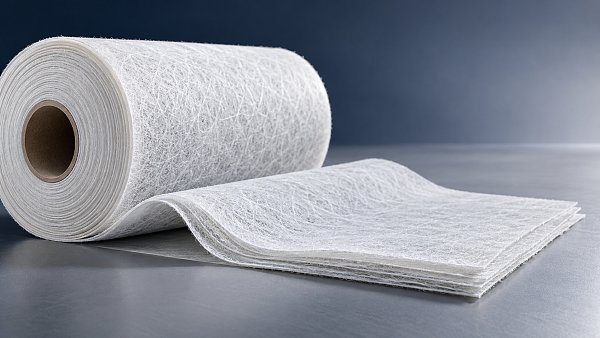
Hangzhou Chaocai operates fully synthetic wet-laid production lines and several lamination platforms. These capabilities are relevant to gas turbine inlet filtration because the media inside a filter element often needs to balance particle capture, airflow resistance, mechanical stability and processability. The balance depends on the material construction and on how the filter element is designed.
Fully synthetic wet-laid media
Wet laying is a method of forming a fibrous sheet from a dispersion of fibers. For a filter manufacturer, the resulting sheet is a starting point: fiber selection, formation and subsequent processing can influence how the media performs and how consistently it runs through conversion equipment.
A fully synthetic wet-laid platform indicates that Hangzhou Chaocai can manufacture this broad category of material. It does not, on its own, establish a particular efficiency class, moisture response or service life. Those depend on the grade and must be supported by test results for the material or completed filter, as appropriate.
Laminated and multilayer media
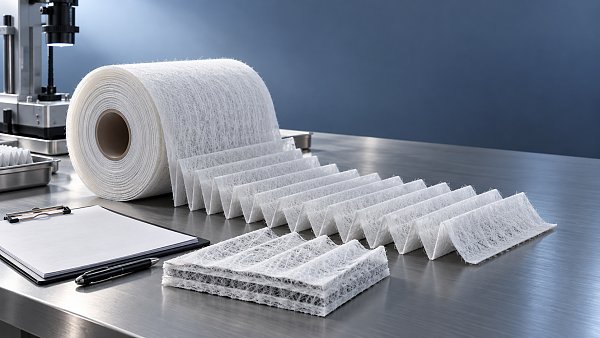
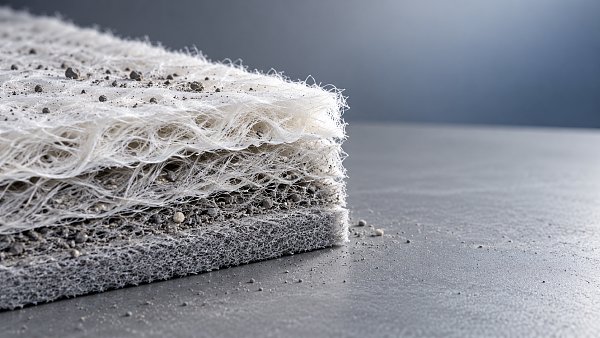
The company’s production platforms include PUR lamination, hot-melt adhesive lamination, solvent-based emulsion spray lamination and ultrasonic lamination. Lamination can be used to join layers that contribute different properties, such as filtration and structural support. A multilayer construction may also be selected to meet conversion requirements, although the actual layer arrangement must be confirmed for each proposed grade.
These process names should not be read as interchangeable product claims. Adhesive chemistry, application pattern, layer compatibility and bonding conditions can all affect the finished material. A buyer considering a laminated medium should ask which process is used for the proposed grade and how the bond performs under the expected operating and handling conditions.
The company also develops filtration materials for automotive, new energy, semiconductor, biopharmaceutical and other specialized applications. That broader manufacturing scope may be useful when discussing material development, but performance in one application should not be assumed to transfer to a gas turbine inlet.
Why inlet conditions matter more than a generic media description
Gas turbine inlet filters operate in very different environments. A dry, dusty inland site presents a different challenge from a coastal installation exposed to moisture and salt. Industrial emissions, seasonal pollen, fog and airborne oil can also change the way a filter loads. The right question is not simply whether a medium captures particles, but whether it can do so at an acceptable resistance throughout the intended maintenance interval.
Fine particles passing through the inlet system can contribute to compressor fouling. Water and soluble contaminants raise additional concerns, particularly where salt can reach sensitive downstream components. At the same time, a high initial pressure drop can impose an operating penalty before the filter has collected much dust. Media selection therefore involves a trade-off: a tighter material is not automatically the better choice if the full inlet system cannot accommodate its resistance.
A useful specification starts with the inlet arrangement. Is the medium intended for a prefilter, a final filter or a replacement element within an existing multistage system? Is the system static or pulse-cleaned? A material suitable for one position or cleaning method should not be assumed suitable for another. Pulse cleaning, for example, introduces repeated mechanical stresses that need to be considered alongside filtration performance.
Comparing filtration efficiency and pressure drop
Efficiency figures are only meaningful when the test conditions are clear. Ask whether a result applies to flat-sheet media or to a complete filter element, what particle-size range was measured, and which test method and airflow were used. A completed element includes pleats, seals, a frame and other components; leakage or uneven airflow can make its behavior different from that of the media alone.
ISO 16890 is relevant to general ventilation air filters, while ISO 29461 addresses air intake filter systems for rotary machinery. The applicable standard and test configuration should be agreed for the project. A media supplier’s internal flat-sheet result is useful for screening, but it should not be presented as an element classification unless the completed filter has been tested and classified accordingly.
Pressure drop deserves the same scrutiny. Compare candidates at the same face velocity and with the same test setup wherever possible. In a pleated filter, pleat depth, spacing and usable media area influence the resistance seen by the system. A low-resistance sheet can still produce an unsatisfactory element if the pleat geometry restricts airflow or if the pleats deform during operation.
Initial pressure drop is only the starting point. Dust loading, humidity and, where applicable, cleaning cycles affect resistance over time. Before comparing two quoted values, check whether each refers to clean media, a loaded sample or a complete element. Otherwise, the comparison may reward a difference in test conditions rather than a better material.
Moisture, strength and conversion are not secondary details
A gas turbine filter medium must survive more than an efficiency test. It may be slit, pleated, bonded, assembled, transported and exposed to changing weather before it reaches the end of its service interval. Material that performs well in a laboratory but is difficult to convert consistently can create a problem for the element manufacturer.
For laminated media, ask about layer adhesion and the risk of separation during pleating or operation. For any candidate, discuss tensile strength, stiffness and the ability to hold pleat shape in the intended element. The necessary values depend on the converting process and element design; they should be agreed with the supplier rather than borrowed from an unrelated application.
Moisture behavior also needs a specific test question. “Water resistant” can mean different things: maintaining strength when wet, resisting liquid penetration, recovering after humidity exposure or retaining filtration performance under wet conditions. These are not equivalent. For a coastal or fog-prone site, identify which condition matters and ask what evidence is available for the proposed construction.
Where pulse cleaning is used, evaluate the media in a representative element and cleaning arrangement. A sheet-level strength figure alone cannot show how pleat geometry, bonding and repeated pulses interact. Where pulse cleaning is not used, dust-holding behavior and the agreed terminal pressure drop remain important to replacement planning.
How to evaluate supplier information and reviews
A search for supplier reviews may help identify questions, but a general rating rarely explains whether a material is suitable for a particular turbine inlet. Look for information that separates the media manufacturer from the company that converts it into a finished filter. A complaint about a damaged frame, for example, may be relevant to the element supplier without proving a problem with the media itself.
For Hangzhou Chaocai, the practical starting point is to connect its stated production capabilities with a specific grade and supporting documentation. A buyer can ask:
- Is the proposed product a single synthetic wet-laid layer or a laminate, and what is the role of each layer?
- Which filtration and pressure-drop results are available, and were they obtained on flat media or a finished element?
- What are the roll dimensions, basis-weight tolerances and other agreed controls relevant to conversion?
- What evidence is available for wet handling, layer bonding or repeated cleaning, if those conditions apply?
- Can the supplier provide samples from the intended production construction and explain how changes between batches are controlled?
These questions are more useful than treating a process capability as proof of a finished filter’s performance. They also expose gaps early. If the supplier has flat-sheet data but no element-level test, the filter manufacturer and end user can decide what additional validation is needed before committing to a larger order.
From a promising sample to a usable filter
A sensible qualification process moves from material screening to conversion trials and then to testing of the assembled element. During screening, compare candidate media under matched conditions. During conversion, record pleating behavior, bond quality and any damage or dimensional variation. Element testing can then address the combined effects of the media, pleat pack, seals and frame.
Commercial details belong in that discussion too. Confirm minimum order quantities, available roll widths, sample and production lead times, packaging, storage recommendations and the process for notifying customers of material or process changes. None of these establishes filtration performance, but each can affect whether a qualified material remains practical to procure and use.
Hangzhou Super Material’s synthetic wet-laid and lamination platforms provide a basis for discussing gas turbine filtration materials; they do not replace a grade-specific review. The next step is to share the inlet conditions, filter position, cleaning method and target test requirements, then compare the proposed construction and its documented results with the needs of the complete filter system.
Recommendation
 Nov 02, 2026
What Gas Turbine Filter Media Does Hangzhou Super Material Offer?
Explore Ltd. filter media reviews and discover Hangzhou Super Material’s synthetic and laminated media capabilities for gas turbine inlet filtration.- Nov 02, 2026
Where Can You Find Reviews of Hangzhou Super Material's Filter Media?
Hangzhou Super Material Co. filter media reviews: discover where to find credible feedback and how to assess test data before you buy. - Oct 30, 2026
How Can Air Filter Media Hold More Dust Without Increasing Pressure Drop?
Explore Ltd. filter media lead time and discover how depth loading, layered media, and pleat design can increase dust capacity while controlling pressure drop.