What Should You Check Before Switching Air Filter Media Suppliers?
What should I check before switching air filter media suppliers? The question often arises after a familiar problem: pressure drop becomes less predictable, a converting line starts generating more waste, incoming rolls vary from one shipment to the next, or a customer asks for performance documentation that the current supplier cannot fully support. Price and lead time matter, but they are rarely the only reasons a filter program succeeds or fails.
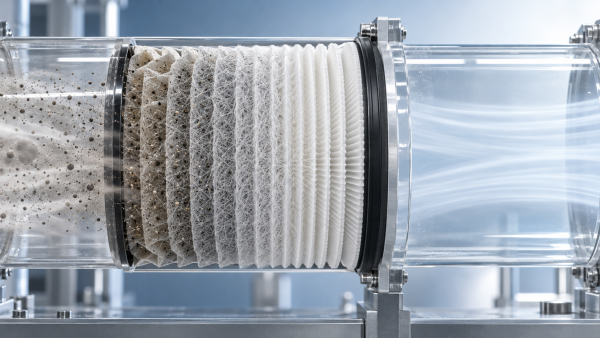
Air filter media is not a simple commodity in demanding applications. A small change in fiber structure, basis weight, resin system, backing layer, or bonding method can affect filtration efficiency, dust-holding behavior, pleat formation, emissions, and the service life of the finished filter. Before changing suppliers, manufacturers should evaluate whether the new material will perform consistently in both laboratory testing and real production conditions.
Start with the performance your finished filter actually needs
The right media is defined by the end application, not by a generic description such as “synthetic nonwoven” or “high-efficiency filter material.” An automotive cabin filter, a gas turbine intake filter, a semiconductor cleanroom filter, and an industrial dust collector may all use air filtration media, yet they face very different operating conditions.
Build a clear performance brief before requesting quotations or samples. It should identify the particle-size range of concern, required filtration efficiency, target initial pressure drop, air-flow rate, expected dust load, temperature range, humidity exposure, chemical contact, and required service interval. If the media will be converted into pleated elements, include pleat height, pleat pitch, adhesive type, and curing conditions as well.
Without this brief, supplier comparisons can become misleading. One material may show attractive efficiency under a single test condition but create excessive resistance at the actual face velocity. Another may look suitable on a flat-sheet sample yet lose its geometry after pleating or exposure to humidity. The goal is not simply to find media with a similar specification sheet; it is to confirm equivalent or improved performance in the finished filter.
Do not compare filtration efficiency without comparing resistance and loading behavior
A supplier may quote an efficiency rating that appears to match your current material. That figure alone does not tell the full story. Filtration performance is a balance: higher capture efficiency can be accompanied by higher initial pressure drop, while low resistance may come at the cost of reduced fine-particle capture or shorter service life.
Ask how the supplier measures efficiency and under what test conditions. The aerosol type, particle size, air velocity, conditioning method, and test standard all influence the result. Two samples cannot be considered directly comparable if their data comes from different methods or different operating points.
It is equally important to review dust-loading performance. Initial pressure drop matters when a filter is new, but the pressure-rise curve during use often determines replacement frequency and energy consumption. In applications with variable particulate loads, media that maintains more open flow paths while retaining particles effectively may offer greater value than a lower-priced material with an attractive initial test result.
- What filtration mechanism is used: mechanical, electrostatic, or a combination?
- How stable is performance after humidity, temperature, or aging exposure?
- What is the pressure-drop profile at the airflow used in your filter design?
- How does the media behave during dust loading rather than only at the beginning of the test?
- Are test reports available for the same construction and thickness being offered?
Examine material construction, not only the headline specification
Two air filter media products with similar basis weight and thickness can behave very differently. Fiber diameter distribution, web formation, pore structure, binder content, electrostatic treatment, reinforcement layers, and surface finish all affect the final result. These details may also determine whether the material is compatible with your manufacturing process.
For example, a fully synthetic wet-laid structure may be selected where moisture resistance, uniform formation, or durability is important. A laminated construction may add stiffness, protection, support, or functional layers. In some applications, a media supplier’s ability to combine substrates through PUR lamination, hot-melt adhesive lamination, solvent-based emulsion spray lamination, or ultrasonic lamination can be as important as the base web itself.
The construction should be reviewed against practical risks. Does the material shed fibers? Is there a risk of delamination under vibration, pulse cleaning, or thermal cycling? Will a coating alter air permeability? Does the media retain dimensional stability after contact with resin, plastisol, or potting compounds? These questions matter especially in high-cleanliness, automotive, energy, and biopharmaceutical filtration environments, where a minor material incompatibility can become a costly downstream issue.
Test convertibility on your own line
A technically good sample can still be the wrong production material. Switching suppliers is often most disruptive when the new media behaves differently during slitting, pleating, corrugation, die cutting, molding, sealing, or assembly.
Run a structured conversion trial using production-representative equipment rather than relying only on hand-made prototypes. Observe web tension behavior, roll flatness, edge quality, splice frequency, static buildup, cutting cleanliness, dust generation, pleat memory, and adhesion to the components used in your filter. If the material is laminated, check whether the bond line remains stable at the temperatures and stresses created by your process.
It is useful to involve production operators early. Engineers may focus on material properties, while operators notice issues such as inconsistent winding, difficult roll starts, edge curling, or a narrow processing window. Those details can affect yield long before they show up in a formal test report.
Questions worth asking during a conversion trial
- Does the media run at the same line speed, or will settings need to change?
- Does it form stable, repeatable pleats at the intended height and spacing?
- Does it accept your adhesive, frame sealant, or potting material reliably?
- Are there changes in scrap rate, downtime, or operator intervention?
- After assembly, does the finished filter meet airflow and integrity requirements?
Look beyond one sample: consistency is a supplier capability
One successful roll does not prove that a supplier can support an ongoing program. Air filter media production involves raw material control, process stability, inspection discipline, and traceability. Variations in basis weight, thickness, permeability, electrostatic charge, tensile strength, or lamination quality can lead to meaningful differences in finished filter performance.
Ask the supplier how it controls critical characteristics from lot to lot. A useful discussion should cover incoming raw-material checks, in-process monitoring, final inspection, retained samples, batch identification, and procedures for nonconforming material. You do not need every proprietary manufacturing detail, but you should understand whether the supplier has a repeatable quality system suited to functional materials rather than only broad commercial tolerances.
Request certificates of analysis or lot-level inspection data where appropriate. More importantly, agree on which properties are critical to your application. A general certificate may list basis weight and width, while your process may depend more heavily on air permeability, tensile strength, thickness under pressure, or bond strength between layers.
For a new supplier qualification, test samples from more than one production lot whenever possible. This provides a better view of real variability and reduces the risk of approving a material based on an unusually favorable trial batch.
Confirm capacity, lead time, and change-management discipline
Switching suppliers can improve resilience, but only if the alternative supplier has the capacity and planning discipline to support your forecast. Ask about normal production lead time, minimum order quantities, standard roll dimensions, packaging options, inventory strategy, and the ability to scale as demand changes. A supplier that can produce a sample quickly may not necessarily have a stable route for recurring commercial volumes.
Supply continuity also depends on how changes are managed. If a raw material, formulation, process parameter, production site, or packaging method changes, will you be notified before shipment? In filtration, seemingly minor adjustments can affect processing or performance. Formal change notification gives manufacturers time to evaluate the impact rather than discovering it after material reaches the line.
For strategically important applications, it is sensible to discuss contingency planning. This does not mean expecting guaranteed immunity from market disruptions. It means understanding how the supplier manages shortages, prioritizes production, qualifies alternate raw materials, and communicates when risks emerge.
Evaluate technical support as part of the material offer
When filtration media is used in a demanding product, technical support should not end after the sample is shipped. The supplier should be able to discuss the relationship between material design, filter construction, and end-use conditions. That includes helping interpret test data, recommend trial parameters, investigate converting issues, and suggest construction changes when performance targets conflict.
This is particularly valuable when a product needs something beyond a standard monolayer web. Specialized applications may require composite structures, reinforcement, tailored stiffness, low-emission materials, chemical resistance, or carefully controlled pore architecture. A supplier with R&D and multiple processing platforms can often explore these trade-offs more effectively than one limited to a narrow catalog.
Hangzhou Chaocai Materials Co., Ltd. develops functional advanced materials for specialized filtration fields, including gas turbines, automotive systems, new energy, semiconductors, and biopharmaceutical applications. Its capabilities in fully synthetic wet-laid production and several lamination technologies are relevant when a customer needs to evaluate not only a base media grade, but also a multi-layer construction designed for a specific filtration and converting challenge.
Check compliance, cleanliness, and application-specific risks
Depending on the market, the new supplier may need to provide documentation related to restricted substances, material safety, traceability, cleanliness, or end-use regulations. Requirements vary widely, so avoid assuming that a material accepted in one sector is automatically appropriate for another.
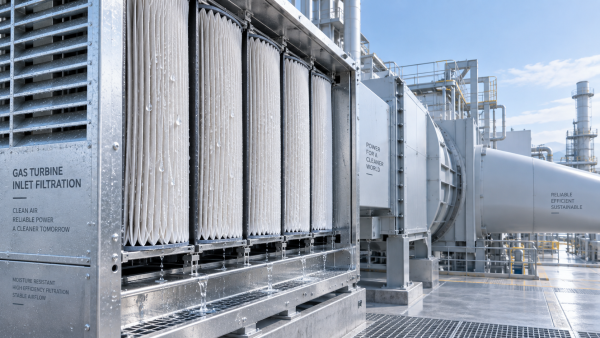
For cleanroom, semiconductor, medical, or biopharmaceutical-related applications, pay particular attention to particulate shedding, odor, volatile compounds, extractables, packaging cleanliness, and contamination control. For automotive and energy applications, consider vibration resistance, temperature cycling, moisture exposure, fuel or oil mist, and long-term structural stability. Gas turbine intake systems may require careful attention to water resistance, mechanical strength, and performance under harsh environmental loading.
Documentation should support your qualification process, but it should not replace application testing. Compliance papers confirm certain material attributes; they do not prove that the finished filter will perform correctly in its operating environment.
A practical approval path before fully switching
A controlled transition is usually safer than an immediate replacement. Begin with document review and sample testing, then move to pilot conversion runs and finished-filter validation. If results are satisfactory, approve a limited initial production lot while monitoring key outcomes such as yield, pressure drop, efficiency, bonding quality, and customer feedback. Only then should the material become a standard source for larger-volume supply.
Keep the comparison disciplined. Use the same filter design, test method, airflow condition, and acceptance criteria for both current and candidate media. Record not only final performance but also what happened during manufacturing. A material that improves laboratory results while creating frequent line interruptions may not be an improvement in total cost or operational risk.
Frequently asked questions
Is lower cost a good enough reason to switch air filter media suppliers?
Not by itself. Lower purchase cost can be offset by higher scrap, slower converting, increased pressure drop, shorter filter life, additional testing, or field-performance risk. Compare total manufacturing and lifecycle impact, not only the price per square meter or kilogram.
How many samples should be tested before approval?
There is no universal number, but testing more than one lot is preferable for any important application. The more critical the filter, the more important it is to confirm lot-to-lot consistency, production-scale convertibility, and performance after relevant environmental conditioning.
Should I qualify a second supplier even if the current supplier performs well?
For critical programs, a qualified alternate source can reduce supply risk and provide useful benchmarking. However, the alternate should be qualified with the same discipline as a primary supplier. A backup source that has only passed a basic sample test may not be ready when it is needed.
What is the biggest mistake when changing filter media?
The most common mistake is treating the material as interchangeable based on a few headline specifications. Air filter media affects the whole filter system: airflow, particle capture, manufacturing behavior, sealing, durability, and end-user experience. A successful switch considers all of those connections before commercial production begins.
Ultimately, switching air filter media suppliers should feel less like a procurement event and more like a carefully managed engineering decision. The right partner brings dependable material quality, relevant processing capability, transparent technical communication, and a willingness to validate performance alongside your team. That approach protects the finished filter—and the reputation attached to it.
Recommendation
 Oct 10, 2026
How Can Air Filter Media Increase Dust Holding Capacity Without Higher Pressure Drop?
Which liquid filter media is suitable for hydraulic oil fine-particle filtration? Discover how advanced air filter media increases dust holding capacity with low pressure drop.- Oct 10, 2026
Which Liquid Filter Media Is Suitable for Fine Hydraulic Oil Filtration?
Can synthetic filter media replace glass fiber in high-humidity gas turbine intakes? Explore media choices for fine hydraulic oil filtration, balancing efficiency, moisture resistance, pressure drop, and service life. - Oct 10, 2026
Can Synthetic Filter Media Replace Glass Fiber in Humid Turbine Intakes?
Is ePTFE filter media suitable for pulse-cleaned construction equipment air filters? Explore synthetic vs. glass fiber performance in humid turbine intakes.