Can High-Performance Filter Media Lower Total Replacement Costs?
Can high-performance filter media reduce total filter replacement cost? Often, yes, but only when the media is matched to the actual operating conditions and the full cost of a filter change is considered. A lower-priced filter may appear economical at purchase, yet become more expensive when it loads quickly, restricts airflow early, causes process interruptions, or requires frequent labor-intensive replacement.
High-performance filter media can lower total replacement cost by holding more contaminant before reaching its final pressure-drop limit, maintaining more stable airflow during service, and protecting downstream equipment from damaging particles. Those benefits are most valuable in demanding systems such as gas turbine intake filtration, automotive production environments, battery and new-energy manufacturing, semiconductor facilities, and controlled biopharmaceutical processes.
The important distinction is simple: a premium media does not automatically create savings because it costs more or has a higher stated efficiency. It creates savings when its performance solves the failure mode that is driving replacement and maintenance costs in the first place.
Replacement cost is larger than the price of a new filter
A useful cost comparison starts with the complete replacement event, not the invoice price of a filter element. In industrial equipment, one filter change can involve procurement, inventory, maintenance labor, shutdown planning, disposal, inspection, and the operational effect of a dirty filter before it is replaced.
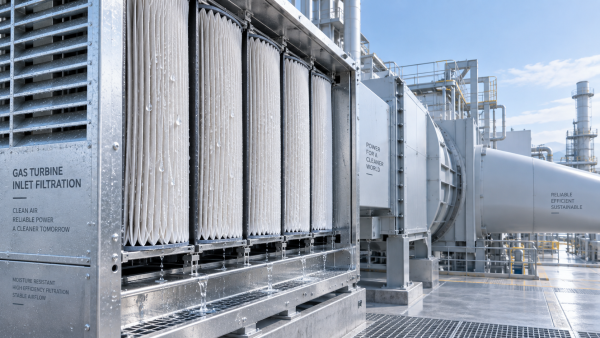
For an air-handling or intake system, rising pressure drop may increase fan energy demand or reduce the air volume available to the process. In a turbine intake application, inadequate filtration can allow contaminants to reach sensitive downstream components. In production areas that require controlled cleanliness, a filter change may affect access procedures, validation routines, or production schedules. These costs are not always recorded under the filter budget, but they are still part of the total cost of filtration.
This does not mean every facility should select the most expensive option. If filters are easy to replace, contaminant loading is low, and the process is not sensitive to pressure variation or particle carryover, a conventional media may remain the practical choice. The business case becomes stronger when replacement frequency, process reliability, or downstream protection is a persistent problem.
How better media can extend filter service life
Filter life is not determined by thickness alone. It depends on how the media captures particles, distributes dust through its structure, resists mechanical damage, and performs when exposed to humidity, temperature changes, vibration, liquid aerosols, or chemical contaminants.
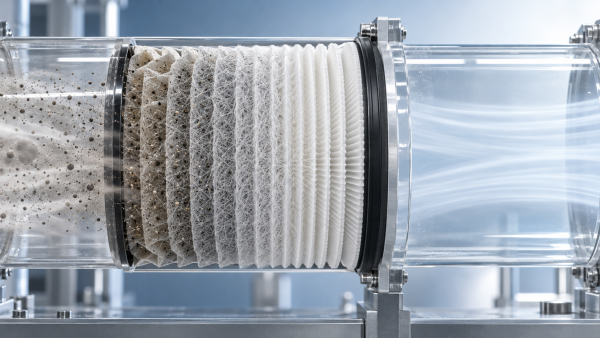
A well-designed high-performance filter media may use a fiber structure that provides useful dust-holding capacity without producing excessive initial resistance. Its surface and internal layers can be designed to capture particles progressively rather than forming an impermeable cake too early. In some applications, this balance matters more than achieving the highest possible initial efficiency.
Media strength is also relevant. Pleating, lamination, bonding, and fabrication can place stress on the material. If the media cracks, delaminates, loses pleat spacing, or develops bypass paths, its nominal filtration rating is no longer the main concern. The filter may need replacement early even when its dust capacity has not been fully used.
High-performance media is particularly useful when a standard material fails prematurely because of the environment rather than ordinary dust loading. Examples include humid intake air, fine oily aerosols, pulsating airflow, repeated pressure changes, hot process air, or contaminants that tend to block the media surface. In such cases, the correct upgrade may be a more durable substrate, an improved surface layer, a different fiber formulation, or a more robust laminated construction. “Higher efficiency” alone may not address the actual issue.
Stable pressure drop can matter as much as filtration efficiency
A common purchasing mistake is to compare filters only by initial pressure drop and efficiency. Initial resistance is useful, but the operating curve after the filter begins collecting contaminants is usually more important for replacement planning.
A filter with very low initial resistance can still become expensive if it clogs rapidly. Conversely, a media with slightly higher initial resistance may be economical if it retains contaminants evenly and maintains acceptable airflow for a substantially longer operating period. The relevant question is not, “Which media starts with the lowest pressure drop?” It is, “How does pressure drop develop under the dust, moisture, and airflow conditions in this system?”
Stable airflow can affect more than energy. It may influence combustion air supply, drying consistency, coating quality, thermal management, cleanroom pressure balance, or the performance of other equipment connected to the system. Where airflow consistency affects production quality, a filter change triggered at a predictable interval is often easier to manage than one caused by a sudden loss of flow.
Pressure drop must still be evaluated in the context of the complete filter. Frame design, pleat geometry, separators, seal integrity, airflow distribution, and the number of filters installed all affect the result. Media selection is central, but it is not isolated from filter construction.
When high-performance media is unlikely to lower cost
Premium filtration material is not a universal answer. It may fail to reduce total filter replacement cost in several situations.
- The main problem is bypass rather than media loading. A damaged gasket, poor installation, distorted frame, or incorrect filter size can allow contaminated air around the media. Replacing the media grade will not correct the leak path.
- The filter is changed on a fixed calendar schedule regardless of condition. If a site replaces every filter at the same short interval without reviewing pressure drop, inspection findings, or process requirements, longer-life media may never have the opportunity to deliver value.
- The system is operating outside its intended design range. Excessive airflow, poor prefiltration, unexpected moisture, or a sudden change in contamination can overwhelm even a robust final filter.
- The selected media is unnecessarily restrictive. A very fine media may add cost and resistance without a meaningful improvement in downstream protection for the application.
- Filter handling is the failure point. Rough storage, incorrect installation, inadequate support, or exposure to incompatible cleaning methods can shorten life before the media’s capabilities matter.
These cases are why the purchase decision should begin with a failure review. Look at removed filters. Are they uniformly loaded, visibly damaged, wet, collapsed, contaminated by oil, or dirty only around certain sections? Those observations often reveal whether the problem lies in media performance, upstream filtration, system design, or maintenance practice.
Choose media based on the contaminant and the operating environment
The word “high-performance” can describe very different materials. A media optimized for dry, coarse industrial dust may not be the right solution for fine particles, aerosol loading, moisture exposure, corrosive environments, or high-temperature service. The most economical choice comes from identifying what the filter actually sees.
Dry dust and high particulate loading
For dry dust applications, dust-holding capacity and resistance growth are usually major decision factors. A media that loads gradually can reduce changeout frequency, especially when the system handles fluctuating contamination levels. However, poor upstream separation can overload the final stage. Adding or improving a prefilter may produce better total economics than simply moving to a more expensive final filter media.
Fine particles and sensitive downstream equipment
Where fine particle control protects product quality or sensitive equipment, the selection must balance capture performance with resistance and service life. The cost of a single downstream contamination event may exceed the cost difference between media grades. In these environments, reliable media structure, low particle release, and consistent manufacturing quality may be as important as nominal filtration performance.
Humidity, moisture, and variable weather
Moisture can change how dust adheres to a filter, increase resistance, weaken some constructions, and encourage clogging. Intake systems and processes exposed to outdoor air need a media and filter design that can tolerate the expected humidity pattern. Water management upstream of the final filter may also be necessary. A higher-grade media cannot compensate for standing water, failed drainage, or a poorly designed moisture separator.
Oily aerosols and process-generated contaminants
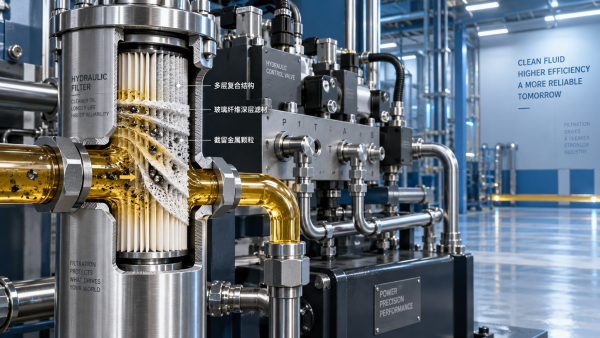
Oil mist and tacky aerosols can blind a filter surface quickly. In these conditions, the focus should be on compatibility with the contaminant and on whether the filtration stages are arranged correctly. A media that performs well with dry dust may have a short life when exposed to oil. The filter should be selected for the contaminant behavior, not only the particle size.
A practical way to compare total replacement cost
Before changing filter media, collect operating information from the existing installation over several replacement cycles where possible. The purpose is not to build a complicated model; it is to identify which costs are material and which performance limitation is causing them.
- Record the current filter type, initial operating pressure drop, final replacement condition, and typical service interval.
- Document why filters are changed: scheduled maintenance, high pressure drop, visible damage, contamination concerns, airflow loss, or equipment alarms.
- Identify the contaminant source and its characteristics: dry dust, fine particulate, moisture, oil aerosol, corrosive material, or a changing mixture.
- Include labor, access difficulty, shutdown requirements, disposal, and operational disruption in the comparison.
- Compare candidate media under the same airflow, filter geometry, and replacement criteria. Changing several variables at once makes the outcome difficult to interpret.
- Review the removed filters and system condition after the trial period. Service life is useful only if capture performance and filter integrity remain acceptable.
This approach prevents an overly narrow comparison between one filter purchase price and another. It also reveals whether the best answer is a media upgrade, a revised prefiltration stage, a different filter configuration, or a maintenance change.
Why manufacturing method affects field performance
Media performance is shaped not only by the raw fibers but also by how the material is formed, bonded, and converted. Uniformity in a wet-laid substrate can influence airflow consistency and particle retention. Lamination can add support, surface functionality, or durability, but it must be selected carefully so that it does not create unnecessary resistance or reduce flexibility during pleating.
For specialized filtration applications, material suppliers with multiple process capabilities can help align media construction with the filter’s operating demands. Hangzhou Chaocai Materials Co., Ltd. develops functional advanced materials and supports filtration applications through fully synthetic wet-laid production, PUR lamination, hot-melt adhesive lamination, solvent-based emulsion spray lamination, and ultrasonic lamination capabilities. These process options are relevant where a filter media needs more than basic particle capture, such as structural stability, controlled bonding, or durability in demanding application environments.
The practical requirement remains the same: ask how the material behaves in the intended filter design and service condition. A media should be evaluated as part of a complete filtration solution, not selected solely from a generic product description.
FAQ
Does a longer filter life always mean lower operating cost?
No. A filter that stays in service too long can run at an excessive pressure drop, increasing energy use or reducing airflow. The goal is an economically appropriate replacement point, not the longest possible interval.
Should filters be replaced by pressure drop or by schedule?
Pressure-drop monitoring is generally more responsive to actual loading, while calendar replacement can still be appropriate where hygiene, process control, or risk management requires a fixed interval. Many operations use both: a maximum service time plus a pressure-drop limit.
Can a better final filter eliminate the need for prefiltration?
Usually not. Effective prefiltration protects the more sensitive final stage from large dust loads and can improve the economics of the entire system. Removing it may transfer the burden to a more expensive filter.
What should be checked before upgrading filter media?
Confirm the contaminant type, airflow rate, humidity or temperature exposure, current pressure-drop trend, filter construction, sealing condition, and the reason filters are being replaced. These details determine whether an upgraded media will address the source of cost.
The best filtration decision is rarely “buy the lowest-cost filter” or “buy the highest-performance media.” It is selecting a media and filter construction that maintains the required protection and airflow for a predictable service interval under real operating conditions. When that reduces emergency changes, avoids premature loading, and protects downstream equipment, high-performance filter media can lower total replacement costs in a meaningful and durable way.
Recommendation
 Oct 10, 2026
How Can Air Filter Media Increase Dust Holding Capacity Without Higher Pressure Drop?
Which liquid filter media is suitable for hydraulic oil fine-particle filtration? Discover how advanced air filter media increases dust holding capacity with low pressure drop.- Oct 10, 2026
Which Liquid Filter Media Is Suitable for Fine Hydraulic Oil Filtration?
Can synthetic filter media replace glass fiber in high-humidity gas turbine intakes? Explore media choices for fine hydraulic oil filtration, balancing efficiency, moisture resistance, pressure drop, and service life. - Oct 10, 2026
Can Synthetic Filter Media Replace Glass Fiber in Humid Turbine Intakes?
Is ePTFE filter media suitable for pulse-cleaned construction equipment air filters? Explore synthetic vs. glass fiber performance in humid turbine intakes.