Can High-Performance Filter Media Lower Total Replacement Costs?
When a filter reaches the end of its service life sooner than expected, the visible expense is usually the replacement element. The larger cost is often hidden in the background: a maintenance crew pulled away from planned work, a machine operating with reduced airflow or pressure stability, a production interruption, or premature wear on equipment that should have been protected.
So, can high performance filter media reduce total filter replacement cost? In many industrial applications, yes—but not simply because a premium media lasts longer. The real value comes from the combined effect of stable filtration efficiency, lower pressure-drop growth, stronger media integrity, and a replacement interval that better matches the operating environment.
For manufacturers working with gas turbines, vehicles, battery production systems, semiconductor processes, biopharmaceutical facilities, and other demanding operations, the lowest-priced filter is not always the lowest-cost choice. A better question is whether the media can reduce the frequency, risk, labor, and equipment exposure associated with each replacement cycle.
The purchase price is only one part of replacement cost
Filter purchasing decisions are often made around unit price, especially when a facility manages a large number of filter positions. That comparison is understandable, but it can be incomplete. Two filters may look similar in form and have comparable initial prices, yet create very different costs over a year of operation.
Total replacement cost generally includes more than the filter itself:
- Initial filter purchase and logistics costs
- Labor required for inspection, removal, installation, and disposal
- Production downtime or reduced operating capacity during service
- Energy consumption caused by excessive airflow resistance
- Risk of contamination reaching downstream equipment or processes
- Inventory needs when replacement intervals are unpredictable
- Waste-handling requirements for used filtration products
In a low-risk ventilation setting, these secondary costs may be modest. In a critical process, however, they can quickly outweigh the price difference between standard and high-performance filtration media. A filter that needs to be changed half as often, while maintaining required cleanliness or protection levels, may deliver a stronger economic result even if it costs more per unit.
Why media design matters more than a simple “long life” claim
Longer service life is attractive, but it should not be treated as an isolated specification. A filter can remain physically installed for a long time while becoming inefficient, restrictive, or unreliable. The useful life of filtration media depends on how it captures particles, manages dust loading, resists mechanical stress, and interacts with the operating conditions around it.
High-performance filter media is typically engineered to balance several competing requirements. It must capture contaminants effectively, yet allow sufficient airflow. It needs enough structural strength to withstand handling and pulse cleaning where applicable, but it must not become unnecessarily dense. It may also require resistance to moisture, heat, chemicals, oils, electrostatic conditions, or repeated temperature changes.
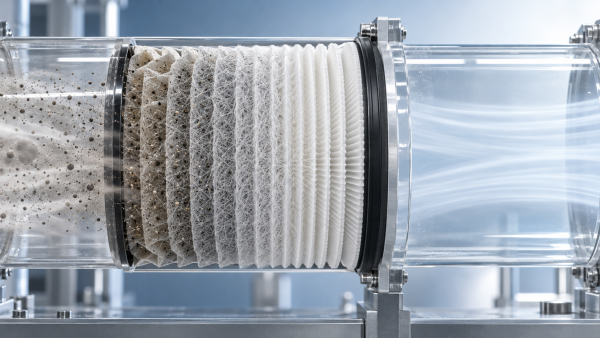
The goal is not simply to make media “tighter.” Excessively restrictive media can raise pressure drop, increase fan or compressor energy demand, and shorten usable life because loading occurs too rapidly at the surface. Well-designed material systems seek a more controlled loading behavior. In many applications, depth filtration, fiber architecture, pore distribution, surface treatment, and laminate construction all influence whether particles are captured gradually or whether the filter plugs early.
This is why filter media selection should start with the actual contaminant challenge rather than a generic efficiency label.
How better filtration media can lower lifecycle spending
A longer and more predictable change interval
Unplanned filter replacement is disruptive. Maintenance teams may have to stop a process, access hard-to-reach housings, and respond quickly because a pressure alarm has already been triggered. When media maintains its performance over a more stable loading cycle, replacement planning becomes easier.
Predictability can be as valuable as duration. A facility that knows its filters can be inspected and changed during scheduled maintenance windows can reduce emergency labor, avoid expedited purchasing, and hold less contingency inventory. This is particularly meaningful for distributed equipment fleets, remote installations, and high-throughput manufacturing lines.
Lower pressure-drop penalties over time
Pressure drop is not merely a filter-room measurement. It affects the energy required to move air or gas through a system. As dust accumulates, resistance rises. If the media loads rapidly or unevenly, fans, blowers, and other air-moving equipment may need to work harder to maintain operating conditions.
High-performance media can help by delivering an appropriate initial resistance and a slower, more manageable pressure-drop increase under the intended dust load. This does not mean every high-efficiency material will automatically reduce energy use; efficiency, airflow, dust type, face velocity, and filter area all matter. But a media design that maintains open flow pathways longer can reduce the operating burden associated with frequent loading.
Less downstream wear and fewer contamination events
The financial impact of inadequate filtration is often delayed. Fine dust can foul heat-transfer surfaces, damage sensitive components, affect optical or electronic manufacturing environments, contaminate product-contact areas, or increase wear in engines and turbines. In some applications, the filter’s job is not just to keep air clean; it is to preserve the performance envelope of an expensive asset.
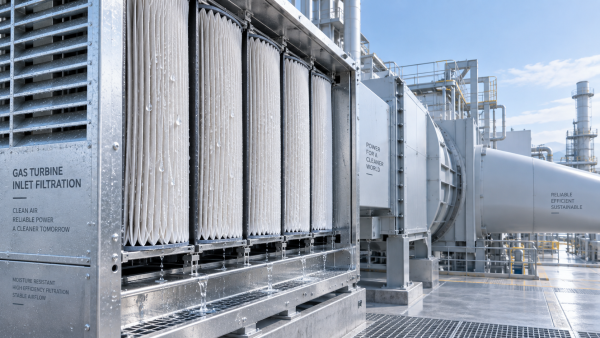
For example, air intake filtration for gas turbines must contend with varying humidity, fine particles, salt exposure in some regions, and fluctuating airflow demands. Automotive and new-energy applications may require consistent performance despite vibration, thermal cycling, and compact installation spaces. In semiconductor and biopharmaceutical environments, even small changes in cleanliness control can have serious process implications.
When media provides more reliable particle retention and mechanical stability, it can help reduce the probability of these costly downstream problems. The savings may not appear as a line item on a filter invoice, but they are part of the total cost equation.
Reduced labor, disposal, and supply-chain activity
Every replacement event has a practical footprint. Filters must be ordered, stored, transported, unpacked, installed, documented, and disposed of. In controlled environments, changing a filter may require gowning procedures, equipment shutdown, area cleaning, or post-change verification. A longer-lasting solution can reduce these repeated activities.
There is also a sustainability consideration. Fewer premature replacements can mean less material consumed and less used media sent to disposal, provided the filter continues to meet the application’s filtration and safety requirements. Extending service life should never mean operating a filter beyond its safe change-out condition, but avoiding needless early replacement benefits both operating budgets and waste reduction efforts.
Where the cost advantage is most likely to appear
Not every application needs advanced media. If contaminant levels are low, equipment is easy to service, and consequences of a short change interval are minimal, a conventional product may be entirely appropriate. High-performance filtration becomes more compelling when one or more of the following conditions apply:
- Replacement requires production downtime or difficult access
- Dust loading is high, variable, oily, humid, or otherwise challenging
- Downstream equipment has high replacement or repair value
- Airflow stability is important to process performance
- Contamination control requirements are strict
- Filters are exposed to vibration, heat, moisture, chemicals, or pressure cycling
- The facility needs longer maintenance intervals or more predictable service planning
In these settings, the media is not a commodity layer hidden inside a filter. It is a functional component that influences energy, maintenance, equipment protection, and operational confidence.
A simple way to compare two filter options
Instead of comparing only the price per filter, compare the expected annual cost of each option. The calculation does not need to be overly complicated at the beginning. Start with a practical estimate:
Annual filtration cost = filter purchase cost + replacement labor + downtime cost + energy impact + expected risk-related cost
The risk-related element may be difficult to quantify precisely, but it should not be ignored. If one filter is more likely to shed fibers, deform under moisture, lose efficiency, or permit harmful particle penetration, that exposure has value even if it does not occur every month.
For a more useful comparison, collect operating data from the actual system:
- Initial and final pressure drop
- Hours or cycles until change-out
- Airflow rate and operating temperature
- Particle type, particle size distribution, and concentration where available
- Humidity, oil mist, chemical exposure, or salt exposure
- Installation conditions and filter sealing performance
- Maintenance labor hours and production impact per change
A trial should be long enough to capture real loading behavior. Short tests can be misleading, particularly where dust conditions change with seasons, production schedules, or local weather. The best decision is usually based on field performance combined with material characterization—not on a single laboratory efficiency number.
Common mistakes that erase the value of premium media
A high-performance material cannot compensate for a poorly designed filtration system. In practice, several common issues can prevent a facility from realizing the expected savings.
Choosing efficiency without considering pressure drop. A higher capture rating may be useful, but only if the system can support the resulting resistance and the media maintains airflow acceptably throughout its loading cycle.
Ignoring the contaminant itself. Dry mineral dust, carbon black, fibrous debris, oil aerosol, sticky particles, and moisture-laden air behave differently. Media that performs well in one condition may not deliver the same service life in another.
Overlooking lamination and conversion quality. Media performance can be compromised by weak bonding, poor pleat support, inconsistent coating, or delamination under heat and humidity. The finished filter construction matters alongside the base material.
Using fixed replacement schedules only. Time-based replacement is simple, but it can cause filters to be discarded early or left in service too long. Differential pressure monitoring, airflow checks, and visual inspection often lead to better decisions.
Assuming “washable” or “reusable” always means lower cost. Cleaning processes can damage fiber structures, alter efficiency, or leave residual contaminants. Reuse should be validated for the specific media and application rather than assumed.
What to ask a filter media supplier before making a change
A useful supplier conversation goes beyond “What grade do you recommend?” The more accurately the operating environment is defined, the more likely the selected media will deliver lifecycle value.
- What loading mechanism is expected for this dust type?
- How does pressure drop change over the intended service period?
- What media properties support moisture, temperature, or chemical resistance?
- Can the material be adapted to pleating, lamination, sealing, or other downstream conversion processes?
- What quality controls support consistency from roll to roll?
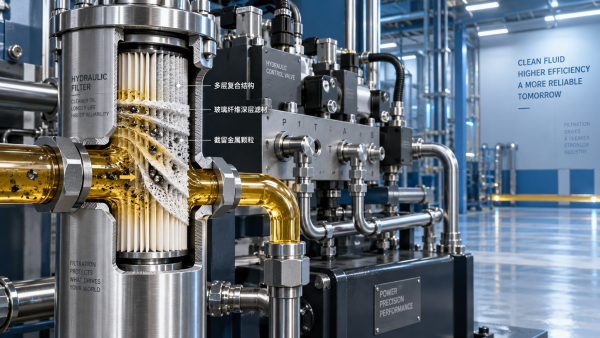
- Is a layered or composite construction more suitable than a single-layer media?
- How should field trials and change-out criteria be defined?
For specialized filters, material integration is often where the difference is made. Fully synthetic wet-laid media, for example, can offer a different balance of durability, fiber distribution, and processability than conventional alternatives. Lamination technologies may add support, protective layers, or functional surfaces that help the finished filter withstand its real service environment. The right construction depends on the application, not on a universal formula.
From material choice to a more reliable maintenance strategy
High-performance filter media should be viewed as part of a broader maintenance strategy rather than a standalone upgrade. When the media, filter design, housing seal, airflow conditions, and monitoring approach work together, the benefits become easier to measure: fewer unexpected changes, steadier equipment operation, and a clearer understanding of actual filter life.
Hangzhou Chaocai Materials Co., Ltd. develops functional advanced materials for filtration fields where standard solutions may not be sufficient. Its capabilities in fully synthetic wet-laid production and multiple lamination processes support the development of tailored filter media for demanding gas turbine, automotive, new-energy, semiconductor, biopharmaceutical, and industrial applications. For buyers, the important point is not the process name alone, but the ability to match material structure and manufacturing method to the conditions the filter will face.
FAQ: Can high performance filter media reduce total filter replacement cost?
Is a more expensive filter media always the better economic choice?
No. A higher-priced media is justified only when it improves the cost of ownership in the actual operating environment. If service is easy, dust loading is low, and equipment risk is limited, the added investment may not be necessary. The strongest case appears when longer service life, stable pressure drop, and better protection reduce meaningful operational costs.
How quickly can a facility see savings after changing filter media?
That depends on the original replacement frequency, operating hours, contamination level, and energy cost. Some benefits, such as lower labor demand or fewer emergency changes, may appear after the first extended service cycle. A reliable financial conclusion usually requires comparison over several normal maintenance intervals.
Does higher filtration efficiency automatically mean longer filter life?
Not necessarily. Higher efficiency can sometimes increase initial resistance or accelerate surface loading if the media structure is not suited to the contaminant. Service life should be evaluated alongside pressure-drop behavior, dust-holding capacity, airflow requirements, and the required cleanliness level.
What is the most practical first step?
Review why filters are currently being changed. If the answer is rising pressure drop, contamination concerns, physical damage, scheduled policy, or inconsistent performance, each reason points to a different material and system question. That diagnosis is a more productive starting point than selecting media by price alone.
Ultimately, high-performance filter media can lower total replacement costs when it solves a real operating problem—not when it simply carries a premium label. The most successful choice is the one that protects the process, maintains acceptable airflow, fits the conversion and installation design, and delivers a replacement interval that makes maintenance less disruptive and more predictable.
Recommendation
 Oct 10, 2026
How Can Air Filter Media Increase Dust Holding Capacity Without Higher Pressure Drop?
Which liquid filter media is suitable for hydraulic oil fine-particle filtration? Discover how advanced air filter media increases dust holding capacity with low pressure drop.- Oct 10, 2026
Which Liquid Filter Media Is Suitable for Fine Hydraulic Oil Filtration?
Can synthetic filter media replace glass fiber in high-humidity gas turbine intakes? Explore media choices for fine hydraulic oil filtration, balancing efficiency, moisture resistance, pressure drop, and service life. - Oct 10, 2026
Can Synthetic Filter Media Replace Glass Fiber in Humid Turbine Intakes?
Is ePTFE filter media suitable for pulse-cleaned construction equipment air filters? Explore synthetic vs. glass fiber performance in humid turbine intakes.