Which Performance Data Matters Most When Selecting Filter Media?
Which Performance Data Matters Most When Selecting Filter Media?
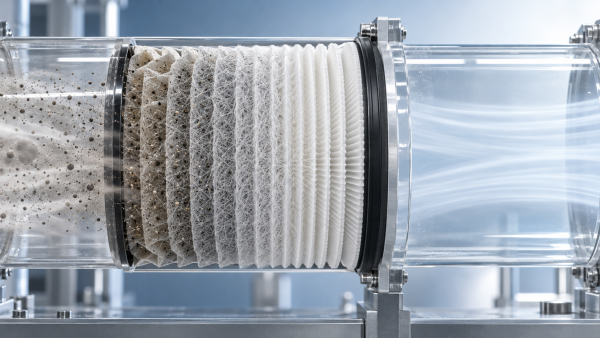
What performance data matters most when selecting filter media? For demanding industrial applications, the answer extends well beyond a single filtration-efficiency figure. A media that captures fine particles effectively may also create excessive resistance to airflow, lose integrity during pleating, degrade in heat, or load too quickly in a dusty environment. The right decision depends on how efficiency, pressure drop, dust-holding capacity, mechanical durability, chemical compatibility, and manufacturing consistency perform together.
This is particularly relevant in automotive, gas turbine, semiconductor, new-energy, and biopharmaceutical filtration, where the filter is not merely a replaceable consumable. It can affect equipment protection, energy demand, process cleanliness, maintenance intervals, and the stability of the final product. Engineers therefore need to look past headline values and ask whether the test data reflects the actual duty cycle, contaminant type, operating temperature, humidity, and filter construction.
Efficiency Is Essential, but the Test Conditions Matter
Filtration efficiency is usually the first specification under review, and for good reason. It indicates how effectively a medium retains particles of a defined size under defined conditions. Yet an efficiency number without its test context is incomplete. Particle size distribution, face velocity, challenge aerosol, loading state, and whether the result represents the media alone or a finished filter all affect the result.
A useful distinction is between initial efficiency and loaded efficiency. Some media relies mainly on mechanical capture mechanisms, while other constructions may include electrostatic effects. Their behavior can differ after exposure to humidity, oil mist, or accumulated dust. In applications where protection of a downstream component is critical, decision-makers should clarify how performance changes throughout the intended service period rather than selecting on the clean-media result alone.
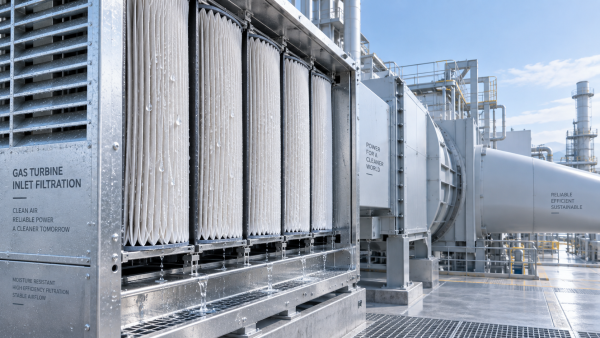
Particle size should also follow the risk, not a generic specification. Fine particulate control may be central to semiconductor or biopharmaceutical air handling, while intake filtration for mobile equipment may need a more balanced response to a broad range of airborne dust. Gas turbine intake systems may face a mixture of fine atmospheric particles, moisture, and seasonal contaminants. The relevant question is not simply “what is the highest efficiency available?” but “which particle sizes create the most serious operational risk in this system?”
Pressure Drop Often Determines the Real Cost of Filtration
Pressure drop is the resistance created as air or fluid passes through the filter medium. It directly affects fan energy, engine intake behavior, process flow, and the useful operating window before a filter reaches its replacement threshold. A media can be highly efficient yet unsuitable if its initial resistance is too high for the available system pressure or if it rises sharply during loading.
Initial pressure drop should be evaluated at the intended face velocity, not treated as an isolated laboratory value. A low resistance result measured at one airflow rate cannot automatically predict behavior in a differently sized filter or under changing system demand. Pleat geometry, media area, support layers, bonding method, and the finished element’s sealing design all influence installed resistance.
The loading curve deserves equal attention. Two media grades can begin at similar pressure-drop levels but behave very differently once dust accumulates. One may form a relatively permeable dust cake and maintain airflow for longer; another may block rapidly at the surface. This is why selection teams should request loading behavior where it is relevant and define the terminal pressure-drop criterion used in the comparison.
Dust-Holding Capacity Is a Service-Life Indicator, Not a Universal Ranking
Dust-holding capacity refers to the amount of contaminant a filter can retain before reaching a specified final resistance or performance limit. It is often used as a proxy for service life, but it must be interpreted carefully. Capacity depends on the dust type, feed rate, airflow, endpoint, filter area, and whether the media captures particles throughout its depth or mainly at the surface.
A higher capacity figure can be valuable where maintenance access is difficult, shutdowns are costly, or the environment has a heavy particulate burden. Still, the most appropriate media is not always the one with the largest reported value. In a controlled process environment, predictable cleanability, low particle shedding, or fine-particle retention may matter more than maximum mass loading. In an engine intake application, the priority may be stable air delivery while protecting sensitive components from abrasive contaminants.
For comparison purposes, ask whether candidate media were tested under the same conditions and whether the final resistance reflects the actual replacement policy. Otherwise, capacity data can create a misleading impression of longer field life.
Mechanical Properties Can Decide Whether Good Media Becomes a Good Filter
Filter media is processed before it ever sees a contaminant. It may be pleated, corrugated, laminated, cut, sealed, or exposed to thermal and ultrasonic bonding steps. A material with strong filtration data but inadequate tensile strength, elongation control, stiffness, or fold endurance can create problems during conversion or in service.
Tensile strength in both machine and cross directions helps indicate whether a web can withstand handling and element assembly. Stiffness affects pleat formation and pleat stability, but excessive stiffness may complicate certain designs. Burst resistance and dimensional stability can become especially important under pulsing, vibration, or fluctuating differential pressure. For liquid filtration, wet strength and resistance to swelling may be more relevant than dry tensile values.
Uniformity is closely connected to mechanical reliability. Variations in basis weight, thickness, fiber distribution, or pore structure may produce weak zones, uneven air distribution, inconsistent pleat behavior, and local pressure-drop differences. Averages on a technical data sheet are useful, but variation across a production roll can be just as consequential for a filter manufacturer trying to maintain stable output.
Environmental Resistance Must Match the Actual Exposure
Temperature resistance, humidity tolerance, hydrolysis resistance, chemical compatibility, and flame-related requirements should be reviewed as application-specific risks. Generic statements such as “high temperature resistant” or “chemical resistant” are not enough. The relevant exposure may involve continuous heat, short excursions, hot oil aerosol, acidic gases, cleaning agents, condensed moisture, ozone, fuel vapors, or a combination of these factors.
Synthetic media can offer useful advantages in moisture resistance and formulation flexibility, but polymer selection, fiber construction, binder chemistry, and laminating materials all need to be considered together. A multilayer structure may perform well in dry air yet behave differently when exposed to solvents or repeated thermal cycling. Adhesive selection also matters: the interface between layers can be a failure point even if each individual substrate performs acceptably.
For high-purity settings, material compatibility includes more than visible deterioration. Users may need to examine particle shedding, odor, extractables, or other contamination risks according to their own process requirements. These questions should be resolved with relevant test methods and project documentation rather than assumptions based on material family alone.
A Practical Way to Read Filter Media Data
The most effective evaluation usually connects each data point to a failure mode or operating objective. The table below is not a substitute for application testing, but it helps organize the discussion before qualification begins.
Do Not Evaluate the Media in Isolation
Filter performance emerges from the entire construction. A media’s pore structure and fiber network establish the filtration foundation, but scrims, support layers, wire mesh, coatings, adhesives, and pleat spacing can change airflow and durability substantially. The same material may deliver different results in a panel filter, cartridge, intake element, or high-efficiency cassette because the structure around it changes.
This is also why manufacturability should be discussed early. A filter maker may need controlled roll width, winding quality, surface condition, consistent caliper, and a bonding surface compatible with its production process. Delays and quality loss often begin when material selection focuses solely on filtration performance and ignores the realities of converting at scale.
Hangzhou Chaocai Materials approaches this challenge through the development and manufacture of functional advanced materials, with attention to applications where process complexity and material differentiation matter. Its fully synthetic wet-laid production capability provides a foundation for engineered filtration structures, while PUR, hot-melt adhesive, solvent-based emulsion spray, and ultrasonic lamination platforms support multilayer design choices. Those options are relevant because filtration media frequently requires a balance between capture performance, strength, support, and processing compatibility rather than a single-layer solution.
Selecting Data for the Application, Not for the Datasheet
In automotive filtration, resistance, pulsation durability, moisture behavior, and compatibility with the intended filter geometry can be as important as particle retention. For gas turbine intake systems, the evaluation may place greater weight on airflow stability, environmental exposure, and the consequences of fine contaminant ingress. New-energy systems may introduce demands related to thermal management, enclosure cleanliness, or compact designs. Semiconductor and biopharmaceutical environments can require a stricter examination of cleanliness, consistency, and material compatibility with the process environment.
These are not interchangeable use cases. A media selected successfully for one can be an inefficient or unreliable choice for another, even when both are described broadly as air filtration. The most productive supplier discussion begins with the contaminant profile, operating conditions, filter dimensions, required life, conversion method, and acceptance criteria. It should then move to relevant test data and, where necessary, samples or application-level validation.
The best filter media decision is rarely based on the highest value in one column. It is based on the performance window that protects the system without imposing unnecessary resistance, maintenance burden, or manufacturing risk. Before approving a grade, confirm what each result measures, how it was obtained, how much variation is acceptable, and whether the finished filter will preserve the behavior demonstrated by the media. That discipline usually prevents more problems than simply adding another requirement to the specification.
Recommendation
 Oct 10, 2026
How Can Air Filter Media Increase Dust Holding Capacity Without Higher Pressure Drop?
Which liquid filter media is suitable for hydraulic oil fine-particle filtration? Discover how advanced air filter media increases dust holding capacity with low pressure drop.- Oct 10, 2026
Which Liquid Filter Media Is Suitable for Fine Hydraulic Oil Filtration?
Can synthetic filter media replace glass fiber in high-humidity gas turbine intakes? Explore media choices for fine hydraulic oil filtration, balancing efficiency, moisture resistance, pressure drop, and service life. - Oct 10, 2026
Can Synthetic Filter Media Replace Glass Fiber in Humid Turbine Intakes?
Is ePTFE filter media suitable for pulse-cleaned construction equipment air filters? Explore synthetic vs. glass fiber performance in humid turbine intakes.