Comparing dust capacity in agricultural machinery air filter media
During harvesting or dry-field cultivation, an engine air filter may face hours of concentrated dust exposure with little opportunity for maintenance. For buyers comparing Agricultural Machinery Air Filter Media, dust-holding capacity therefore deserves close attention. Yet the largest capacity figure on a supplier’s data sheet is not automatically the best choice for engine protection or service life.
A useful comparison asks what the material retained, under which conditions, and how its airflow resistance and filtration efficiency changed along the way. Procurement decisions become more reliable when capacity is treated as part of a performance profile—not as an isolated purchasing specification.
What a dust-capacity figure actually tells you
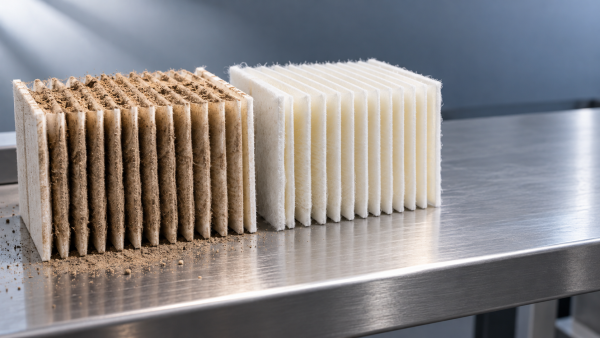
Dust-holding capacity generally describes the quantity of dust retained before a defined test endpoint, often a specified terminal pressure drop. That endpoint matters enormously. A medium tested until a higher resistance is reached may hold more dust simply because the test allows it to load further.
Buyers should also distinguish between dust introduced into the test system and dust actually retained. These quantities are not interchangeable: some dust may pass through the specimen or be deposited elsewhere in the apparatus. Ask suppliers how they calculate the reported value and whether downstream dust collection forms part of the measurement.
Results may be expressed as total mass per filter element or as retained mass per unit of media area. Neither format is inherently wrong, but each answers a different question. Area-normalized capacity helps compare media specimens; total element capacity reflects the combined influence of material, usable area, pleat geometry, and filter construction.
The purchasing question is not simply “How much dust can this medium hold?” It is “How much dust can it retain while maintaining acceptable engine protection and intake restriction?”
Make supplier results comparable before ranking them
Two capacity values can appear directly comparable while describing very different operating conditions. Before building a supplier ranking, request the test method and enough supporting information to understand the result.
ISO 5011 is commonly referenced for engine inlet air-cleaning equipment performance testing. However, a reference to the standard alone does not establish equivalence between reports. Confirm the applicable procedure, configuration, dust, airflow, and reporting basis. A flat-sheet screening result should not be presented as proof of complete air-cleaner performance.
Where suppliers use different methods, request testing under a shared protocol rather than trying to correct incompatible figures with a simple conversion factor. Normalizing capacity by area cannot remove differences caused by dust type or terminal restriction.
Read the loading curve, not just the final number
A terminal capacity figure hides what happened during most of the filter’s working life. The pressure-drop-versus-dust-loading curve reveals whether resistance rises gradually, accelerates early, or increases sharply near the endpoint.
Consider two media that reach a similar final retained mass. One may maintain relatively low restriction through much of the test before rising steeply. Another may develop higher restriction much earlier. Depending on the machine’s allowable intake restriction and maintenance trigger, their usable service intervals could differ despite similar headline capacities.
Request three connected sets of evidence:
- Clean-media resistance: establishes the starting pressure-drop budget at the specified airflow.
- Resistance during loading: shows how quickly that budget is consumed as dust accumulates.
- Efficiency throughout loading: checks whether protection remains acceptable, including before a dust layer develops.
Some materials become more efficient as deposited dust forms an additional collection layer. That can be useful, but it does not excuse inadequate initial efficiency. Conversely, very high initial efficiency is not enough if restriction reaches the machine’s service limit too quickly.
For procurement teams, the strongest candidate is usually the one that meets the required efficiency threshold and delivers useful capacity within the actual restriction limit—not the one tested to the most generous endpoint.
How media construction changes the trade-off
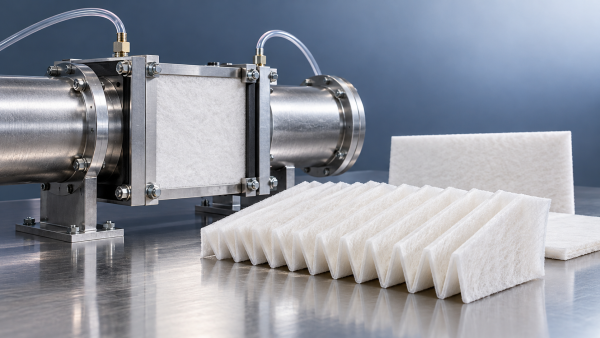
Agricultural Machinery Air Filter Media can use cellulose, cellulose/synthetic blends, or more extensively engineered synthetic structures. Fiber composition is important, but it does not determine performance by itself. Fiber diameter, pore structure, thickness, resin treatment, and layer arrangement all influence the result.
Cellulose and blended media
Cellulose-based materials are established options for engine intake filtration. Their suitability depends on how the sheet is formed and treated, including its resistance to moisture and its ability to maintain pleat shape during operation.
Adding synthetic fibers can modify strength, pore structure, and loading behavior. However, a blend should not automatically receive a higher purchasing score than cellulose. A well-matched cellulose grade can outperform an unsuitable blend under a particular duty cycle. Compare measured performance rather than assuming a material hierarchy.
Layered and synthetic structures
Layered designs can distribute filtration tasks across different structures. A more open upstream layer may accommodate larger particles, while a finer downstream layer provides additional particle capture. Whether this arrangement improves usable capacity depends on how the layers interact under the specified dust challenge.
Lamination also introduces design considerations. Adhesive distribution, bonding method, and layer compatibility can influence airflow, stiffness, and converting behavior. More layers are not automatically better; the structure must remain permeable and mechanically stable after pleating and loading.
This is where manufacturing capability becomes relevant to supplier assessment. Hangzhou Chaocai Materials Co., Ltd. has fully synthetic wet-laid production and PUR, hot-melt adhesive, solvent-based emulsion spray, and ultrasonic lamination platforms. These capabilities provide different routes for developing filtration structures, but buyers should still require grade-specific evidence for the proposed application rather than infer performance from processing capability alone.
Agricultural dust is not a single, predictable challenge
A tractor cultivating dry soil may encounter a different contaminant mix from a combine operating through crop residue. Mineral particles, plant fibers, chaff, and changing moisture conditions can all affect filter loading. A standardized laboratory dust is valuable for controlled comparison, but it cannot reproduce every field exposure.
Fine particles may penetrate into the media structure and drive resistance differently from coarse debris that accumulates upstream. Fibrous material can obstruct available flow area without behaving like a uniform mineral dust. Moisture may change both the deposited dust layer and the mechanical response of the medium.
Translate the intended application into a short operating profile before asking suppliers for recommendations:
- Machine type, engine airflow requirements, and allowable intake restriction.
- Dominant work: harvesting, tillage, transport, or mixed operation.
- Expected dust composition and seasonal moisture exposure.
- Precleaner arrangement and the contaminants likely to reach the main element.
- Service interval expectations and approved maintenance practices.
A precleaner can substantially change the challenge reaching the main filter. For that reason, media selection should consider the complete intake system rather than raw ambient dust alone. If filter cleaning is part of the maintenance plan, validate it only under procedures approved by the equipment and filter manufacturers; repeated cleaning can damage media or compromise sealing.
Where an automotive air-intake grade fits into the shortlist
An available candidate such as PB1088R can be considered during initial supplier discussions, provided its stated application is understood. It is listed for automotive engine air-intake use, with cellulose, cellulose/synthetic, and cellulose/synthetic/PBT material options, acrylic resin, and available flame-retardant or water-resistant options.
Those details identify questions to investigate; they do not establish agricultural suitability. Ask which exact construction is being quoted, whether optional treatments affect resistance or loading performance, and whether the material meets the intended machine’s environmental and mechanical requirements.
No numerical dust-capacity, efficiency, or pressure-drop data are supplied in the available product information. Its position on an agricultural shortlist therefore remains subject to testing. Likewise, longer-life or fuel-saving claims should not substitute for evidence: engine response depends on the complete intake system, maintenance condition, and operating duty.
Turn the comparison into a defensible purchasing decision
A practical evaluation separates mandatory requirements from preferences. Engine protection, acceptable restriction, structural integrity, and compatibility with filter manufacturing should be pass/fail gates. Price, capacity margin, supply flexibility, and processing convenience can then distinguish the candidates that pass.
Start with comparable flat-sheet testing to screen materials economically. Review resistance, efficiency, and loading behavior together, alongside thickness, basis weight, air permeability, and relevant strength properties. Air permeability is useful for quality control and material characterization, but it is not a replacement for filtration testing.
Next, convert shortlisted media into representative elements. Pleat spacing, effective area, adhesive application, and assembly quality can change the outcome. A promising sheet can lose its advantage if pleats crowd together or part of its area becomes poorly utilized. Leaks around seals can overwhelm otherwise good media performance.
Finally, validate the chosen element in the intended system and, where practical, through controlled field trials. Record operating conditions, restriction progression, service observations, and evidence of downstream contamination. Treat field results as application-specific validation, not as a universal service-life promise.
What the supplier agreement should preserve
Once a grade is approved, purchasing documents should identify the exact material construction, required treatments, agreed test conditions, and acceptance limits. Include traceability and notification requirements for changes to fibers, resin, layer structure, or manufacturing process. Otherwise, a familiar grade name may conceal changes that affect performance.
Ask for production-representative samples and evidence of lot-to-lot consistency. An excellent development sample is less valuable if routine deliveries vary enough to disrupt pleating or shift initial resistance.
The best dust-capacity comparison ends with a clear explanation of why a material was chosen: it provides the required protection, accommodates the expected dust burden within the machine’s restriction limit, and performs consistently after conversion into a finished filter. That is a stronger purchasing basis than the highest capacity number—and a more dependable starting point for keeping agricultural machinery working when the field cannot wait.
Recommendation
 Oct 26, 2026
How engine air intake filter media affects initial restriction
Engine Air Intake Filter Media affects initial restriction through fiber, pore, and laminate design. Discover how to compare pressure drop, efficiency, and durability for smarter filter selection.- Oct 26, 2026
Comparing dust capacity in agricultural machinery air filter media
Compare Agricultural Machinery Air Filter Media for dust capacity, filtration efficiency, and airflow resistance. Discover how to select reliable media for demanding field conditions. - Oct 26, 2026
Why coastal gas turbine filtration pressure drop rises in fog
Coastal Gas Turbine Filtration pressure drop rising in fog? Discover how moisture, sea salt, and drainage affect airflow—and learn practical steps to diagnose issues and protect turbine performance.