How Moisture-Resistant Is Hangzhou Super Material's Filter Media?
Hangzhou Super Material's filter media cannot be assigned a single moisture-resistance rating without identifying the specific grade and reviewing its test data. A material that retains its structure in humid air is not necessarily resistant to liquid water, and a water-repellent surface does not guarantee stable filtration efficiency after wetting. For gas turbine inlet filtration, the useful answer comes from testing the selected media under conditions that resemble the expected humidity, water exposure, airflow, and dust loading.
Moisture resistance should be assessed at two levels: the filter medium itself and the finished filter element. Fibers may remain intact while a bonded seam, pleat, or frame loses strength. Conversely, an element may shed occasional droplets effectively even though prolonged saturation produces an unacceptable pressure drop. The exposure scenario changes the answer.
Does high humidity have the same effect as liquid water?
No. Humid air contains water vapor; rain, fog droplets, and condensation introduce liquid water. A filter installed downstream of effective weather protection may encounter long periods of high relative humidity without substantial droplet loading. An exposed coastal or fog-prone inlet can face liquid water that accumulates on the upstream filter surface and within pleats.
Condensation adds a further complication. When a surface falls below the dew point of the surrounding air, water can form locally even when no rain enters the inlet. Temperature changes during shutdown and restart can therefore produce wetting that is not obvious from a weather description alone. The relevant conditions include air temperature, relative humidity, temperature variation, and whether the inlet housing contains cold surfaces.
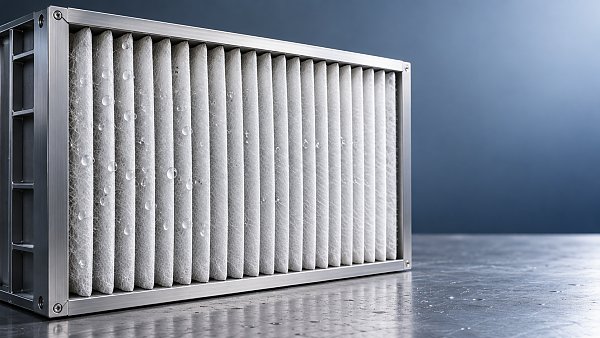
Liquid water occupies pore space and can restrict airflow, increasing pressure drop across the filter. The magnitude and persistence of that increase depend on how much water reaches the medium, how the droplets distribute themselves, and whether water drains or evaporates. Humidity exposure alone should not be used as a substitute for a liquid-water test when fog or rain carryover is plausible.
Which media characteristics affect performance when wet?
Fiber composition influences water absorption and dimensional stability. Synthetic fibers are often selected where resistance to moisture-related changes is important, but a synthetic label by itself does not establish that a finished medium is hydrophobic or that all its layers retain their properties after repeated wetting. Fiber blends, binders, surface treatments, and construction all matter.
Surface wettability also affects how water behaves. A water-repellent medium tends to resist wetting at its surface, although droplet impact, water accumulation, contamination, and pressure across the medium can change the outcome. A sample that repels a droplet during a simple visual demonstration has not necessarily demonstrated resistance to water penetration under operating airflow.
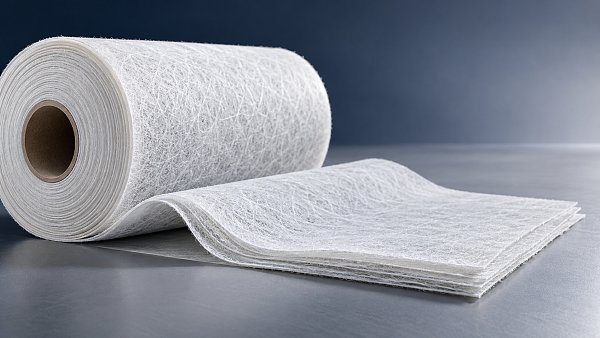
The structure of the sheet matters just as much. Pore size distribution, thickness, fiber arrangement, and the connection between layers influence airflow and the way water collects. Very fine filtration structures can provide the desired particle capture, yet they also need to be assessed for pressure-drop behavior when exposed to droplets. Two media with similar dry efficiency can respond differently to the same wetting event.
Binder and laminate integrity deserve separate attention. Moisture or prolonged wetting can affect some adhesive systems and fiber bonds. Where a medium has multiple layers, inspect for separation and changes in strength after conditioning and drying. The manufacturing process alone does not establish the wet strength of a particular grade; the material combination and the way it is processed determine the result.
Can a moisture-resistant medium still cause a high pressure drop?
Yes. Resistance to water damage describes one aspect of performance; resistance to airflow is another. A structurally sound medium can develop a substantial temporary pressure-drop increase when water blocks part of its open area. In a pleated element, water can also bridge adjacent pleat surfaces or accumulate where drainage is restricted.
The shape of the pressure-drop curve helps distinguish possible causes. A rise during a fog event followed by recovery as the element dries is consistent with a reversible water-loading effect. A rise that remains after drying warrants investigation of retained dust, water-driven redistribution of contaminants, deformation, or permanent changes to the medium. Pressure readings alone do not identify the cause, so inspection and exposure records are needed before attributing the change to media failure.
Dust changes the picture. Particles captured before a wetting event can hold water or form deposits that obstruct pores. A clean laboratory sample may recover readily after drying while a dust-loaded element retains a higher pressure drop. Testing the medium in both clean and representative loaded states gives a more useful view where the inlet experiences airborne dust as well as moisture.
Which test results make moisture resistance meaningful?
A useful report identifies the exact media grade, sample preparation, exposure, and measurement method. A statement such as “suitable for humid conditions” leaves open whether the sample was exposed to water vapor, sprayed with droplets, immersed, or subjected to repeated wetting and drying. Those exposures are not interchangeable.
For a comparison, keep the airflow conditions and sample configuration consistent and request results at relevant stages:
- Before exposure: initial pressure drop and filtration efficiency at a stated airflow or face velocity.
- During or immediately after wetting: pressure-drop response, visible water penetration, and any change in the physical condition of the sheet.
- After drying: whether pressure drop recovers and whether the medium remains intact.
- After repeated exposure: evidence of dimensional change, loss of strength, layer separation, or other deterioration, with the number and nature of the cycles stated.
Efficiency data should identify particle size or the measurement basis, rather than presenting an isolated percentage. For a wet-exposure comparison, confirm whether efficiency was measured while wet, after drying, or only before exposure. Wetting can alter the airflow paths through a medium, while drying can leave deposits in a different arrangement. A dry efficiency value alone cannot describe both conditions.
Wet strength is similarly easy to misread. A strength result is meaningful only when the direction of the test, sample condition, and conditioning procedure are known. The strength of a flat sheet also does not establish the strength of a pleated assembly at its folds or bonded edges. If the concern is collapse or tearing under differential pressure, the finished element needs an appropriate mechanical assessment as well.
Does lamination improve moisture resistance?
Lamination can combine layers with different functions, such as particle capture, support, or protection from incoming droplets. Whether the resulting structure withstands moisture depends on the layers, the bonding method, and the exposure. A laminate can remain dimensionally stable while its airflow resistance changes during wetting; it can also show adequate dry strength but lose bond integrity after repeated wet-dry cycles.
Examine where separation begins. An edge can be exposed to water differently from the central area of a sheet, especially after cutting and pleating. If layers separate near a bonded perimeter, the issue may involve the interface or edge construction rather than the fibers themselves. Testing only the center of a flat sample can miss that behavior.
Adhesives and coatings should also be evaluated against the intended operating temperatures and any cleaning or chemical exposure specified for the installation. A material that tolerates clean water has not automatically demonstrated resistance to water carrying salts, oils, or other contaminants. The relevant exposure must be defined before a compatibility claim has practical meaning.
How much does the filter element design matter?
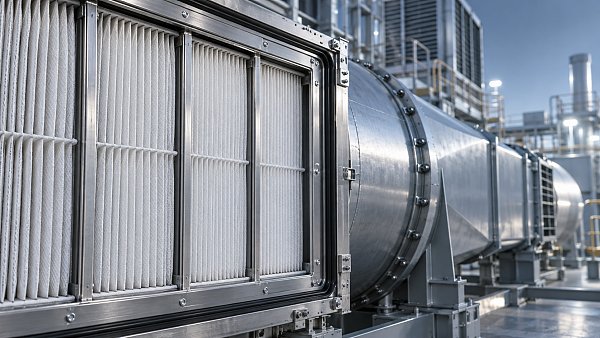
A great deal. Media test coupons do not reproduce the geometry of a finished gas turbine filter. Pleat depth and spacing affect airflow distribution and the space available for water to drain. Frame design, seal condition, and bonding determine whether air and water remain on the intended path through the element.
Water entering through a damaged seal or poorly seated frame can reach the clean side without passing through the media. That is a bypass issue, not proof that the sheet itself has poor moisture resistance. Conversely, an intact seal does not prevent pressure loss if water accumulates across the pleated surface. Examining both the media and the surrounding assembly prevents these different failure paths from being confused.
Inlet protection changes the exposure reaching the element. Louvers, moisture separators, drainage paths, and upstream filtration can reduce the water load, but their effectiveness depends on the complete inlet arrangement and conditions. A media grade assessed behind functioning water separation should not be assumed to tolerate direct rain exposure without further evidence. Blocked drains or gaps around upstream components can also defeat the intended protection.
What happens during storage, installation, and shutdown?
Moisture exposure can begin before the turbine runs. Packaging that has been torn or stored against a wet floor can allow water or contaminants to reach the filter. Before installation, inspect packaging and elements for water staining, distorted pleats, damaged seals, and visible contamination. A wet or visibly damaged element should be evaluated against the applicable acceptance criteria rather than assumed to recover without consequence.
During installation, compression of pleats, damage to bonded edges, and incomplete seating can compromise the finished assembly. These defects are distinct from the intrinsic moisture resistance of the media, yet they can produce similar symptoms, including leakage or unusual pressure readings. Record the initial differential pressure after installation under known operating conditions so that later changes have a useful reference.
Shutdown periods deserve attention where condensation is possible. A filter that is wet when airflow stops may dry slowly, particularly if the housing retains water. Persistent moisture and captured organic contamination can support microbial growth; susceptibility depends on the conditions and materials present. Any drying, inspection, or replacement procedure should follow the equipment and filter documentation, since unsuitable cleaning methods can damage media or alter filtration performance.
What information is needed to assess a particular grade?
Identify the exact media and finished element, then describe the water exposure in operational terms: humid air, intermittent fog, rain carryover, condensation, or a combination. Include expected airflow, temperature range, existing inlet protection, and the nature of the dust or other contaminants. These details determine whether a humidity-conditioning result is relevant or whether droplet exposure and wet pressure-drop measurements are needed.
Request the available test conditions alongside the results, including whether samples were clean or loaded and whether measurements were taken during wetting or after drying. If the intended exposure falls outside the documented conditions, a representative element test is the stronger basis for judging suitability. Until grade-specific evidence is available, the moisture resistance of the named media remains unquantified.
Recommendation
 Nov 02, 2026
Is F9 Filter Media Suitable for Gas Turbine Intake Filtration?
Explore Ltd. custom filter media for gas turbine intakes. Learn when F9 filtration is suitable and how to assess efficiency, pressure drop, and moisture resistance.- Nov 02, 2026
How Moisture-Resistant Is Hangzhou Super Material's Filter Media?
Ltd. gas turbine filter media: How well does Hangzhou Super Material's filter media handle moisture? Explore key tests and selection factors. - Nov 02, 2026
What Gas Turbine Filter Media Does Hangzhou Super Material Offer?
Explore Ltd. filter media reviews and discover Hangzhou Super Material’s synthetic and laminated media capabilities for gas turbine inlet filtration.