How Often Should Gas Turbine Intake Filters Be Inspected Near the Coast?
Gas turbine intake filters installed near the coast should be visually inspected at least monthly, with closer attention after salt spray events, heavy fog, storms, nearby construction activity, or unusual turbine operating changes. A fixed calendar interval alone is not enough. Coastal air can expose the intake system to salt aerosols, persistent moisture, fine dust, biological debris, and corrosive deposits that do not always produce the same visible signs as inland dust loading.
For many coastal installations, a sensible starting point is a weekly review of differential-pressure and intake condition data, a monthly external inspection, and a more detailed inspection during planned maintenance intervals or whenever the pressure-drop trend changes unexpectedly. Systems located very close to open water, shipping channels, sea walls, desalination facilities, or exposed industrial waterfronts often need more frequent physical checks than installations farther inland.
Inspection frequency should follow exposure and filter behavior
The useful question is not simply how many days have passed since the last inspection. It is whether the inlet environment and the filter system are behaving as expected. A filter bank may look relatively clean while salt contamination is collecting on downstream hardware, seals, frames, or moisture separators. Conversely, a visible surface deposit may be mostly dry dust and have little immediate effect on airflow. Inspection intervals should be adjusted from observed conditions rather than based only on an assumed replacement schedule.
These intervals are starting points, not universal limits. The filter supplier's specified final pressure drop, the turbine manufacturer's intake requirements, the configuration of the air inlet house, and local operating history should determine the final maintenance plan. A site with reliable online monitoring and stable trends may need fewer intrusive inspections than a site where the pressure reading is inconsistent or the inlet has known leakage paths.
Do not use differential pressure as the only trigger
Differential pressure is one of the most useful indicators of filter condition, but it answers a narrow question: how much resistance is developing across a measured section of the intake. It does not directly prove that salt penetration is controlled, that gaskets remain sealed, or that moisture management is functioning.
A slow, steady rise in pressure drop often indicates normal particulate loading. A sudden increase can point to a storm-driven contamination event, a wet filter surface, a collapsed or shifted element, a blocked weather louver, or an instrument problem. A surprisingly low or falling pressure drop also deserves investigation. It may result from a bypass path, a damaged filter, a missing element, an open access door seal, or a failed pressure tap rather than improved filter condition.
Coastal environments create a specific risk of interpreting wet loading as ordinary dust loading. Salt particles absorb moisture readily. When humidity remains high, deposited salt can form a damp layer that changes airflow resistance and binds additional particles. Once conditions dry, the same filter may show a different pressure response. Reviewing the trend alongside humidity, rain, fog, and recent weather events gives the reading useful context.
Read the pressure trend by filter stage
Where the intake design has separate measurement points for weather protection, prefiltration, high-efficiency filtration, and moisture-removal stages, each stage should be reviewed separately. A total intake pressure drop can hide the source of the restriction. For example, rising resistance across a prefilter may be expected during dusty weather, while an unexplained change across a final filter section may indicate finer contaminant loading, moisture carryover, or a change in upstream filter performance.
If only one differential-pressure reading is available, physical inspections become more important. The inspection should verify that the reading reflects the condition of the full filter path rather than a local blockage or sensing-line issue.
What a coastal inspection needs to examine
A useful inspection begins at the outside air entry and proceeds toward the clean-air side. Looking only at the visible face of final filters misses several common causes of salt ingress. Before opening a filter housing, follow the applicable shutdown, isolation, access, and safety procedures for the installation.
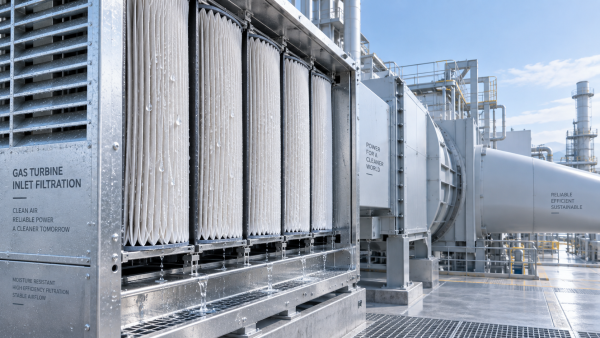
- Weather hoods, louvers, and screens: Look for salt crystals, blocked drainage openings, loose blades, damaged bird screens, and deposits concentrated on the windward side. Uneven buildup often reveals how local wind and rain are entering the inlet.
- Drainage and moisture control: Confirm that drain paths are open and that standing water is not collecting at the base of the inlet house. Water retained near filter stages can be drawn into the airflow or increase corrosion around frames and fasteners.
- Prefilters and coarse stages: Inspect for wet patches, hardened deposits, tears, deformation, and abnormal color changes. A prefilter that has become waterlogged may restrict flow long before it appears fully dust-loaded.
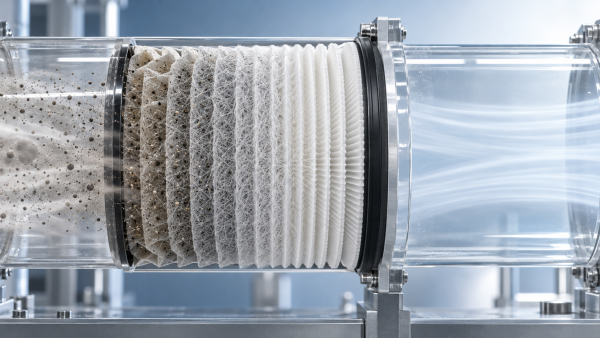
- Final filter media and pleats: Check for uniform pleat spacing, intact media, broken adhesive bonds, edge damage, and signs that dirt is bypassing around the frame. Localized staining near a gasket edge should not be treated as a cosmetic issue.
- Gaskets, clamping surfaces, and access doors: Salt moisture can degrade sealing surfaces and corrode hardware. A high-efficiency element cannot perform as intended if air travels around it through a compressed, cracked, or improperly seated gasket.
- Clean-air plenum surfaces: Examine accessible downstream areas for deposits, moisture marks, corrosion products, or evidence of droplets. Clean-side contamination is a stronger warning than a dirty filter face because it suggests leakage, carryover, or filter damage.
Inspection records should distinguish between dry particulate accumulation, sticky deposits, salt-like residue, biological growth, and corrosion staining. These conditions call for different corrective actions. Replacing a visibly dirty element will not solve repeated salt passage caused by a leaking access panel or poor drainage.
Salt is often a sealing and moisture problem before it becomes a filter-life problem
Fine filtration media is selected to capture small airborne particles, yet coastal performance depends on the entire intake assembly. Salt can enter as dry aerosol, as droplets, or as moisture that later evaporates and leaves deposits behind. The route matters. Large droplets should be controlled by the weather protection and moisture-separation sections; finer salt aerosols require effective downstream filtration; leaks bypass both defenses.
Humidity makes this distinction more important. A filter material that performs well under dry test conditions may behave differently when exposed to repeated wetting and drying. Media stiffness, pleat geometry, adhesive durability, separator integrity, and water drainage all influence whether the element maintains a stable air path. Filters with damaged water-resistant treatment or compromised bonding can lose shape when wet. A distorted element may create high local velocity, promote bypass, or develop premature pressure loss.
For this reason, any inspection that finds wet media should identify the source before replacement. Possible sources include rain penetration through louvers, saturated mist eliminators, poor drainage, wash-water entry, condensate, or a housing door that does not seal. Installing new elements without correcting the source can repeat the same failure pattern immediately.
Events that justify an extra inspection
Coastal intake systems benefit from event-based inspections in addition to routine intervals. A strong onshore wind, tropical storm, prolonged sea fog, or unusually high wave spray can deliver a concentrated salt load over a short period. The calendar may indicate that an inspection is not due, while the inlet condition indicates otherwise.
Extra attention is also warranted after a turbine trip, inlet-house maintenance, filter change-out, nearby blasting or painting work, fire-suppression discharge, or modifications to louver and access-door hardware. These events can alter airflow, disturb seals, contaminate media, or leave the system with an unrecognized bypass path.
A post-event inspection does not always require removal of filters. A focused review of the external intake, drain paths, pressure trend, door latches, visible filter faces, and accessible clean-air surfaces can determine whether a deeper examination is needed. The important point is to capture a change in exposure before it becomes a turbine cleanliness or availability issue.
Set replacement decisions separately from inspection decisions
Frequent inspection does not mean frequent replacement. Replacing filters too early increases material use and may introduce installation errors; delaying replacement until airflow loss is severe can reduce turbine output and place excess stress on the intake system. The replacement trigger should combine the approved pressure-drop limit with the physical condition of the element and evidence from the clean-air side.
An element should be considered for replacement before the nominal pressure limit when it is torn, collapsed, persistently wet, chemically attacked, poorly seated, or associated with confirmed downstream contamination. On the other hand, surface discoloration alone does not establish failure. Some filters retain acceptable airflow and integrity despite visible deposits, while others become unsuitable with modest-looking damage at a gasket, corner, or pleat pack.
During change-out, preserve the information that led to the decision. Record the filter stage, installation position, observed condition, measured pressure drop, recent weather, and whether deposits were concentrated in particular areas. Repeated loading on only one side of a bank can indicate uneven inlet velocity or weather exposure. A pattern of dirty downstream surfaces may point toward sealing defects rather than media capacity.
Installation quality affects the next inspection interval
A newly installed filter bank should receive an early follow-up inspection instead of waiting for the normal monthly cycle. Shipping vibration can damage corners or pleat packs, and installation can leave a gasket partially rolled, a frame misaligned, or a retaining mechanism unevenly engaged. These faults may be difficult to notice once the housing is closed.
Filters should remain protected from rain, floor moisture, salt-laden outdoor storage, and crushing before installation. Packaging should be opened only when the housing is ready. For elements with directional airflow requirements, confirm orientation before closing the access section. For gasketed elements, verify continuous compression around the full frame rather than relying on latch tension at one point.
After the intake returns to service, compare the initial differential-pressure reading with the expected clean condition and confirm that access panels, pressure taps, and drains are secure. That baseline is valuable later: it separates gradual normal loading from an abnormal change caused by exposure, leakage, or instrument drift.
Common questions
Should filters be inspected after every coastal storm?
A full filter removal is not automatically required after every storm. When wind direction, spray exposure, rainfall intensity, or pressure trends suggest unusual intake loading, a prompt targeted inspection is appropriate. Severe events with direct salt spray or visible water entry justify a more detailed review.
Can a clean-looking filter still allow salt into the turbine?
Yes. Salt passage can result from leaks around frames, damaged gaskets, moisture carryover, or a compromised filter element. Clean-side deposits, corrosion, or unexplained turbine cleanliness concerns should prompt an examination of the entire intake path.
Is washing an intake filter a suitable response to salt deposits?
Only filters specifically designed and approved for washing should be cleaned that way. Applying water to a disposable or non-washable element can damage media, adhesive, coatings, and pleat stability, while leaving moisture in the housing. The filter documentation and intake maintenance procedure should govern this decision.
Near the coast, inspection frequency works best as a living maintenance interval: routine enough to detect moisture, corrosion, and seal issues early, but responsive to weather exposure and measured filter behavior. A stable pressure trend, dry housing, intact seals, effective drainage, and clean downstream surfaces support normal intervals. When any of those conditions changes, the intake deserves attention before the turbine shows the consequence.
Recommendation
 Oct 10, 2026
How Can Air Filter Media Increase Dust Holding Capacity Without Higher Pressure Drop?
Which liquid filter media is suitable for hydraulic oil fine-particle filtration? Discover how advanced air filter media increases dust holding capacity with low pressure drop.- Oct 10, 2026
Which Liquid Filter Media Is Suitable for Fine Hydraulic Oil Filtration?
Can synthetic filter media replace glass fiber in high-humidity gas turbine intakes? Explore media choices for fine hydraulic oil filtration, balancing efficiency, moisture resistance, pressure drop, and service life. - Oct 10, 2026
Can Synthetic Filter Media Replace Glass Fiber in Humid Turbine Intakes?
Is ePTFE filter media suitable for pulse-cleaned construction equipment air filters? Explore synthetic vs. glass fiber performance in humid turbine intakes.