How Gas Turbine Filtration Solutions Limit Compressor Fouling
Gas Turbine Filtration Solutions play a critical role in limiting compressor fouling, protecting airflow efficiency, and reducing unplanned maintenance for aftermarket service teams.
By capturing fine dust, moisture, salt, and airborne contaminants before they enter the inlet system, suitable filtration media help preserve turbine output and extend cleaning intervals.
For maintenance personnel, the practical question is not whether filtration matters, but how to identify when filtration performance is causing fouling, pressure loss, or avoidable downtime.
This guide explains the contamination mechanisms, selection criteria, inspection practices, and maintenance decisions that help aftermarket teams control compressor fouling in real operating conditions.
Why Compressor Fouling Becomes an Aftermarket Maintenance Problem
Compressor fouling occurs when airborne particles, oil aerosols, moisture, salt, and biological material adhere to blades, vanes, and internal compressor flow paths.
Even a thin contaminant layer changes blade surface roughness, disrupts airflow, and reduces the compressor's ability to achieve its intended pressure ratio.
As fouling increases, operators may notice reduced power output, higher heat rate, unstable operating margins, and more frequent washing requirements.
For aftermarket teams, these symptoms often appear gradually, making filtration-related performance losses harder to isolate than sudden mechanical failures.
A turbine can remain operational while fouling accumulates, but continued degradation raises fuel consumption and can shorten the useful interval between planned shutdowns.
Effective Gas Turbine Filtration Solutions reduce contaminant loading at the inlet, preventing particles from becoming an internal compressor cleaning and reliability issue.
The objective is not simply high filter efficiency; it is stable protection with acceptable pressure drop throughout the service life of the filter system.
Which Airborne Contaminants Cause the Most Serious Fouling Risks?
Fine mineral dust is a common fouling source because particles small enough to bypass weak filtration can attach readily to compressor surfaces.
Construction activity, unpaved roads, dry industrial yards, cement handling, mining operations, and seasonal dust events can significantly increase inlet contamination loads.
Salt is especially damaging in coastal, offshore, and marine-influenced locations because hygroscopic particles attract moisture and encourage corrosive deposits.
Salt-containing aerosols may pass through inadequate prefiltration, then combine with humidity inside the intake system or compressor to form sticky surface deposits.
Oil mist, hydrocarbon aerosols, and industrial emissions can create adhesive films that trap additional dust, making ordinary dry particles more difficult to remove.
Moisture also matters because wet filter media, poor drainage, and liquid carryover can reduce airflow while creating conditions for microbial growth.
Maintenance teams should evaluate local contamination sources rather than assuming that a standard filter configuration will suit every turbine installation.
How Filtration Media Interrupt the Fouling Process
Compressor fouling starts at the inlet when contaminants enter with combustion air, so prevention depends on controlling particle penetration before compression begins.
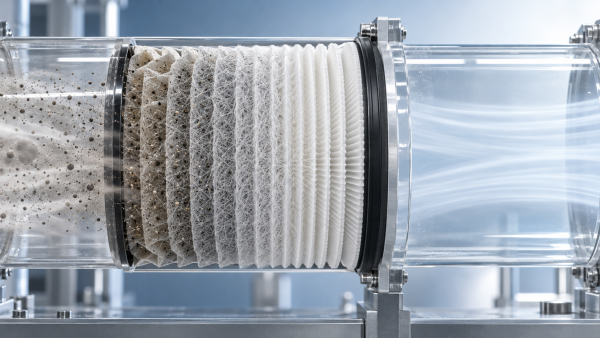
High-performance filtration media use a structured fiber network to capture particles through interception, impaction, diffusion, and electrostatic attraction where applicable.
Larger particles are generally easier to collect, while fine particles require carefully engineered media with consistent pore structure and controlled fiber distribution.
A well-designed filter does not only capture contaminants on its surface; it creates usable depth capacity that supports longer service intervals.
Depth-loading capability is important in variable environments because sudden contamination events can otherwise cause rapid pressure-drop increases and premature filter replacement.
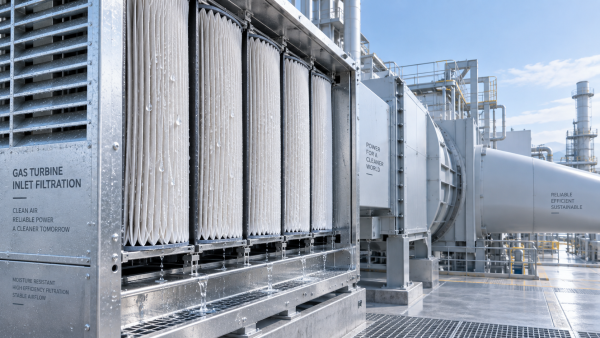
Hydrophobic or moisture-resistant media can also help reduce water-related performance issues when turbines operate in humid, coastal, rainy, or fog-prone conditions.
For critical applications, filtration media selection should account for particle efficiency, moisture behavior, structural stability, and compatibility with the complete intake housing.
Why Filter Efficiency Alone Does Not Guarantee Better Turbine Protection
Higher efficiency can reduce compressor contamination, but an overly restrictive filter may create excessive inlet pressure loss and reduce turbine operating performance.
Aftermarket personnel should therefore assess efficiency and pressure drop together, rather than treating a high filtration rating as the only decision criterion.
Initial pressure drop is useful, but final pressure drop and dust-holding capacity are often more relevant when planning maintenance intervals and replacement schedules.
A filter that loads unpredictably may appear economical at installation but increase labor, production disruption, and emergency replacement costs during operation.
Uniform media formation helps produce more predictable airflow resistance, which supports better differential-pressure monitoring and more reliable maintenance planning.
Mechanical strength also matters because media deformation, pleat collapse, seal leakage, or frame failure can create bypass paths around otherwise effective filtration layers.
The best Gas Turbine Filtration Solutions balance contaminant removal, airflow capacity, service life, durability, and local operating conditions as one system.
What Maintenance Teams Should Check During Filter Inspections
Routine inspection should begin with the inlet housing, because a high-quality filter cannot compensate for damaged doors, failed gaskets, or poor sealing surfaces.
Look for visible dust tracks downstream of filters, which may indicate bypass leakage, incorrect installation, damaged media, or incomplete gasket compression.
Check differential-pressure readings against baseline values and historical trends rather than relying only on a single reading taken during an inspection.
A sudden pressure increase may indicate abnormal dust loading, water exposure, icing conditions, collapsed pleats, or a blockage elsewhere in the inlet system.
Unexpectedly low differential pressure can also require investigation, particularly when it appears alongside fouling symptoms or visible downstream contamination.
Inspect filter faces for uneven loading patterns, discoloration, moisture staining, salt residue, insect accumulation, and evidence of physical damage from handling.
Record findings consistently so service teams can compare seasonal conditions, identify recurring causes, and justify changes to filtration specifications or replacement frequency.
How to Diagnose Whether Fouling Is Linked to Filtration Performance
When compressor performance declines, filtration should be assessed alongside fuel quality, ambient conditions, turbine load profile, washing practices, and mechanical condition.
A recurring loss of output shortly after offline washing may suggest that contaminants are entering the compressor faster than the current inlet system can control.
Review filter replacement records, pressure trends, wash-water observations, local weather history, and nearby industrial activity before drawing conclusions about root cause.
Sticky or dark wash-water residue may indicate oil or hydrocarbon exposure, while white or crystalline deposits can point toward salt contamination.
Fine dry deposits often suggest dust penetration, but laboratory analysis can provide stronger evidence when the source is uncertain or failure costs are high.
Compare fouling behavior before and after filter changes, housing repairs, or inlet upgrades to determine whether corrective actions produced measurable improvement.
Root-cause diagnosis is essential because frequent compressor washing without resolving inlet contamination only treats the symptom and consumes valuable maintenance resources.
Choosing Filtration Solutions for Different Operating Environments
Desert and inland industrial sites typically require strong fine-dust handling, high dust-holding capacity, and robust protection during seasonal particulate events.
Coastal locations require particular attention to salt aerosol control, moisture resistance, drainage design, and corrosion risks within inlet ducts and support structures.
Urban or petrochemical environments may demand protection against soot, hydrocarbons, chemical aerosols, and mixed contaminants that can form adhesive deposits.
Cold climates introduce additional concerns, including snow ingestion, icing, moisture accumulation, and changes in filter pressure drop during wet weather conditions.
High-humidity regions may benefit from filtration configurations that manage water droplets while maintaining sufficient airflow and resisting media degradation over time.
Sites with rapidly changing conditions should avoid selecting filters solely from average annual data because peak contamination periods often determine actual service performance.
Material suppliers with wet-laid, lamination, coating, and bonding capabilities can tailor filtration media structures for these distinct environmental requirements.
How Better Filter Media Supports Longer Maintenance Intervals
Longer filter life is valuable only when protection remains consistent, because extended operation with declining efficiency can transfer hidden costs into compressor cleaning and repairs.
Stable media structure helps preserve pleat geometry, maintain airflow channels, and reduce the risk of early performance changes under vibration or humidity exposure.
Appropriate lamination and bonding processes can improve material integrity, supporting durable filter construction without unnecessarily restricting air movement through the media.
Controlled manufacturing is particularly important for fine filtration layers, where inconsistent basis weight or pore distribution can create variable capture performance across filters.
For service organizations, predictable loading behavior improves inventory planning because filter replacement can be scheduled around operational windows instead of emergency outages.
Reduced fouling can also lower the frequency of compressor washing, decrease cleaning-related downtime, and help maintain more stable unit performance between inspections.
The total value of advanced filtration materials should therefore be measured through lifecycle performance, not only through the purchase price of replacement elements.
Practical Steps for Improving an Existing Gas Turbine Inlet System
Start by documenting current turbine symptoms, filter specifications, replacement intervals, pressure-drop data, compressor washing frequency, and known local contamination sources.
Next, inspect the entire inlet path for bypass routes, including access doors, panel joints, filter frames, transition sections, drains, and weather louvers.
Confirm that installed filters match the intended orientation and that sealing surfaces are clean, undamaged, and compressed according to manufacturer requirements.
Use differential-pressure trending to identify loading patterns, but combine those records with visual inspections and turbine performance data for meaningful interpretation.
Consider staged filtration where contamination levels are high, since prefiltration can protect final filters and support more stable overall pressure-drop performance.
When changing media grade or filter design, establish a baseline before installation so improvements in output retention, washing intervals, and filter life can be measured.
Work with qualified filtration material suppliers when site conditions are unusual, because media design, moisture resistance, and bonding construction can affect field results.
Conclusion: Filtration Is a Primary Control for Compressor Fouling
Compressor fouling is often a gradual reliability and efficiency problem, but its causes can frequently be managed through better inlet contamination control.
Effective Gas Turbine Filtration Solutions prevent fine dust, salt, moisture, and industrial aerosols from reaching sensitive compressor surfaces and disrupting aerodynamic performance.
For aftermarket maintenance teams, the most useful approach combines proper filter selection, housing integrity checks, pressure-trend analysis, contamination diagnosis, and documented inspection routines.
When filtration media are matched to the operating environment and maintained as part of the complete inlet system, turbines can operate more reliably with fewer fouling-related interventions.