How moisture resistant filter media protects filtration in humid plants
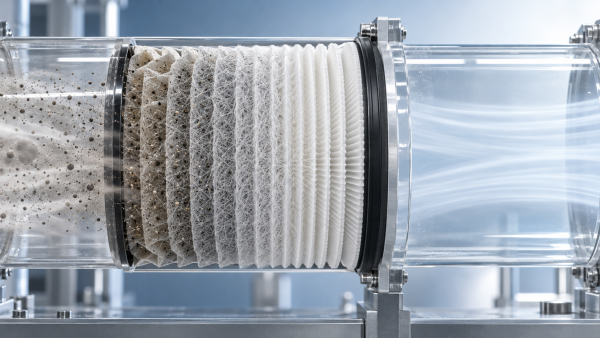
Humidity does not simply make a filter “wet.” In an operating plant, moisture can change the structure of the media, alter how dust or liquid-borne contaminants move through it, and create a pressure-drop problem long before the filter appears fully loaded. Moisture Resistant Filter Media is intended to keep its pore structure, strength, and filtration behavior more stable when the surrounding air or process conditions contain persistent moisture, condensation, wash-down exposure, or intermittent water carryover.
For operators, the practical benefit is consistency. A filter that keeps its shape and permeability under humid conditions is less likely to cause unstable airflow, bypass risk, premature replacement, or unexpected equipment alarms. The right media does not eliminate the need to control leaks, drainage, and condensation, but it prevents normal moisture exposure from becoming a filtration failure.
Why ordinary filter media struggles in humid plants
Many filter materials perform acceptably in a dry test environment but behave differently after repeated exposure to high relative humidity or liquid contact. Cellulose-rich media can absorb water and swell. Pleats may soften, spacing can narrow, and the pressure drop across the element can rise. If the element is exposed to cycling humidity, the problem may develop gradually: it starts as a shorter service interval, then becomes inconsistent flow or reduced protection for downstream equipment.
Moisture also affects what the filter is trying to capture. In air filtration, fine dust can combine with water vapor or condensate and form a dense surface layer. Instead of passing into the depth of the media, contaminants collect near the upstream face and restrict airflow. In liquid filtration, water contamination can interact with oil, additives, fibers, and captured debris. This may increase restriction or reduce the mechanical stability of a media not designed for that environment.
The operating symptom is often misread. A rising differential pressure may be blamed entirely on heavy dirt loading, while the actual cause is moisture-driven media deformation or a wet contaminant cake. Replacing the element restores flow temporarily, but the same problem returns because the media selection and moisture source were never addressed.
What moisture resistance actually protects
Water resistance is not one single property. A useful filter medium must manage several effects at the same time. The media needs enough wet strength to remain intact under exposure, stable pore geometry so its resistance does not change abruptly, and compatible bonding so fibers and layers do not separate. Pleat support and end-cap bonding also matter because a well-designed sheet can still fail as a finished element if water reaches weak interfaces.
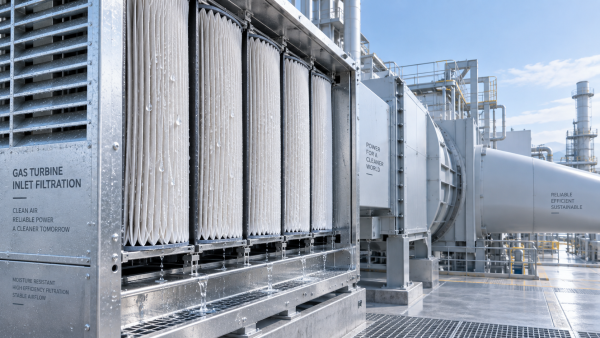
For humid air systems, the goal is normally to preserve airflow and particle capture during high-humidity periods. This matters in facilities with outdoor air intake, coastal locations, cooling-related condensation, wet-process areas, or frequent temperature changes between shifts. In these conditions, a moisture-resistant medium helps prevent the filter from becoming an unintended moisture collector.
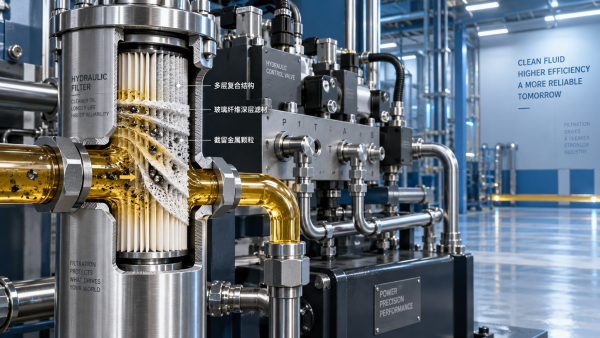
For oils and other process liquids, the question is more specific: what fluid is being filtered, whether free water can enter the system, and how the media reacts to the fluid chemistry. Engine and transmission oil filters may need to retain carbon residue, metal particles, and other contaminants while tolerating the operating environment. A material selected only for dry particle capture may not remain the best choice once water exposure or humid storage becomes part of the process.
Start with the source of moisture, not the filter grade
Before choosing a replacement medium, identify how moisture reaches the filter. This step prevents a common mistake: upgrading the media while leaving a severe water-ingress problem untreated. Moisture-resistant media extends reliability within its intended conditions; it is not a substitute for drainage, sealing, or process control.
- Condensation: Look for cold ducts, uninsulated housings, temperature swings, or shutdown periods that allow humid air to condense inside the filter section.
- Direct splash or wash-down: Check whether cleaning operations, spray, leaks, or nearby wet processes can contact the housing or element.
- Water carryover in compressed air or gases: Inspect separators, drains, and dryer performance upstream of sensitive filters.
- Water in oil or process liquid: Investigate seals, breathers, coolers, storage practices, and contamination introduced during maintenance.
- Humid storage before installation: Media can be compromised before it reaches service if elements are stored on damp floors, near open doors, or in unprotected packaging.
These sources lead to different solutions. Condensation may require drainage and insulation as well as a more robust medium. Direct water exposure may call for a housing change or an upstream protective stage. Water contamination in a lubricant system may require separation or dehydration rather than relying on the particle filter alone.
Match the medium structure to the operating duty
The best choice depends on the filtration task, not only on how wet the plant feels. A low-moisture indoor process may only need improved wet strength. An outdoor intake system with repeated fog, rain ingress, or salt-laden humidity may need a media construction designed for more sustained exposure. A lubricating-oil filter has a different set of requirements again, including fluid compatibility, contaminant type, flow demand, and element collapse resistance.
Media composition and binder system deserve attention here. Cellulose can be practical for many filtration duties, but its behavior under moisture depends on treatment and construction. Cellulose/synthetic blends can improve stability while retaining useful contaminant-holding characteristics. In more demanding liquid applications, constructions that include synthetic components such as PBT may be considered when the needed balance of strength, compatibility, and filtration performance supports that choice.
Resin treatment is equally relevant. Acrylic and cured phenolic systems can serve different design needs, and neither is automatically the correct answer for every element. The right decision depends on the liquid, temperature range, required rigidity, flame-retardant needs where applicable, and whether the element must endure extended moisture exposure. Ask for the media construction and intended operating conditions, rather than treating “water resistant” as a complete specification.
How to recognize that humidity is affecting filtration
Operators do not need laboratory testing to spot every moisture problem. Trend data and physical inspection often reveal the pattern. If differential pressure rises shortly after humid weather, after wash-down, or following equipment cooldown, moisture is a likely contributor. Filters that feel soft, show irregular pleat spacing, have swollen edges, or contain damp deposits should be examined alongside the housing condition.
Other useful clues include unexplained variation between apparently identical replacement intervals, corrosion or standing water in the filter housing, and a downstream process that becomes unstable even though the filter is not visibly overloaded. For an intake or ventilation system, watch for airflow reduction and fan energy changes. For liquid systems, monitor restriction, fluid cleanliness trends, and changes in equipment response rather than relying on calendar-based replacement alone.
Do not assume that a visibly dry removed filter was unaffected. A filter can experience condensation during a cold start, then dry during normal operation after the media has already changed shape or collected wet contamination. Reviewing the timing of pressure-drop changes is often more informative than a single visual check.
A practical selection and installation sequence
- Define the filtration duty: air, gas, lubricating oil, transmission oil, coolant, or another liquid. Record the contaminants that actually threaten the equipment.
- Map moisture exposure: continuous humidity, occasional condensation, direct water contact, water carryover, or damp storage.
- Confirm the filter element’s mechanical constraints, including pleat design, support layers, seals, end caps, and allowable pressure conditions.
- Select media based on retained performance in the real environment, not only its dry-state efficiency or initial resistance.
- Correct avoidable water sources. Check drains, seals, housing orientation, insulation, and upstream separation equipment before expecting the new media to solve the issue alone.
- Track differential pressure and replacement causes after installation. This distinguishes genuine dirt loading from recurring moisture-related restriction.
For oil and transmission oil filtration, it can be useful to compare available media constructions rather than assuming one fiber type suits every application. OS320500 is an example of a filter-material option offered in cellulose, cellulose/synthetic, and cellulose/synthetic/PBT constructions for oil filtration, transmission oil filters, liquid filtration, and new-energy liquid filtration solutions. Its available acrylic and cured phenolic resin approaches make it relevant to discussions about wet-strength and water-resistant material selection. The final element design still needs to match the fluid, contamination profile, and operating conditions.
Do not trade filtration protection for lower restriction
When humidity causes pressure drop problems, operators may be tempted to use a more open medium or reduce the filtration grade. That can restore flow, but it may also allow more damaging particles downstream. The better approach is to separate the causes of restriction. If wet dust is building at the surface, a prefilter, drainage improvement, or different media structure may solve the problem without weakening final-stage protection.
The same principle applies to liquid systems. A low-resistance element is not automatically a longer-life solution if it allows abrasive particles to circulate through pumps, valves, bearings, or precision components. Stable filtration means balancing particle capture, contaminant-holding capacity, fluid flow, and media durability under the actual moisture conditions.
Material development matters when conditions are specialized
Specialized filtration applications often require more than a standard sheet of paper media. Fully synthetic wet-laid processes, lamination methods, and controlled adhesive systems allow material designers to tailor layer structure, bonding, and mechanical behavior for demanding duties. This is particularly relevant where filtration must remain dependable in gas turbines, automotive systems, new-energy equipment, semiconductor operations, or biopharmaceutical environments with tightly controlled processes.
Hangzhou Chaocai Materials Co., Ltd. develops functional advanced materials using fully synthetic wet-laid, PUR lamination, hot-melt adhesive lamination, solvent-based emulsion spray lamination, and ultrasonic lamination production capabilities. For users, the practical value of these capabilities is not a generic claim of better filtration. It is the ability to evaluate material construction against a specific challenge: humidity exposure, fluid contact, mechanical loading, process cleanliness, or a combination of these conditions.
A moisture-resistant filter medium is most valuable when it is chosen as part of the system. Identify where water enters, maintain the housing and upstream controls, then select a media construction that remains stable under that exposure. This approach protects airflow and filtration performance without sacrificing the particle control that the equipment depends on.
Recommendation
 Oct 10, 2026
How Can Air Filter Media Increase Dust Holding Capacity Without Higher Pressure Drop?
Which liquid filter media is suitable for hydraulic oil fine-particle filtration? Discover how advanced air filter media increases dust holding capacity with low pressure drop.- Oct 10, 2026
Which Liquid Filter Media Is Suitable for Fine Hydraulic Oil Filtration?
Can synthetic filter media replace glass fiber in high-humidity gas turbine intakes? Explore media choices for fine hydraulic oil filtration, balancing efficiency, moisture resistance, pressure drop, and service life. - Oct 10, 2026
Can Synthetic Filter Media Replace Glass Fiber in Humid Turbine Intakes?
Is ePTFE filter media suitable for pulse-cleaned construction equipment air filters? Explore synthetic vs. glass fiber performance in humid turbine intakes.