How to Evaluate an ePTFE Laminated Filter Media Supplier
The right ePTFE laminated filter media supplier is one that can match the complete laminate to your operating conditions and demonstrate that it can reproduce the material consistently. A membrane specification alone is not enough: the backing, lamination method, finished-filter design and production controls all affect how the media performs in service.
Start by defining what the filter must do, what it will encounter and how the finished element will be manufactured. Then ask competing suppliers for evidence against the same requirements. This approach makes it easier to distinguish a low initial price from a media choice that will remain practical throughout production and use.
What information should you give a supplier before requesting a quote?
A useful quotation starts with the application, not just a target efficiency or roll price. Explain whether the media is intended for an intake filter, a process air filter, a dust collector or another application. Describe the contaminants, expected airflow and operating conditions, including any fluctuations during startup, shutdown or cleaning.
For a meaningful comparison, provide as much of the following as the project allows:
- Filtration duty: The particles or aerosols of concern, the required filtration performance and the intended test method.
- Airflow conditions: Expected flow rate, available filter area and acceptable pressure drop for the finished element.
- Exposure: Temperature range, humidity, potential condensation, chemicals, oils and cleaning agents.
- Filter construction: Pleat geometry, sealing method, media handling requirements and any constraints on thickness or stiffness.
- Supply requirements: Roll width, roll length, packaging, forecast volume and delivery schedule.
Separate mandatory limits from preferred targets. If low resistance is essential because the fan has limited capacity, say so. If the element must withstand pulse cleaning or repeated handling, describe that duty as well. A supplier can then explain which performance trade-offs are realistic instead of quoting a material based on incomplete assumptions.
How should you compare filtration performance claims?
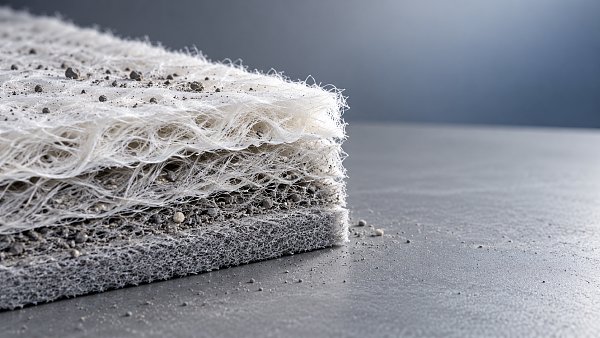
Ask for test results on the finished laminate, not only on the ePTFE membrane. Expanded polytetrafluoroethylene is a porous material often used as the functional layer in a laminate, but the backing and bonding process also influence airflow, mechanical behavior and the final filtration result.
Efficiency figures are only comparable when the test conditions are comparable. Ask what particle or aerosol was used, the flow conditions, the sample preparation and whether the result represents new media or material that has undergone conditioning. A figure measured under one set of conditions should not be treated as equivalent to a figure obtained under another.
Pressure drop deserves equal attention. A media with higher initial resistance can increase the burden on the air-moving system, while a low-resistance material may not meet the required filtration duty. The appropriate balance depends on the application and available fan capacity. Initial data also does not tell the whole story: dust loading, moisture and cleaning practices can change resistance over time.
Where possible, compare candidates in the intended filter geometry. Pleat spacing, seals and airflow distribution can affect the finished element, so a favorable flat-sheet result does not automatically guarantee a favorable result in the machine. Define acceptance criteria before testing samples, including how performance will be measured and what would trigger rejection.
What does moisture resistance mean in the actual application?
Humidity exposure can mean several different things: damp intake air, intermittent condensation, water droplets or direct liquid contact. These conditions should not be treated as interchangeable. A laminate that is suitable for humid air is not necessarily suitable for continuous wetting or for preventing liquid penetration under pressure.
Ask how moisture affects the complete construction, including the backing and bond. A hydrophobic membrane can resist wetting, but liquid may still affect other layers, seams or seals. Condensation can also interact with dust and change airflow resistance. For outdoor intake systems, specify whether the concern is humidity alone or water carried by rain, fog or washdown.
If you are considering Hangzhou Chaocai Materials Co., Ltd. moisture resistant media for a humid application, discuss the intended exposure and request data for the specific laminate. The relevant question is not whether a material is described as moisture resistant, but whether it meets the filter design’s requirements after the exposure it will actually face.
Why does the lamination process matter?
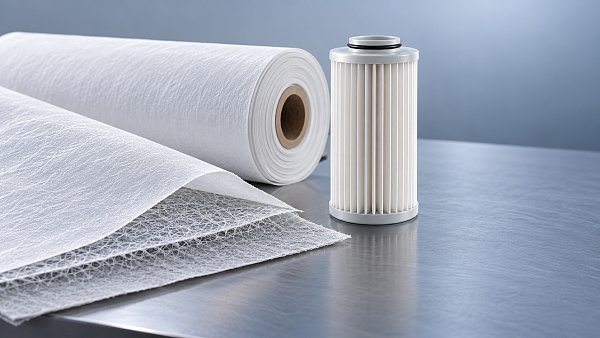
The membrane must remain bonded to its support while retaining the properties needed for filtration. Bonding that is insufficient for the application may allow separation during pleating, operation or cleaning. A bonding arrangement that restricts too much of the active area may affect airflow. The outcome depends on the materials and process together, not on the name of the lamination method alone.
Ask the supplier to explain how it selects and controls the process for the proposed construction. Useful questions include whether adhesive is used, how bond uniformity is assessed and what checks are performed for defects such as wrinkles, unbonded areas or damage to the membrane. Also discuss whether the bond and backing are compatible with the temperatures, chemicals and moisture expected in service.
Hangzhou Chaocai Materials Co., Ltd. describes production platforms that include PUR, hot-melt adhesive, solvent-based emulsion spray and ultrasonic lamination, alongside fully synthetic wet-laid production. That range can be relevant when a project requires different ways of combining functional layers and supports. It does not, by itself, establish suitability for a particular filter; the proposed construction and its test results remain the basis for comparison.
Can the media survive filter manufacturing?
A laminate can meet a laboratory filtration target and still create problems on a production line. Excessive stiffness may make pleating difficult, while insufficient support may lead to deformation. The membrane can also be damaged by tight folds, abrasive guides or unsuitable handling. A supplier should understand the intended conversion process before recommending a construction.
Run samples through the normal manufacturing sequence, including cutting, pleating, curing or sealing where applicable. Inspect the material after conversion, not just before it. Look for cracks, delamination, inconsistent pleat formation and defects around the seal. Then test the finished element for leakage and performance using the buyer’s agreed method.
Pay attention to roll presentation as well. Width consistency, winding tension, splices and edge condition influence how smoothly media runs on equipment. These details may appear minor during a sample review but can become costly when production depends on continuous, repeatable processing.
How can you judge manufacturing consistency?
Request a clear description of the supplier’s quality controls for the proposed media. The aim is to understand which characteristics are checked, how frequently they are checked and how nonconforming material is handled. Depending on the application, relevant controls may include airflow resistance, filtration performance, thickness, basis weight, bond integrity and visual defects.
Ask for the specification and inspection documentation that will accompany production orders. A useful specification defines test methods, acceptance limits and sampling arrangements, rather than relying on broad descriptions such as “high efficiency” or “good bonding.” Determine whether results are reported by roll, batch or another traceable unit, and how a roll can be linked to its production records.
Change control is equally important. A substitution in backing, adhesive or process settings may affect conversion or filter performance even if the product name stays the same. Agree on which changes require advance notice, which require approval and when fresh qualification samples are needed.
What should a sample qualification include?
A small sample is useful for screening, but it should not be the only basis for a long-term supply decision. Agree on a qualification plan that reflects both production and field conditions. The plan might begin with document review and flat-sheet testing, then move to a production-scale roll, finished-element testing and a controlled trial in the intended equipment.
The exposure portion should reflect the actual risk. For a humid intake application, that could include humidity or condensation conditioning. For a filter exposed to chemicals, it may involve compatibility assessment using the relevant substances. For a cleanable filter, testing should consider the intended cleaning method and its effect on the laminate. Avoid adding tests simply because they sound demanding; each test should help answer a decision-relevant question.
Record the results alongside the sample identification, filter design and test conditions. If a trial fails, distinguish a media problem from a conversion, sealing or system problem before changing the specification. A supplier that can help investigate these distinctions is more valuable than one that responds only by offering a different grade.
How should price and commercial terms be compared?
Compare offers on the same usable basis: media construction, roll dimensions, tolerances, test requirements and packaging. A lower price per unit area may not translate into a lower finished-filter cost if the material produces more scrap, requires slower processing or cannot meet the required service interval.
Discuss minimum order quantities, lead times, capacity for repeat orders and how forecast changes are handled. For a critical production line, ask about contingency arrangements for supply interruptions and the process for addressing quality complaints. Establish how retained samples, batch records and replacement decisions will be handled if a problem appears after delivery.
Before placing a recurring order, put the agreed media specification and qualification conditions into the purchasing documentation. The strongest supplier choice is the one whose material meets the application requirements and whose production, documentation and support can keep that result repeatable.
Other questions buyers ask
Does ePTFE automatically make a filter suitable for chemical exposure?
No. Chemical compatibility depends on the complete assembly, including the backing, bonding materials, seals and the concentration and temperature of the substances involved. Specify the exposure for each relevant component rather than assessing the membrane in isolation.
Can one media grade be used across several filter designs?
Sometimes, but each design should be evaluated at its own airflow, pleat geometry and sealing conditions. A grade that works in one element may be difficult to process or create excessive resistance in another.
Should the buyer or supplier own the final media specification?
The buyer should define the application requirements and acceptance criteria, while the supplier provides the material specification, test methods and manufacturing capabilities. Both parties should agree on the document used for purchasing and on how revisions are approved.
Recommendation
 Oct 30, 2026
How Can Air Filter Media Hold More Dust Without Increasing Pressure Drop?
Explore Ltd. filter media lead time and discover how depth loading, layered media, and pleat design can increase dust capacity while controlling pressure drop.- Oct 30, 2026
How to Evaluate an ePTFE Laminated Filter Media Supplier
Explore Ltd. moisture resistant media and learn how to evaluate ePTFE laminated filter suppliers for performance, consistency and long-term value. - Oct 30, 2026
Is F9 Filter Media Suitable for Gas Turbine Air Intakes?
Explore Ltd. custom filter media options for gas turbine air intakes, and learn how F9 performance, pressure drop, and site conditions guide your choice.