



When is oleophobic filter media needed for oil-mist exposure?
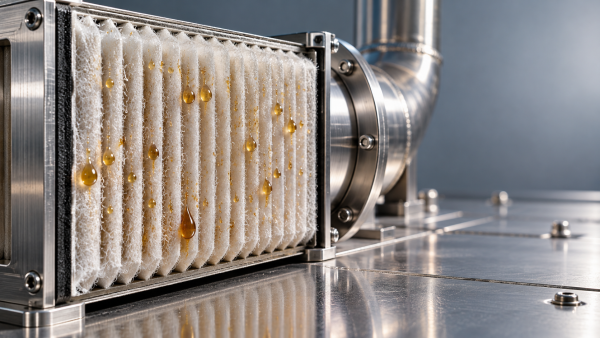
Oleophobic filter media deserves evaluation when airborne oil wets a particulate filter, accelerates pressure drop, or compromises filtration stability before its expected replacement interval.
The strongest case involves recurring oil exposure in an otherwise particulate-focused filtration system, where resisting liquid penetration could preserve usable airflow and filtration performance.
However, continuous mist loading, visible liquid accumulation, or significant oil carryover may require dedicated coalescing and drainage equipment rather than a surface treatment alone.
For technical evaluators, the decision should connect oil chemistry, aerosol concentration, operating temperature, and filter construction with measurable performance under realistic exposure conditions and duty cycles.
Is oil actually causing the filter problem?
Start by confirming the failure mechanism. Short service life alone does not establish a need for oil repellency, because several unrelated problems produce similar symptoms.
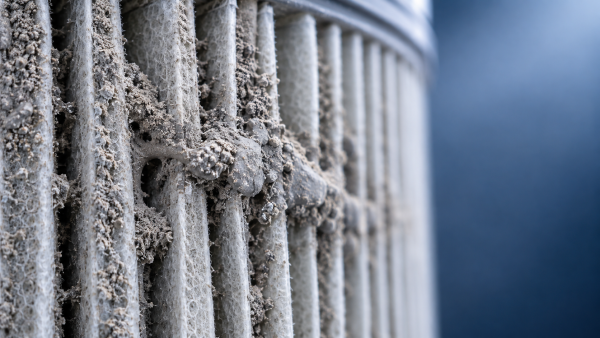
Review used filters for oily staining, localized saturation, sticky deposits, pleat deformation, and changes in downstream cleanliness. Compare these observations with maintenance and operating records.
Measure differential pressure at comparable airflow rates. A pressure increase caused by higher system flow should not be mistaken for deterioration caused by oil loading.
Where practical, identify the aerosol source: machining operations, compressor carryover, lubricated equipment, or contaminated intake air. Each source creates different exposure patterns and fluid compositions.
Mixed contamination deserves particular attention. Oil can bind fine dust into deposits that obstruct pores, making relatively modest aerosol exposure operationally significant over time.
If filters remain dry and their pressure rise follows ordinary dust accumulation, an oleophobic treatment may offer limited benefit compared with improving particulate capacity.
What can an oleophobic treatment realistically improve?
Oleophobic treatment changes how an oil interacts with a media surface, potentially reducing spreading, wetting, and penetration when the treatment matches the actual fluid.
In suitable applications, this can help preserve air pathways and reduce liquid migration into the structure. The benefit must be demonstrated under operating conditions.
Oil repellency does not automatically increase aerosol capture efficiency. Capture still depends on fiber geometry, particle size, airflow velocity, electrostatic effects, and filter construction.
Nor does repellency guarantee drainage. Captured droplets need connected transport pathways, suitable orientation, and somewhere to discharge without being carried back into the airflow.
A treatment can also change permeability or interact with binders and adhesives. Compare finished media properties instead of assuming the untreated substrate remains functionally identical.
The relevant value is therefore sustained filtration performance during oil exposure, rather than an impressive initial droplet shape or a single surface repellency rating.
Which operating conditions justify evaluating oleophobic filter media?
Intermittent oil mist entering a particulate filtration stage is a strong evaluation scenario, particularly when conventional media shows premature wetting while substantial dust capacity remains.
Another candidate is a sensitive downstream process where occasional liquid penetration creates contamination concerns, provided the proposed filter can meet the required aerosol removal performance.
Evaluation is also worthwhile when mixed oil and dust deposits repeatedly drive replacement, and maintenance evidence links that mechanism to excessive resistance or unstable performance.
Consider operating variability as well as averages. Startup events, tool changes, compressor faults, and production peaks can expose filters to short periods of concentrated mist.
Temperature can change both oil viscosity and wetting behavior. A medium that performs acceptably with cool lubricant may behave differently during sustained hot operation.
Prioritize trials where oil exposure is documented and a practical improvement can be measured, such as longer operating intervals, lower resistance, or reduced liquid penetration.
When should a dedicated mist separator take priority?
Continuous liquid aerosol loading generally calls for a system designed to capture droplets, combine them into larger drops, and discharge the collected liquid reliably.
Visible oil pooling, repeated filter saturation, and persistent downstream carryover indicate that liquid handling may dominate the problem. Surface repellency alone cannot supply drainage capacity.
A dedicated separator may use several stages, including bulk liquid removal, coalescing media, and final filtration. The appropriate arrangement depends on the aerosol distribution.
Drainage design must account for installation orientation, airflow direction, liquid viscosity, and pressure conditions. Poor drainage can defeat otherwise effective media by allowing liquid accumulation.
Excessive face velocity can increase resistance and promote re-entrainment. Verify performance at the installed flow rate, including temporary operating peaks and uneven flow distribution.
Oleophobic layers may still contribute within a mist separation assembly, but their role must support the complete capture, coalescence, and drainage mechanism of that design.
Which oil and aerosol properties should suppliers receive?
Provide the exact lubricant or machining fluid designation where possible, together with available composition information. Generic descriptions such as “industrial oil” leave important compatibility questions unresolved.
Distinguish straight oils from water-miscible machining fluids. Their wetting behavior, additive packages, evaporation characteristics, and potential residues can differ substantially during filtration and subsequent drying.
Include representative used fluid when feasible. Oxidation products, metal fines, cleaning agents, and other process contaminants can make aged oil behave differently from fresh material.
Describe the aerosol size distribution or available measurement data. Fine aerosols and larger droplets can require different capture strategies even at similar total mass concentrations.
Report normal and peak concentration, airflow, temperature, humidity, and exposure duration. Together, these conditions define the liquid challenge more usefully than concentration in isolation.
Also identify maintenance chemicals and potential upset conditions. Compatibility assessment should cover the fluids and temperatures the filter may encounter throughout its intended service period.
Which tests demonstrate useful performance?
Begin with a clearly defined baseline: the current medium or filter tested at the same airflow, aerosol challenge, installation orientation, and environmental conditions as alternatives.
Measure initial pressure drop and filtration efficiency before oil exposure. This establishes whether the candidate meets basic requirements before evaluating any benefit from its treatment.
Then track pressure drop against cumulative oil loading and elapsed time. Include downstream aerosol measurements so apparent resistance improvements are not achieved through increased penetration.
Test with representative oil wherever possible. A standard challenge fluid supports comparison, but its results may not predict behavior with the actual process lubricant.
Use surface repellency tests as screening tools. Contact angle or oil repellency grades do not independently establish service life, aerosol efficiency, or resistance to breakthrough.
Where drainage is required, measure collected liquid, retained liquid, and downstream carryover. Check behavior during flow changes and restarts, when accumulated oil may become mobile.
How should results translate into acceptance criteria?
Set application limits before reviewing trial results. Specify allowable pressure drop, required efficiency, acceptable downstream carryover, and the exposure duration or loading the filter must withstand.
Include the complete operating cycle where relevant: startup, steady operation, shutdown, and restart. A successful steady-state test may miss liquid release after an idle period.
If the medium uses electrostatic capture, examine efficiency after relevant conditioning and oil exposure. Initial efficiency alone may not represent performance throughout the service interval.
Choose filtration standards appropriate to the equipment and efficiency class. General ventilation or high-efficiency classifications do not by themselves demonstrate oil-mist drainage or long-term compatibility.
Confirm promising media results in a representative filter assembly. Pleat spacing, support layers, seals, and adhesive coverage can alter airflow, liquid movement, and usable area.
Repeat testing enough to assess variability across samples or production lots. A small improvement from one specimen may not justify changing an established filtration specification.
How do material platforms and product fit affect selection?
Substrate selection matters alongside treatment chemistry. Fiber composition, pore structure, binder system, and mechanical strength influence permeability, liquid interaction, and durability during assembly and service.
Hangzhou Chaocai Materials Co., Ltd. develops functional filtration materials using fully synthetic wet-laid production and several lamination processes, providing manufacturing routes for application-specific material development.
Its PUR, hot-melt adhesive, solvent-based emulsion spray, and ultrasonic lamination capabilities provide different construction options. Their suitability requires validation against the actual fluid and conditions.
Keep liquid oil filtration distinct from airborne mist filtration. A medium designed to remove particles from circulating oil serves a different duty from an air filter.
For example, OS320500 is listed for liquid oil filtration, including transmission applications, with cellulose-based material options and phenolic cured or acrylic non-cured resin options.
Its stated function concerns removing solid impurities from oil. That information does not establish oleophobic performance, airborne mist efficiency, or suitability for a gas-stream filtration stage.
Does the improvement justify the installed cost?
Compare alternatives over a common operating period using purchase cost, replacement labor, disposal, downtime, and energy consumption attributable to filter resistance at the required airflow.
A more expensive medium can be economical if validated performance extends replacement intervals or reduces average resistance sufficiently. Calculate those benefits using site-specific operating data.
Include upstream improvements in the comparison. Repairing compressor carryover or improving source capture may reduce oil exposure enough to change the preferred final filter specification.
Use a controlled field trial with comparable equipment and recorded operating conditions. Establish replacement triggers beforehand so service-life comparisons reflect equivalent filtration requirements and exposure.
Track oil consumption, production changes, and maintenance interventions during the trial. Otherwise, a cleaner operating period can be mistaken for a superior filter material.
Select the option that meets downstream cleanliness and operating limits consistently. Longer service life has little value if it comes with unacceptable oil carryover or instability.
Making the final selection
Oleophobic filter media is most compelling when confirmed oil wetting limits a particulate filter and representative testing shows that treatment preserves required performance over time.
Where liquid loading dominates, prioritize a complete mist separation system with demonstrated drainage. Evaluate any oleophobic layer according to its function within that system.
Base approval on the actual oil, realistic exposure cycles, pressure drop, downstream cleanliness, and assembly durability. Treat surface repellency as supporting evidence within that assessment.
This approach gives technical evaluators a clear decision rule: specify oil repellency when it solves a measured failure mechanism and delivers a verified operating benefit.