When should water filter media be replaced rather than backwashed?
When should water filter media be replaced rather than backwashed?
Backwashing can restore flow, but it cannot reverse every form of filter deterioration. For maintenance teams, the difficult decision is often not whether a filter is dirty, but whether another cleaning cycle will actually return it to reliable service.
Water filter media should generally be replaced when it is physically damaged, has exhausted its treatment capacity, or cannot recover acceptable performance after an appropriate, verified cleaning procedure. However, persistent pressure loss alone is not enough to condemn the media. A restricted drain, incorrect valve position, or inadequate backwash flow can produce much the same symptom.
The practical distinction is simple: backwash removable deposits; replace media that can no longer perform its intended function. Establishing which condition exists takes more than watching the pressure gauge.
Check whether the filter is designed to be backwashed
“Filter media” covers equipment with very different maintenance requirements. A sand bed, activated carbon vessel, disposable depth cartridge, and laminated fiber element should not share one cleaning procedure.
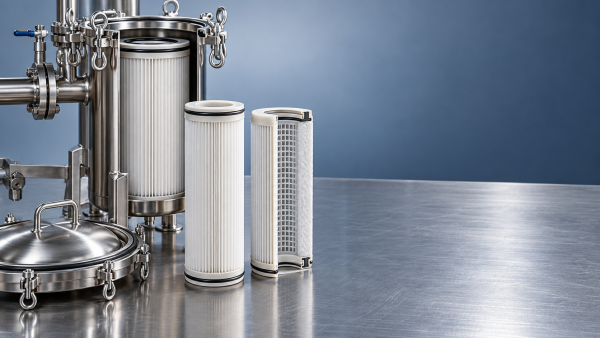
Granular filters are often designed for backwashing, with sufficient freeboard for bed expansion and an underdrain that distributes wash water. Many cellulose, synthetic, and glass-fiber cartridges are replacement elements instead. Reversing flow through an element that was not designed for it may damage its structure, separate layers, or disturb seals. A clean-looking cartridge is not proof that its filtration performance survived.
Before troubleshooting, confirm the exact element or media grade, approved cleaning method, flow direction, pressure limits, temperature limits, and chemical compatibility. If the documentation does not authorize backwashing, do not treat it as an economical alternative to replacement.
Persistent differential pressure: verify the wash before replacing the bed
A backwash that runs for the programmed duration has not necessarily cleaned the filter. The relevant question is whether the required wash conditions actually reached the media.
In a granular filter, insufficient flow may fail to loosen the bed. Excessive flow can carry usable media into the drain. Water temperature affects bed expansion, so a setting that worked under one operating condition may not perform identically under another. Use the equipment supplier’s expansion and backwash guidance rather than a generic flow recommendation.
Before authorizing a media change, check:
- Pressure instruments and sensing lines for blockage, drift, or inconsistent readings.
- Actual service flow against the flow used to establish the clean-filter baseline.
- Backwash supply pressure, delivered flow, valve travel, and drain restrictions.
- Air-scour operation, where fitted, and the specified wash sequence.
- Underdrains, distributors, and support layers for obstruction or damage.
Compare post-backwash differential pressure at equivalent flow and reasonably comparable water conditions. A higher production rate can raise pressure loss even when the media is serviceable. Conversely, reduced flow can disguise serious plugging.
If a verified backwash repeatedly leaves pressure loss well above the established clean baseline, investigate retained deposits or bed deterioration. Hardened scale, cemented solids, and oil-bound agglomerates may not release hydraulically. An approved chemical cleaning may be appropriate, but only if the media, vessel, seals, and downstream process tolerate it. Replacement becomes the stronger option when authorized cleaning fails or cannot be performed safely.
Good flow does not mean the treatment function remains intact
Some of the clearest replacement signals appear in the water analysis, not on the pressure gauge.
Activated carbon can be exhausted without becoming blocked
Backwashing activated carbon removes accumulated suspended matter and helps redistribute the bed. It does not reliably restore adsorption capacity once the carbon is exhausted. If the target contaminant breaks through, additional washing is not a substitute for capacity assessment.
Confirm the result with appropriate sampling, and investigate bypass, increased loading, changed water chemistry, and insufficient contact time. Carbon replacement or specialist reactivation may be necessary, depending on the application. Reactivation is a separate treatment process, not something achieved by extending an ordinary backwash.
Reactive media may need regeneration—or replacement
Iron- and manganese-removal media can depend on specific pH, oxidant conditions, or regeneration procedures. Declining removal does not automatically mean the media has reached end of life. Correct an unsuitable feed condition or missed regeneration step before discarding an otherwise recoverable bed.
Replacement is more defensible when the media’s active function has deteriorated and the manufacturer-approved recovery procedure no longer restores treatment. For ion-exchange resin, the equivalent distinction is between normal exhaustion that regeneration can reverse and damage or fouling that regeneration cannot correct.
Physical damage changes the decision
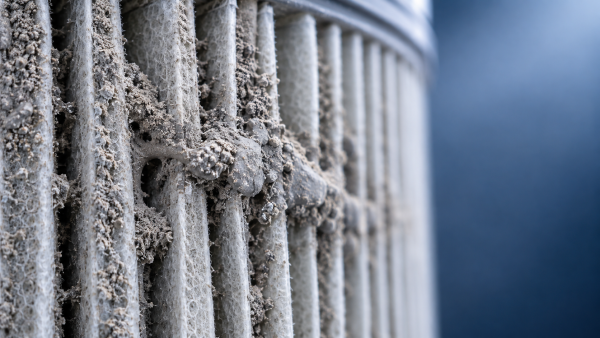
Media that has lost its physical structure cannot be repaired by washing. In granular beds, warning signs include excessive fines, abnormal grain fragmentation, persistent clumping, and a particle-size distribution that no longer supports the intended filtration behavior.
Do not judge the entire bed from the surface alone. Where safe access and the vessel design allow it, representative samples from different depths can help distinguish a surface deposit from widespread cementation or degradation. Isolate, depressurize, and drain the equipment before opening it; vessel entry requires the applicable confined-space controls.
Repeated media loss also needs investigation. A low bed may provide inadequate treatment depth, but adding new material without checking backwash velocity or the underdrain can simply repeat the loss. Topping up is appropriate only when the remaining media is serviceable and the replacement grade is compatible with the specified bed arrangement.
For fibrous or laminated elements, torn pleats, collapsed supports, separated layers, and damaged end seals are replacement conditions. Unusually low differential pressure combined with worsening particle removal can indicate bypass or rupture. Treat that combination as a possible integrity failure, not as evidence of successful cleaning.
Match the replacement material to the failure mechanism
Replacing like for like makes sense when the original specification suited the duty and the element simply reached its service limit. It makes less sense when repeated failures follow a change in temperature, cleaning chemistry, solids loading, or operating pressure.
A fiber blend selected for particle capture may behave differently under wet pressure cycling or chemical exposure than another material with a similar nominal rating. Pore structure, wet strength, layer bonding, support construction, and sealing all matter. A nominal filtration rating alone does not establish equivalent performance.
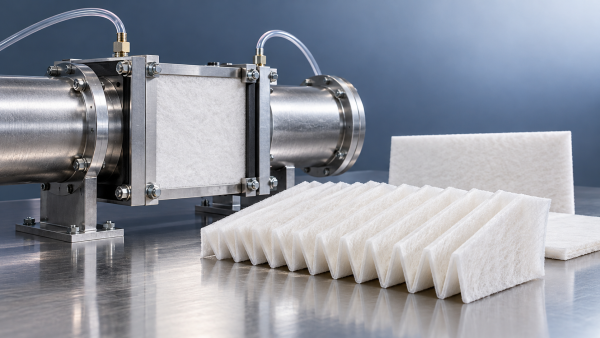
Hangzhou Chaocai Materials Co., Ltd. develops functional filtration materials using capabilities including fully synthetic wet-laid production and several lamination processes. Its liquid-filtration offering, GF1218, supports customized material formulations using options such as cellulose, synthetic fibers, glass fibers, and PBT. For a maintenance specification, the useful discussion is which formulation and construction fit the actual liquid, contaminant, and operating conditions—not whether a material is universally “long-life.”
Such material options do not establish backwashability, potable-water suitability, or a guaranteed replacement interval. Confirm these requirements separately, along with filtration performance and compatibility, before approving a substitution.
Contamination may rule out another cleaning attempt
A filter exposed to an abnormal chemical release, severe biological contamination, or an unidentified process upset needs a different assessment from a filter loaded with ordinary suspended solids. Restoring pressure loss does not demonstrate that the contamination has been removed.
Biofilm can persist despite hydraulic cleaning. Some systems permit controlled sanitization, but the method must be compatible with the media and validated for the application. Where acceptable recovery cannot be demonstrated, replacement may be necessary. The vessel, pipework, and associated components may also require cleaning or disinfection; fresh media installed in a contaminated system can quickly develop the same problem.
Where water quality is outside the process acceptance limit, isolate or divert the affected supply under the site procedure. Do not keep the filter in service simply because another backwash is scheduled. Assess spent-media handling against the contaminants it has captured, rather than assuming it is ordinary solid waste.
Make the replacement decision traceable
A useful service report records why replacement is required: unrecoverable differential pressure, confirmed treatment breakthrough, structural damage, or contamination that cannot be acceptably removed. “Old media” is a weak diagnosis unless the manufacturer specifies a service-life limit or operating records support the decision.
Record inlet and outlet pressure, service flow, relevant water-quality results, backwash conditions, and the outcome of any approved recovery attempt. Note changes in upstream operation. Shortening filter runs after a production change may point to increased solids loading rather than premature media failure.
After replacement, verify the specified media grade, loading arrangement, bed depth or element fit, seals, and flow direction. Complete the required rinsing, conditioning, and any applicable sanitization before release. Establish a new clean-filter baseline and confirm treated-water quality.
The stopping point for backwashing is reached when an approved wash no longer restores the required hydraulic or treatment performance—or when damage makes further washing inappropriate. Replace the media then, but correct the cause at the same shutdown. Otherwise, the next service call may arrive with new media and exactly the same complaint.
Recommendation
 Oct 28, 2026
What causes pulse-jet cleanable filter media to lose permeability?
Pulse-Jet Cleanable Filter Media can lose permeability due to dust, moisture, oil, or damage. Learn how to diagnose the cause, improve airflow, and avoid premature replacement.- Oct 28, 2026
When should water filter media be replaced rather than backwashed?
Water Filter Media: replace or backwash? Learn the signs of damage, exhausted capacity, and persistent fouling to make smarter maintenance decisions and protect water quality. - Oct 26, 2026
How engine air intake filter media affects initial restriction
Engine Air Intake Filter Media affects initial restriction through fiber, pore, and laminate design. Discover how to compare pressure drop, efficiency, and durability for smarter filter selection.