Choosing Liquid Filter Media by Micron Rating, Fluid Compatibility, and Flow Rate
Selecting liquid filter media is not a matter of choosing the smallest micron rating available. A finer medium may improve particle removal, but it can also create excessive pressure drop, shorten service life, and reduce production flow. The practical choice comes from matching three conditions at the same time: the contaminants that must be removed, the chemical and thermal behavior of the fluid, and the flow the system must sustain.
Start with the process requirement, not the filter roll or cartridge specification. Ask what must be protected downstream: a pump, spray nozzle, heat exchanger, coating head, filling line, membrane stage, or the final product itself. The answer determines how much contamination can be tolerated and whether filtration is mainly a protective step, a product-quality step, or both.
Micron Rating Defines What the Media Can Retain, Not the Whole Result
A micron rating describes the approximate particle size that a filter medium is designed to capture. It is useful, but it is often misunderstood. A 5-micron medium is generally intended to retain smaller particles than a 25-micron medium, yet that does not automatically mean it is the better option for every line.
The first distinction is between nominal and absolute ratings. A nominal rating indicates that the medium captures a substantial portion of particles near a stated size. An absolute rating is used when retention at that size must be much more consistent. For routine prefiltration, coolant cleaning, or bulk solids removal, a nominal medium may be appropriate. For sensitive downstream equipment, fine coatings, high-purity fluids, or processes where a single larger particle can cause a defect, more tightly controlled retention may be required.
Operators should also avoid treating micron rating as a stand-alone measure of cleanliness. Particle shape, flexibility, concentration, and the way particles build a cake on the media all affect actual filtration behavior. Fibrous contaminants, gelatinous material, or soft agglomerates may block a medium differently from hard mineral particles of the same nominal size.
Choose the rating based on the protected component
For pump protection or removal of visible debris, a coarser grade may provide the most reliable operating life. It usually offers lower initial resistance and more room to hold contaminant before replacement. For spray systems, fine orifices, precision coating, and fluid recirculation loops, the required rating often becomes finer because particles that would be harmless in a transfer line can create plugging, streaks, or uneven application downstream.
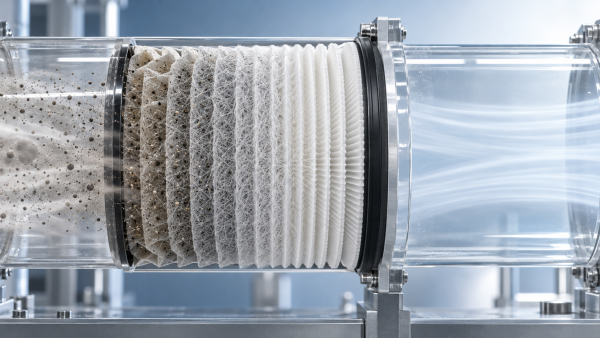
In many industrial systems, staged filtration is more effective than asking one fine medium to do all the work. A coarse prefilter removes larger loading particles, while a downstream finer stage controls the contamination that affects process quality. This arrangement can reduce the rate at which the final filter clogs and gives operators a clearer view of where contamination is entering the system.
Fluid Compatibility Can Override a Good Micron Choice
A filter medium that performs well in water may soften, swell, shed fibers, lose bonding strength, or become brittle in another liquid. This is why fluid compatibility should be checked before comparing micron ratings or pricing.
Consider the full fluid condition rather than only the base liquid. A water-based process stream may contain surfactants, dispersants, acids, alkalis, oxidizers, oils, or cleaning agents. A solvent-containing fluid may behave differently as concentration changes or as evaporation occurs in the system. Temperature also matters: a material that is stable at room temperature may change under sustained heat, especially near a heater, pump, or recirculation loop.
Compatibility has two sides. The media must resist damage from the liquid, and it must not introduce unwanted material into the liquid. In processes involving coatings, electronics, pharmaceuticals, or other sensitive applications, loose fibers, binder migration, odor, discoloration, or chemical extractables can be as disruptive as poor particle retention.
Review the material construction, not only the face layer
Liquid filter media may be made from synthetic fibers, cellulose-based fibers, glass fibers, membranes, composite structures, or laminated constructions. The filtration layer is only one part of the assembly. Support layers, bonding agents, adhesives, and seams can determine whether a product remains stable under pressure and chemical exposure.
This becomes important when selecting pleated elements, filter bags, sheets, or converted media. If the filtering layer is chemically suitable but the laminate or adhesive system is not, the filter can fail before the media itself appears damaged. Fluid contact may be continuous, intermittent, hot, or combined with pressure cycling, so the expected operating pattern should be part of the material review.
For complex applications, it is useful to provide the fluid name, additives, concentration range, operating temperature, and cleaning procedure to the media supplier. Companies developing functional filtration materials, such as Hangzhou Chaocai Materials Co., Ltd., can use this information to evaluate fiber selection and multilayer construction rather than proposing a grade based on micron rating alone. Manufacturing capabilities such as synthetic wet-laid production and adhesive or ultrasonic lamination are relevant when an application needs a tailored balance of filtration performance, structural support, and liquid resistance.
Flow Rate Must Be Evaluated at Operating Pressure, Not on a Clean Sample Alone
Flow rate is where otherwise sensible filter selections often fail. Every medium creates resistance to flow. A finer structure, thicker media, higher fluid viscosity, lower temperature, or heavy contaminant loading will increase that resistance. When pressure drop rises, the pump works harder and the actual delivery rate can fall below what the process needs.
Clean-media flow is only the starting point. The more useful question is: how long can the medium maintain the required flow before the pressure differential reaches the system limit? A filter that runs well for a short period but blocks quickly may cost more in downtime, labor, fluid loss, and inconsistent product output than a slightly more open medium with longer usable life.
Viscosity deserves particular attention. Water-like fluids pass through a medium much more easily than viscous oils, resins, polymer dispersions, or cold process liquids. If the same filter is used after a seasonal temperature change, a different batch formulation, or a change in solids loading, its pressure behavior can change significantly even though the nominal micron rating has not changed.
For systems with variable demand, choose the media around the highest sustained operating flow, not only the average flow. Short peaks may be manageable when the system has sufficient pressure capacity, but continuous operation near the maximum limit leaves little margin as the filter loads. Oversizing the filtration area is often a more dependable solution than forcing a very open medium to meet a flow target.
Use This Selection Sequence Before Ordering Media
- Identify the failure you are preventing. Define whether the goal is equipment protection, nozzle protection, surface-quality control, fluid reuse, or removal of a specific contaminant.
- Characterize the fluid in operating condition. Record its base chemistry, additives, temperature range, viscosity behavior, and whether cleaning chemicals contact the filter.
- Estimate contaminant type and loading. Hard particles, soft debris, fibers, gels, metal fines, and biological material load filter media in different ways.
- Set the required flow and available pressure margin. Include expected peak demand and the pressure limit at which the line becomes unstable or equipment protection is triggered.
- Choose the filtration geometry. Surface filtration may be suitable for larger, uniform particles, while depth media can hold more distributed contamination. The housing size and available media area are part of this decision.
- Confirm replacement criteria. Use differential pressure, flow reduction, or process-quality signals rather than replacing elements only on a calendar schedule.
Common Selection Errors That Create Avoidable Downtime
Choosing the finest grade “for safety.” This can create rapid clogging and inadequate flow when the upstream contamination load is high. A staged setup or a larger filter area is often more appropriate.
Using only the clean-fluid flow figure. The filter must perform after contaminants begin accumulating. Ignoring loading behavior makes service intervals unpredictable.
Checking compatibility against the main liquid but not the cleaning cycle. Filters are sometimes exposed to stronger chemicals during flushing, sanitation, or maintenance than during normal production. Those conditions can damage construction materials or release contaminants.
Assuming the old grade remains correct after a process change. A new fluid supplier, altered formulation, different machining load, changed temperature, or increased line speed can shift the balance among micron rating, flow, and service life.
Ignoring bypass and sealing behavior. Even excellent liquid filter media cannot protect a process if the element is poorly seated, the gasket is incompatible, or fluid bypasses the intended filtration path. A sudden reduction in pressure drop is not always good news; it can indicate a sealing or rupture problem.
How to Make the Final Choice Practical
When two media options appear suitable, compare them by total operating behavior rather than by micron rating alone. The better choice is the one that reaches the required cleanliness while maintaining stable flow, tolerating the actual fluid environment, and producing a manageable replacement interval.
Begin with the current system’s pressure trend, flow requirement, fluid details, contaminant source, and downstream sensitivity. That information makes it possible to distinguish a media problem from an undersized housing, excessive contamination load, poor upstream housekeeping, or a pump operating issue. A filter medium should be selected as part of the whole liquid path, because performance at the machine depends on how those conditions interact after the system is running, not only on the specification printed on the package.
Recommendation
 Oct 10, 2026
How Can Air Filter Media Increase Dust Holding Capacity Without Higher Pressure Drop?
Which liquid filter media is suitable for hydraulic oil fine-particle filtration? Discover how advanced air filter media increases dust holding capacity with low pressure drop.- Oct 10, 2026
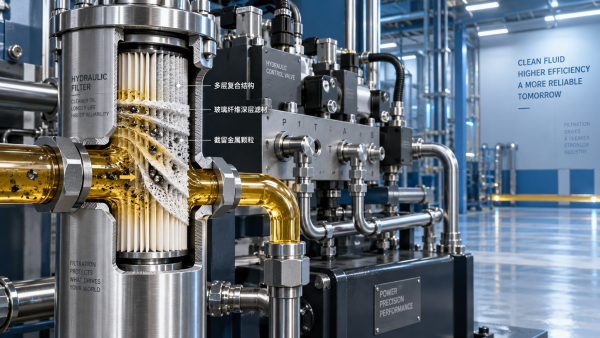
Which Liquid Filter Media Is Suitable for Fine Hydraulic Oil Filtration?
Can synthetic filter media replace glass fiber in high-humidity gas turbine intakes? Explore media choices for fine hydraulic oil filtration, balancing efficiency, moisture resistance, pressure drop, and service life. - Oct 10, 2026
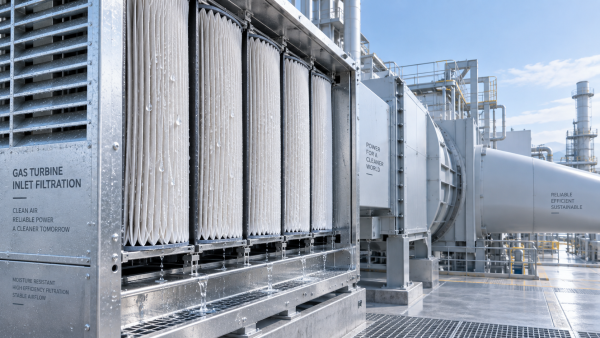
Can Synthetic Filter Media Replace Glass Fiber in Humid Turbine Intakes?
Is ePTFE filter media suitable for pulse-cleaned construction equipment air filters? Explore synthetic vs. glass fiber performance in humid turbine intakes.