



How moisture resistant filter media prevents pressure drop after washdown
How Moisture Resistant Filter Media Prevents Pressure Drop After Washdown
Washdown is necessary in many manufacturing environments, but it can create a filtration problem that is easy to miss until equipment performance begins to drift. After cleaning, a filter may look intact from the outside while its media remains damp, swollen, partially blocked, or unevenly supported inside the housing. The result is often higher resistance to airflow, unstable differential pressure, reduced extraction performance, and a maintenance issue that appears to have no obvious source.
Moisture Resistant Filter Media is designed to reduce this risk. Rather than treating water exposure as an unavoidable cause of short filter life, it addresses the material behavior that creates pressure drop after washdown: liquid retention within the fiber structure, loss of pore openness, weakened bonding, and distortion of the media pack. For operators responsible for dust collection, oil mist extraction, process ventilation, or air-handling systems, the practical goal is simple: restore equipment after cleaning without turning the filter into the next restriction point.
Why pressure drop often rises after a washdown
Pressure drop is the resistance a filter presents to air moving through it. In normal operation, this resistance rises gradually as particles collect on the media. After washdown, however, a sharp or erratic increase can occur even when the dust load is low. That is a different failure mechanism. The problem is not necessarily contamination; it may be water changing the structure through which air must pass.
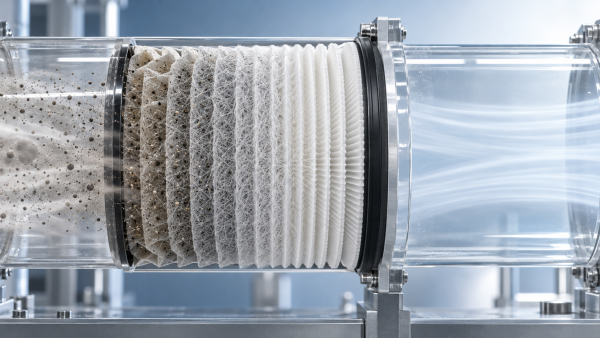
Conventional cellulose-containing or poorly protected media can absorb moisture into the fiber network. Fibers may expand, pores may narrow, and retained water can bridge open pathways. In pleated elements, the added weight of moisture may encourage pleat sagging or local contact between folds. If the media has been exposed repeatedly to detergent, heat, or mechanical spray, adhesive lines and support layers can also be affected. Air does not move evenly through a distorted filter. It seeks the least resistant path, which can create localized velocity, uneven loading, and differential-pressure readings that fluctuate rather than follow a predictable loading curve.
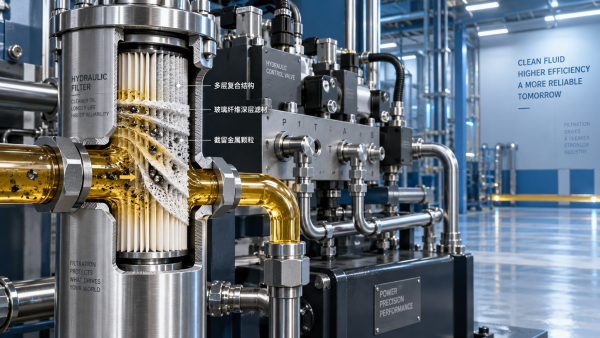
Oil mist systems add another complication. A washdown may remove visible residue from housings and ductwork, yet a mixture of residual oil, detergent, and water can remain on the filter surface. This emulsion can form a denser film than dry dust alone. A filter that is merely “wet” may therefore behave differently from one exposed to humid air. The liquid’s composition, surface tension, and drainage behavior all matter.
This is why an operator should avoid assuming that higher differential pressure after cleaning means the fan, sensor, or damper has failed. Those components should be checked, but the filter media itself may be the source of the restriction.
What moisture resistance changes inside the filter
A moisture-resistant design aims to keep the filtration structure stable when water is present. That does not mean every filter can be sprayed directly, submerged, or returned to service immediately after cleaning. The relevant question is whether the media maintains its airflow pathways and mechanical form under the actual conditions around the unit.
In many industrial applications, fully synthetic wet-laid media provides a useful basis because its fibers are less prone to the kind of water-driven swelling associated with untreated cellulosic structures. Fiber selection, web formation, binder chemistry, surface treatment, and downstream lamination can all influence how water is repelled, drained, or retained. A stable media structure is more likely to preserve effective porosity after washdown, which helps the system return to its expected airflow range once the filter is properly drained and dried.
The media is only one part of the equation. A durable solution also depends on the way layers are joined and supported. Delamination, edge lifting, and bond failure can change the air path even if the filtration layer itself is water resistant. Where multilayer constructions are required, lamination methods need to be matched to the expected exposure to humidity, wash chemicals, temperature, and oil aerosols. The choice between PUR, hot-melt, solvent-based emulsion spray, or ultrasonic lamination is therefore not simply a manufacturing preference; it can influence how the finished material holds together in a wet-cleaning environment.
Stable pressure is not the same as the lowest initial resistance
It is tempting to select media only by its initial pressure drop. That value matters, especially when fan capacity is limited, but it does not tell the whole operating story. A very open material may show low resistance when dry and still lose its useful airflow characteristics quickly if it absorbs water, deforms, or permits liquid to spread across a large area. In washdown-intensive facilities, pressure stability after exposure can be more informative than a single dry-condition measurement.
Operators should also distinguish between a temporary post-wash increase and a persistent problem. Some increase may occur until surface moisture drains or evaporates. If pressure remains elevated after the normal recovery period, or if readings vary noticeably from one start-up to another, inspect the element for collapsed pleats, wet spots, softened media, blocked drainage, or a damaged gasket that allows bypass and uneven loading.
Where moisture-resistant media is most useful
The need is strongest where cleaning is frequent and filtration equipment cannot be isolated for long. Typical situations include machining areas with water-miscible coolants, food or packaging areas with regular sanitation, metalworking lines producing oil mist, enclosed process equipment exposed to high humidity, and air-handling units near wet process zones. In these locations, the filter may not receive direct spray every time, but repeated exposure to humid air and cleaning aerosols can still shorten the useful life of an unsuitable media.
For dust and oil mist filtration, the right construction depends on the contaminant as well as the cleaning routine. Dry particulate tends to form a surface cake; mist can penetrate, coalesce, and alter drainage behavior. A media choice that works well in a dry grinding enclosure may not be appropriate for a CNC machining cell where coolant mist, periodic washdown, and temperature changes occur together. The filter must manage the air stream, the captured contaminant, and the moisture that enters the system during cleaning.
Materials such as EP1020WBU can be considered in air filtration and industrial dust and oil mist filtration programs where the operating team needs to evaluate media behavior under moisture exposure rather than only under dry laboratory conditions. Suitability should still be confirmed against the filter geometry, target efficiency, fluid chemistry, operating temperature, and cleaning method used on site.
A practical way to investigate post-wash restriction
When a system develops pressure-drop issues after sanitation or equipment cleaning, replacing filters without investigating the sequence can waste time. A short review of operating conditions often reveals whether the media is being asked to perform outside its intended environment.
- Record differential pressure before washdown, immediately after restart, and after the normal drainage or drying period.
- Check whether water reaches the filter directly, enters through ductwork, or arrives as humid process air.
- Review the cleaning agent. Some chemicals can leave residues or affect adhesives, coatings, seals, and support materials.
- Inspect the element after removal, paying attention to pleat spacing, edge integrity, wet zones, and evidence of channeling.
- Confirm that drains, moisture separators, and prefilters are functioning. A filter media upgrade cannot compensate for a housing that traps water.
The timing of the pressure increase is particularly useful. A rise immediately after washdown points toward retained moisture or a mechanical change in the filter pack. A slower increase over subsequent shifts may indicate that wet media is capturing contaminants differently, that residual liquid is carrying particles deeper into the structure, or that airflow has become uneven. These patterns guide a more useful discussion with the filter supplier than a general request for a “waterproof” material.
Choosing a media construction without over-specifying
Water resistance should be specified in relation to the real exposure. There is a major difference between occasional condensation, high ambient humidity, incidental splashing, direct washdown, and continuous contact with wet aerosol. Over-specifying may add unnecessary complexity; under-specifying can lead to recurring pressure instability and premature replacement.
Start with the contaminant. Is it dry dust, oil mist, coolant mist, mixed particulate, or a combination? Then identify the moisture source and the required recovery behavior. Some systems can remain offline until filters are dry. Others must restart quickly after sanitation, making drainage and wet structural integrity more important. Also consider whether the media will be pleated, pocketed, panel-mounted, or incorporated into a multilayer element. The same base material can behave differently once converted into a finished filter.
It is also worth asking how the media will be validated. Depending on the application, useful evaluation may include dry and conditioned airflow resistance, visual checks after exposure, bond integrity, dimensional stability, and compatibility with the relevant cleaning chemistry. The exact test method and acceptance criteria should be agreed for the project rather than assumed from a general product description.
Material engineering matters beyond the filter surface
Reliable wet-environment filtration is usually the outcome of several connected material decisions. Hangzhou Chaocai Materials Co., Ltd. develops functional advanced materials for applications where process complexity and performance requirements are both high. Its production capabilities include fully synthetic wet-laid lines as well as PUR, hot-melt adhesive, solvent-based emulsion spray, and ultrasonic lamination platforms. This range matters when a filtration material needs more than basic particle capture: it may need to preserve form, manage moisture, and remain compatible with a demanding conversion process.
The company’s work across specialized filtration fields, including gas turbines, automotive systems, new energy, semiconductors, and biopharmaceutical applications, reflects a material-development approach rather than a one-size-fits-all filter concept. For industrial operators, the useful takeaway is that moisture performance should be considered early, alongside filtration efficiency, airflow target, contaminant type, and fabrication method.
Keeping washdown from becoming a filtration bottleneck
A washdown procedure should improve equipment hygiene, not create hidden airflow losses that show up later as poor extraction, fan strain, or unexplained maintenance. Moisture Resistant Filter Media helps prevent post-wash pressure drop by limiting water absorption, preserving pore structure, supporting stable pleat geometry, and reducing the likelihood that the media becomes a long-lasting wet restriction.
Before changing a filter specification, document the actual cleaning exposure and compare pressure behavior across the full washdown cycle. That information will help determine whether the priority is better drainage, stronger wet integrity, different layer bonding, improved protection from direct spray, or a broader redesign of the filtration stage. A material decision is most effective when it is tied to the way the equipment is truly cleaned and operated.
Recommendation
 Oct 10, 2026
How Can Air Filter Media Increase Dust Holding Capacity Without Higher Pressure Drop?
Which liquid filter media is suitable for hydraulic oil fine-particle filtration? Discover how advanced air filter media increases dust holding capacity with low pressure drop.- Oct 10, 2026
Which Liquid Filter Media Is Suitable for Fine Hydraulic Oil Filtration?
Can synthetic filter media replace glass fiber in high-humidity gas turbine intakes? Explore media choices for fine hydraulic oil filtration, balancing efficiency, moisture resistance, pressure drop, and service life. - Oct 10, 2026
Can Synthetic Filter Media Replace Glass Fiber in Humid Turbine Intakes?
Is ePTFE filter media suitable for pulse-cleaned construction equipment air filters? Explore synthetic vs. glass fiber performance in humid turbine intakes.