Is ePTFE Filter Media Worth the Higher Material Cost?
Is ePTFE Filter Media Worth the Higher Material Cost?
Is ePTFE filter media worth the higher material cost? In many demanding filtration applications, it can be—but not simply because ePTFE is considered a premium material. The real question is whether its performance changes the operating economics of the finished filter. If a filter runs longer before replacement, maintains a lower pressure drop, releases dust more effectively during cleaning, or survives a chemically aggressive environment that damages conventional media, the higher initial material cost may be justified.
On the other hand, ePTFE is not automatically the right answer for every filter design. In a low-load, non-critical application with inexpensive and easy-to-replace elements, a standard cellulose, synthetic, or surface-treated media may be entirely adequate. Paying for membrane technology where it does not solve a real operating problem is not good engineering; it is just added cost.
For filter manufacturers, equipment builders, and industrial end users, the decision usually comes down to four practical considerations: required filtration efficiency, pressure-drop behavior over time, cleaning and service intervals, and exposure to heat, moisture, chemicals, or difficult dust. Looking at those factors together gives a much more useful answer than comparing media price per square meter.
What Makes ePTFE Different from Conventional Filter Media?
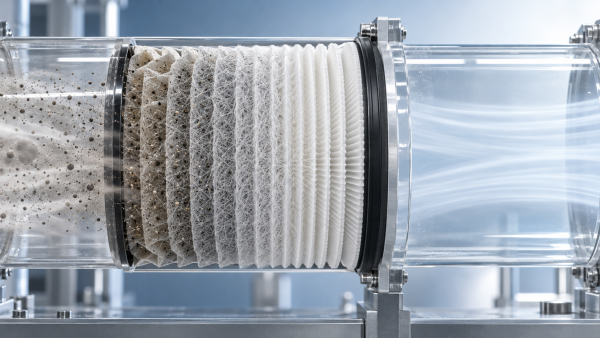
Expanded polytetrafluoroethylene, commonly called ePTFE, is a microporous material with a very fine fibril structure. When it is used as a membrane layer on a suitable substrate, it acts as a highly efficient surface filtration barrier. Rather than allowing particles to penetrate deeply into the supporting media before being captured, the membrane is designed to retain contaminants near the surface.
That distinction matters in real operation. Depth-loading media can work well, especially where dust loading is modest or filter replacement is straightforward. But as particles embed within the structure, resistance to airflow may rise and cleaning can become less effective. In pulse-cleaned dust collection systems, for example, dust that has penetrated into the media is generally harder to dislodge than dust held at or close to the surface.
An ePTFE membrane does not eliminate every filtration challenge. Poor airflow distribution, unsuitable pleat geometry, excessive moisture, incorrect pulse pressure, and incompatible filter construction can still cause premature failure. Yet when the system is properly designed, the membrane can provide a more controlled filtration surface and reduce the dependence on a dust cake to achieve high efficiency.
The substrate beneath the membrane is equally important. A membrane alone does not determine the final filter’s durability, stiffness, pleatability, bonding behavior, or resistance to handling damage. Media engineering often involves balancing the ePTFE layer with a wet-laid synthetic base, a support layer, adhesive system, or protective construction appropriate to the end use.
Where the Premium Usually Has a Stronger Business Case
The most convincing case for ePTFE filter media is usually found where a filter failure is expensive, inconvenient, or risky. This is common in industrial equipment that cannot be stopped casually, in processes where contamination control is strict, and in systems with difficult dust characteristics.
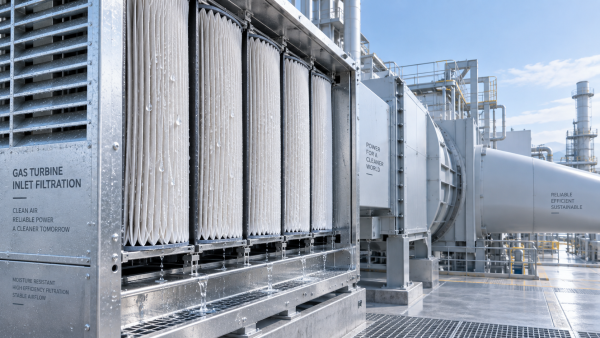
Consider a gas turbine intake system. The cost of the filter element is only one part of the decision. Operators may also be concerned with turbine availability, intake pressure loss, exposure to fine particulate matter, humidity, salt-laden air, or changing outdoor conditions. The right media construction must be assessed against the complete intake design, local environment, maintenance approach, and required filtration performance. A material that costs more but holds stable performance longer may be easier to justify in this context than in a simple workshop ventilation unit.
Automotive and new-energy applications create a different set of demands. Space is limited, component consistency matters, and the media may need to integrate with compact housings, pleated geometries, or automated assembly processes. The filtration layer must not only perform in laboratory conditions; it also has to survive converting, bonding, transport, vibration, and use. A membrane-based solution can be valuable when fine-particle capture and low airflow resistance are both important, but the converting route must be considered early.
In semiconductor and biopharmaceutical environments, the conversation often shifts from bulk dust loading to particle control, cleanliness, material compatibility, and process reliability. There is rarely a sensible “one media fits all” answer. Media selection may depend on the filter format, the process fluid or gas, the relevant cleanliness expectations, and validation requirements determined by the specific project.
The point is simple: ePTFE earns its place when filtration performance is linked to the cost of downtime, product loss, maintenance labor, energy consumption, or process risk. It is less compelling when the filter is a low-consequence consumable changed on a predictable schedule.
The Cost Comparison Should Not Stop at the Roll Price
A common purchasing mistake is comparing membrane media and conventional media only by material cost. That is understandable because the roll price is visible and immediate. The costs created after installation are often spread across operations, maintenance, energy, procurement, and production teams, so they are less obvious.
For a meaningful comparison, manufacturers should evaluate the finished filter and the operating system together. Higher media cost may be offset if the design reduces the frequency of element replacement, supports more stable airflow, improves cleaning behavior, or lowers disposal volume. None of those outcomes should be assumed, however. They need to be assessed with the actual dust, airflow, duty cycle, and filter geometry in mind.
Energy deserves particular attention in systems that operate continuously. Fan energy is linked to resistance in the airflow path, but it would be misleading to promise a fixed energy saving from a media type alone. Filter loading behavior is system-specific. A responsible evaluation compares pressure-drop trends under representative conditions rather than relying only on a clean-media value from a datasheet.
Surface Filtration Can Be Valuable in Dust Collection—But Dust Chemistry Still Wins
ePTFE is often discussed in relation to pulse-cleaned cartridge filters, bag filters, and industrial dust collection. The reason is clear: a surface filtration layer can support dust release and help limit deep clogging. For fine, dry, non-sticky particulate, this can be a meaningful advantage.
But not all dust behaves alike. Hygroscopic powders, oily aerosols, fibrous material, resinous particles, hot dust, or mixed contaminants can produce very different loading patterns. A membrane surface can still foul if the contaminant is tacky or if moisture creates adhesion. In some processes, a precoat strategy, different substrate, specialized surface treatment, or changes to the cleaning cycle may matter as much as the membrane itself.
This is where field knowledge matters. A filter supplier should ask what the dust actually is, where it comes from, whether temperature and humidity fluctuate, how cleaning is performed, and what failure mode is being seen today. “The current filters plug too quickly” is useful, but it is not yet a diagnosis. Plugging may be caused by media selection, insufficient area, poor pulse cleaning, leaks, condensation, or a process change upstream.
The Lamination Method Is Part of the Performance Story
When ePTFE is incorporated into a composite filtration material, the lamination method can affect both performance and manufacturability. Bond uniformity, adhesive distribution, flexibility, pore protection, and resistance to delamination all deserve attention. A construction designed for a rigid panel filter may not be appropriate for tightly pleated automotive media or a filter that will experience repeated pulse cleaning.
This is one reason material development should not be separated from downstream processing. Hangzhou Chaocai Materials develops functional advanced materials with production capabilities that include fully synthetic wet-laid lines as well as PUR, hot-melt adhesive, solvent-based emulsion spray, and ultrasonic lamination processes. That range is relevant because different substrates and end uses call for different bonding approaches. The best route is not necessarily the one with the most layers or the strongest bond; it is the one that protects intended filtration behavior while allowing stable conversion into the final component.
For purchasers, this means asking more than “Do you offer ePTFE?” It is worth asking how the membrane is supported, what converting stresses the composite can tolerate, whether the chosen construction is appropriate for the intended filter geometry, and which properties should be verified before scale-up.
When ePTFE May Not Be Worth Paying For
There are legitimate situations where a less expensive material is the better decision. If filtration efficiency requirements are moderate, replacement is easy, environmental exposure is mild, and the existing media already delivers stable service life, moving to ePTFE may add cost without solving a meaningful problem.
It may also be the wrong first move when the current issue is mechanical rather than filtration-related. Torn pleats, collapsed elements, leaking seals, incorrect installation, or inadequate structural support cannot be fixed merely by upgrading the filtration layer. Likewise, if the main problem is condensate entering a dry filtration system, the root cause should be addressed before changing media.
Another warning sign is an evaluation based only on a small laboratory sample. Bench testing is useful for screening, but it may not reveal how the media behaves after pleating, curing, sealing, pulsing, vibration, or long-term exposure to process conditions. The more critical the application, the more important it is to validate the complete filter construction.
A Practical Way to Make the Decision
Before specifying ePTFE media, define the problem in operational terms. Is the goal finer particle capture? Longer filter life? More reliable pulse cleaning? Lower pressure rise? Improved resistance to chemicals? Better consistency in a compact filter design? A clear problem statement prevents a premium material from becoming a vague upgrade.
Then compare candidate constructions using the same finished-filter geometry whenever possible. Review clean and loaded pressure-drop behavior, particulate retention requirements, dust-release characteristics where relevant, mechanical integrity, environmental compatibility, and manufacturing yield. If the filter will be used in a regulated or tightly controlled process, the applicable project specifications and validation expectations should guide the evaluation.
The strongest decision is usually not “ePTFE versus conventional media.” It is a specific construction selected for a specific duty cycle. In demanding gas turbine, automotive, new-energy, semiconductor, biopharmaceutical, and specialized industrial applications, ePTFE can be worth the higher material cost when it addresses a measurable failure mode or operating burden. If it does not, a well-engineered conventional media may remain the smarter choice.
That is the practical answer: pay for ePTFE when the total cost of filtration—not just the price of the media—shows a clear reason to do so.
Recommendation
 Oct 10, 2026
How Can Air Filter Media Increase Dust Holding Capacity Without Higher Pressure Drop?
Which liquid filter media is suitable for hydraulic oil fine-particle filtration? Discover how advanced air filter media increases dust holding capacity with low pressure drop.- Oct 10, 2026
Which Liquid Filter Media Is Suitable for Fine Hydraulic Oil Filtration?
Can synthetic filter media replace glass fiber in high-humidity gas turbine intakes? Explore media choices for fine hydraulic oil filtration, balancing efficiency, moisture resistance, pressure drop, and service life. - Oct 10, 2026
Can Synthetic Filter Media Replace Glass Fiber in Humid Turbine Intakes?
Is ePTFE filter media suitable for pulse-cleaned construction equipment air filters? Explore synthetic vs. glass fiber performance in humid turbine intakes.