



What Is the Cost Difference Between Synthetic and Glass Fiber Media?
What Is the Cost Difference Between Synthetic and Glass Fiber Media?
What is the cost difference between synthetic and glass fiber filter media? The answer involves more than material price alone. Initial purchase cost, filtration efficiency, energy consumption, service life, processing requirements, and application conditions all influence total ownership cost.
For most industrial buyers, glass fiber media usually offers a lower initial material cost, while synthetic media can deliver lower lifecycle cost when durability, moisture resistance, cleanability, and stable pressure drop matter.
The Short Answer: Initial Price Is Only One Part of the Decision
Glass fiber filter media is often more economical at the point of purchase because its raw-material supply chain is mature and many established filtration formats use it.
Synthetic filter media, commonly produced from polyester, polypropylene, polyamide, or bicomponent fibers, may cost more initially due to polymer selection, web formation, bonding, and surface-treatment requirements.
However, comparing only price per square meter can be misleading. A lower-priced medium becomes expensive when it requires frequent replacement, raises fan energy consumption, or fails under moisture exposure.
Buyers should therefore compare cost per operating hour, cost per filtered air volume, and cost per acceptable filtration result instead of evaluating purchase price alone.
The practical cost difference depends heavily on the application. HVAC prefiltration, gas turbines, automotive intake systems, semiconductor cleanrooms, and biopharmaceutical processes have very different performance expectations.
In low-risk, dry, short-service applications, glass fiber can remain a highly competitive choice. In harsh, humid, vibration-prone, or long-life systems, synthetic media often provides stronger value.
Why Glass Fiber Media Usually Has a Lower Upfront Cost
Glass fiber media is manufactured from fine inorganic fibers formed into a porous web. It has been widely used for decades in air filtration.
Its production technology is well understood, and large-scale manufacturing can keep unit costs relatively controlled, particularly for standard disposable filter grades and conventional filter constructions.
Glass fiber can also achieve high particle-capture performance with relatively fine fibers. This makes it attractive when high efficiency is required without excessive media thickness.
For some high-efficiency particulate applications, glass fiber media provides an effective balance between efficiency and initial pressure drop, especially when combined with suitable binders and pleating methods.
These advantages explain why glass fiber remains common in HEPA, HVAC, paint booth, industrial ventilation, and certain high-efficiency air filtration systems.
Yet lower material cost does not automatically mean lower installed cost. Fragility, handling loss, moisture sensitivity, and disposal frequency can materially change the financial comparison.
Why Synthetic Media Can Cost More at Purchase
Synthetic media often requires carefully engineered fiber diameters, polymer blends, electrostatic treatments, thermal bonding, resin systems, or multilayer structures to reach target filtration performance.
These manufacturing steps may increase the price of the media itself, particularly when the product must combine efficiency, dust-holding capacity, flame resistance, and mechanical strength.
Advanced wet-laid synthetic media can further require precise control of fiber dispersion, bonding chemistry, porosity, thickness, and downstream lamination performance.
For specialized equipment, a synthetic material may also need compatibility with hot-melt adhesives, PUR lamination, ultrasonic welding, or other converting processes.
Those added capabilities create value beyond basic filtration. They can improve pleat stability, reduce delamination risk, support automated processing, and provide more consistent finished-filter performance.
As a result, synthetic media commonly commands a premium where engineered durability and process reliability are important, rather than simply functioning as a low-cost disposable substrate.
Compare Total Cost of Ownership, Not Just Media Price
The most useful way to evaluate synthetic and glass fiber filter media is through total cost of ownership, which includes purchasing, installation, energy, replacement, downtime, and waste disposal.
A purchasing team may see a lower invoice price for glass fiber media. Operations teams may later experience higher replacement labor, production interruptions, or pressure-drop-related energy expenses.
Conversely, synthetic media may appear more expensive during sourcing but reduce maintenance frequency and provide longer service life under conditions that damage conventional glass fiber structures.
For this reason, suppliers and filter manufacturers should calculate expected operating cost over a defined period, such as one year, one maintenance cycle, or one equipment lifecycle.
A basic comparison should include media cost, conversion yield, filter assembly labor, shipping volume, replacement intervals, disposal fees, and the electrical cost of moving air through the filter.
Where downtime is expensive, maintenance cost may exceed media cost by a large margin. This is particularly relevant in clean manufacturing, critical ventilation, and continuously operated industrial systems.
Pressure Drop and Energy Use Can Change the Economics
Pressure drop is one of the most important hidden cost drivers in air filtration. Higher resistance requires fans, blowers, or compressors to consume more energy.
A medium with good initial efficiency but poor dust-loading behavior can become costly if its resistance rises quickly during operation and forces earlier replacement.
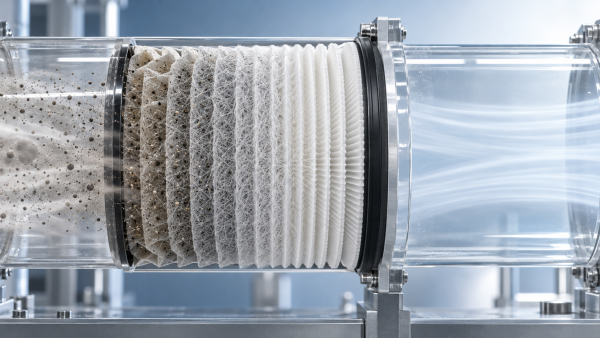
Synthetic media can be engineered with graded density, open structures, electrostatic capture, or multilayer construction that supports lower resistance while maintaining useful particle retention.
Glass fiber media can also provide excellent efficiency-to-pressure-drop performance, especially in high-efficiency formats. The key question is how resistance changes after real dust exposure.
Buyers should request dust-holding capacity and pressure-drop-versus-loading data under conditions resembling their actual process, rather than relying only on initial laboratory efficiency values.
Even small reductions in average operating pressure drop can generate meaningful savings for large ventilation systems, gas turbines, automotive plants, and facilities with continuous airflow requirements.
Service Life Depends on Moisture, Handling, and Mechanical Stress
Glass fiber media can be effective in dry, controlled environments, but its structure may be more vulnerable to breakage, shedding, binder degradation, or reduced integrity in severe conditions.
Moisture exposure is an especially important consideration. Condensation, washdown environments, outdoor air fluctuations, and high humidity can challenge certain glass fiber filter designs.
Synthetic media generally offers better resistance to water, many chemicals, flexing, vibration, and rough handling. These properties can reduce damage during manufacturing, transport, installation, and operation.
For pleated filters, mechanical strength matters because media must maintain pleat geometry under airflow. Collapsed or distorted pleats reduce effective filtration area and increase resistance.
A stronger synthetic substrate may allow more stable converting and more reliable pleat formation, potentially improving usable yield for filter manufacturers and consistency for end users.
Longer service life does not always justify a premium, but it becomes financially important when access is difficult, labor is costly, or unplanned replacement disrupts production.
Filtration Efficiency Must Be Compared at the Same Performance Level
It is not meaningful to compare the cost of synthetic and glass fiber media unless both materials are evaluated against the same efficiency target and test method.
A low-cost glass fiber product and a premium synthetic product may serve completely different filtration classes, particle sizes, airflow rates, and operating environments.
Glass fiber media is widely recognized for high-efficiency particle capture because fine fibers create a dense filtration structure capable of collecting very small contaminants.
Synthetic media can achieve strong performance through fiber design, electrostatic charge, layered construction, and optimized pore structure, often with benefits in depth loading and durability.
The relevant question is not which material is universally better. It is which medium achieves the required efficiency with acceptable pressure drop, lifetime, safety, and processing cost.
Buyers should review recognized performance data, including filtration class, initial resistance, arrestance, particle efficiency, dust capacity, and resistance at recommended final pressure drop.
Conversion and Manufacturing Costs Matter to Filter Producers
Filter manufacturers should assess more than the roll price. Material behavior during slitting, pleating, laminating, bonding, ultrasonic processing, and final assembly affects actual production cost.
A cheaper medium that tears, sheds fibers, creates uneven pleats, or requires slower machine settings can create scrap and labor costs that exceed its purchase-price advantage.
Synthetic media frequently provides favorable tensile strength and flexibility, which can support efficient processing on automated filter manufacturing lines and reduce conversion-related defects.
Glass fiber media may require careful handling and optimized binder systems to avoid damage. Its processing characteristics depend substantially on grade, backing, coating, and intended construction.
For composite filters, compatibility with adhesive lamination is essential. PUR, hot-melt, solvent-based emulsion, and ultrasonic technologies each impose different material-performance demands.
Trials should therefore measure line speed, waste rate, bond strength, pleat retention, dimensional stability, and finished-filter consistency, rather than treating media cost as an isolated number.
Application Scenarios Where Glass Fiber Often Makes Sense
Glass fiber media is often suitable when high filtration efficiency is the dominant requirement and the operating environment is controlled, dry, and compatible with disposable filter replacement.
It remains a practical option for many high-efficiency air filters, cleanroom applications, HVAC systems, paint finishing operations, and industrial dust collection configurations.
Where a filter design already uses established glass fiber processing methods, maintaining the material can avoid redesign cost, qualification delays, and changes to validated performance data.
It may also be preferred when space is limited and a compact, high-efficiency media structure is necessary to meet a target filter class within a defined depth.
However, decision-makers should still validate mechanical integrity, moisture exposure, and service interval. A suitable laboratory result does not guarantee acceptable field performance in every environment.
Glass fiber is most economical when its initial cost advantage is preserved throughout its installed life, without disproportionate losses from handling, loading, replacement, or failure.
Application Scenarios Where Synthetic Media Often Delivers Better Value
Synthetic media often performs well in applications requiring robust mechanical properties, high dust-holding capacity, moisture resistance, and dependable operation through fluctuating environmental conditions.
It is frequently considered for automotive filtration, gas turbine prefiltration, industrial ventilation, battery manufacturing, semiconductor support systems, and specialized process-air applications.
For automotive and mobile equipment, vibration, intermittent airflow, water exposure, and compact packaging can make flexible, durable synthetic structures especially valuable.
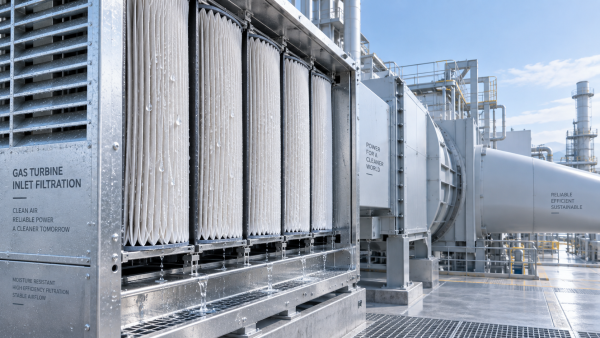
In gas turbine filtration, reliable airflow management and stable resistance are important because contamination, pressure loss, and maintenance events can affect power output and operating economics.
Synthetic media can also be attractive where fiber shedding is a concern or where downstream production processes require clean, stable, carefully engineered filtration components.
For advanced manufacturing environments, the premium for synthetic media is often justified by process reliability, lower failure risk, improved service life, and more predictable filter performance.
How to Build a Fair Cost Comparison
Start by defining the required filtration duty: contaminant type, particle-size range, airflow rate, operating temperature, humidity, chemical exposure, expected dust load, and allowable pressure drop.
Next, compare candidate media at the same tested performance level. Do not compare one material's raw roll cost against another material's fully engineered filtration capability.
Request application-specific samples and conduct pilot tests where possible. Field trials reveal loading behavior, durability, pleat stability, and maintenance requirements that catalog data may not show.
Calculate installed filter cost, then estimate service interval under representative conditions. Include replacement labor, production access constraints, disposal, and any qualification or validation requirements.
Energy should be modeled using actual fan operation and expected pressure-drop progression. Average resistance over the filter's life matters more than the initial reading alone.
Finally, include the cost of failure. Filter rupture, contamination events, equipment fouling, unscheduled shutdowns, or rejected products can outweigh moderate differences in media pricing.
Questions to Ask a Filter Media Supplier
A qualified supplier should explain not only the media's nominal filtration performance, but also how its structure behaves after pleating, lamination, exposure, and prolonged particulate loading.
Ask for data on basis weight, thickness, air permeability, tensile strength, efficiency, pressure drop, dust-holding capacity, moisture resistance, and compatibility with intended processing methods.
For demanding applications, ask whether the material can be customized through fiber formulation, density gradient, surface treatment, backing selection, or multilayer composite construction.
Manufacturers should also discuss quality consistency. Stable roll-to-roll properties are critical because variation can affect automated production, finished-filter performance, and customer acceptance rates.
Technical collaboration is especially valuable when standard media cannot meet the operating challenge. A material supplier with wet-laid and lamination capability can support application-specific development.
The best supplier relationship is based on measurable performance targets, transparent test methods, and a shared understanding of the final filter's operating environment.
Conclusion: Choose the Lowest Lifecycle Cost for the Required Performance
The cost difference between synthetic and glass fiber filter media cannot be reduced to a single price comparison. Glass fiber commonly offers a lower initial cost and proven high-efficiency capability.
Synthetic media may require greater upfront investment, but it can reduce lifecycle expense through stronger handling performance, moisture resistance, reliable conversion, extended service life, and controlled pressure-drop behavior.
For routine, dry, disposable filtration, glass fiber may remain the most economical option. For demanding systems, synthetic media can provide better operational value and lower risk.
The right decision comes from matching media performance to the actual application, then calculating total ownership cost using real operating conditions instead of purchase price alone.
By evaluating efficiency, energy consumption, service interval, processing yield, environmental resistance, and failure consequences together, manufacturers can select filtration media with confidence and long-term economic justification.
Recommendation
 Oct 10, 2026
How Can Air Filter Media Increase Dust Holding Capacity Without Higher Pressure Drop?
Which liquid filter media is suitable for hydraulic oil fine-particle filtration? Discover how advanced air filter media increases dust holding capacity with low pressure drop.- Oct 10, 2026
Which Liquid Filter Media Is Suitable for Fine Hydraulic Oil Filtration?
Can synthetic filter media replace glass fiber in high-humidity gas turbine intakes? Explore media choices for fine hydraulic oil filtration, balancing efficiency, moisture resistance, pressure drop, and service life. - Oct 10, 2026
Can Synthetic Filter Media Replace Glass Fiber in Humid Turbine Intakes?
Is ePTFE filter media suitable for pulse-cleaned construction equipment air filters? Explore synthetic vs. glass fiber performance in humid turbine intakes.