When high performance filter media reduces filter change costs
When High Performance Filter Media Reduces Filter Change Costs
For procurement teams, filter replacement cost is rarely just the price printed on a purchase order. A filter that appears economical at the point of purchase may require frequent changeouts, create disposal volume, interrupt maintenance schedules, or allow contamination to reach components that are far more expensive than the filter itself. In oil, transmission, process liquid, and specialized industrial filtration, the real question is not “What does this filter cost?” but “What does it cost us to keep this system protected over time?”
High Performance Filter Media changes that calculation by helping a filter maintain useful performance for longer under the actual conditions of operation. When media selection is aligned with contaminant type, fluid chemistry, temperature, pressure, and required cleanliness, buyers can often reduce the number of emergency replacements and make scheduled maintenance more predictable. That does not mean choosing the heaviest or most expensive media in every case. It means purchasing the right performance balance for the duty cycle.
For purchasing professionals managing recurring filter demand, this distinction matters. Unit price remains important, but it needs to be evaluated alongside replacement frequency, labor requirements, equipment availability, and the risk associated with unstable filtration performance.
The hidden cost behind a short filter service interval
A filter is usually replaced because it reaches a pressure-drop limit, loses flow capacity, no longer meets cleanliness requirements, or becomes part of routine preventive maintenance. Each of these events has a cost beyond the replacement element itself. Maintenance staff need access to the equipment. Oil or process liquid may be handled and disposed of. Production may be paused, even if only briefly. In more sensitive applications, the filter change can trigger inspection, flushing, or additional quality checks.
These costs become especially visible in systems with variable contamination loads. A transmission oil circuit, for example, may face metal particles generated through wear, carbon residue, degraded fluid by-products, and contaminants introduced during service. If the medium loads unevenly or clogs prematurely, the planned replacement interval becomes unreliable. Procurement then faces rushed orders, unplanned inventory consumption, and the familiar challenge of explaining why annual filter usage exceeded forecast.
There is also a less obvious risk: a filter may be changed too early simply because the operating team lacks confidence that it will remain stable until the next scheduled stop. Conservative replacement can protect equipment, but it can also consume filters that still have usable capacity. Better media consistency gives maintenance teams a more dependable basis for setting change intervals.
Filter change cost is a total-cost-of-ownership issue
When comparing filtration materials or completed filter elements, a practical procurement review should consider the full ownership picture:
- Purchase cost per element: the initial price is visible, but it is only one line of the calculation.
- Expected service life: a longer interval can reduce annual element consumption when protection requirements remain satisfied.
- Labor and access time: difficult-to-reach filters make every replacement more costly.
- Downtime exposure: even planned stops may affect output, scheduling, or delivery commitments.
- Fluid and waste handling: used filters and contaminated liquids create disposal and housekeeping obligations.
- Equipment protection: insufficient particle retention can contribute to wear in pumps, valves, transmissions, and other critical assemblies.
- Supply stability: frequent consumption makes lead time variation and batch consistency more consequential.
This is why low-cost media is not always low-cost filtration. If a lower-priced substrate causes earlier restriction, weak pleat stability, inconsistent resin bonding, or poor compatibility with the working fluid, savings at the purchasing stage can be lost many times over in service. Conversely, a premium specification that exceeds the actual need can also waste budget. The goal is a defensible specification: enough performance to control lifecycle cost without paying for features that do not add value in the application.
What makes High Performance Filter Media last longer in real use?
Filter life is influenced by more than nominal filtration rating. Media architecture, fiber composition, pore structure, basis weight consistency, wet strength, resin system, and downstream converting quality all shape how a filter behaves as it captures contaminants.
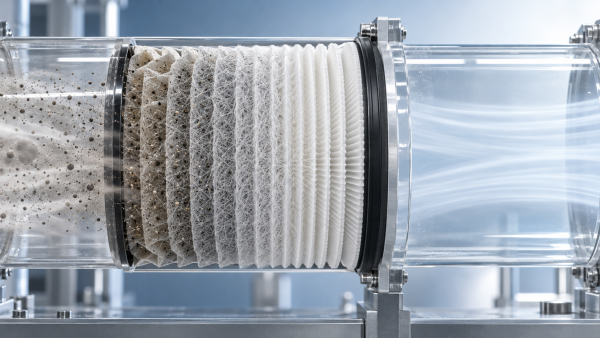
In liquid filtration, the best result is often not simply the finest surface layer. A well-designed medium can distribute contaminant loading through its structure rather than creating a rapid blockage at the upstream face. This supports useful dirt-holding capacity while maintaining acceptable flow resistance. The right balance depends on the particle profile: hard metal particles, soft carbonaceous material, fibrous contaminants, oxidation products, and gel-like residues do not load a filter in the same way.
Strength is equally important. In demanding oil filtration conditions, the media must retain structural integrity after exposure to fluid, temperature changes, pulsation, and differential pressure. If the medium becomes distorted, tears, or allows pleats to collapse, the element may lose effective area and reach its change point sooner than expected. A stable material gives filter manufacturers more confidence during pleating, curing, and assembly, while end users gain more predictable in-service behavior.
Resin selection deserves close attention. Acrylic systems and phenolic systems can serve different process and end-use requirements. A non-cured acrylic option may suit applications where flexibility and manufacturing process compatibility are priorities. A cured phenolic option can be selected where higher rigidity and resistance characteristics are needed. The correct choice should be based on the fluid, operating environment, intended conversion process, and performance expectations—not on a generic assumption that one chemistry is always superior.
Matching media construction to oil and transmission filtration
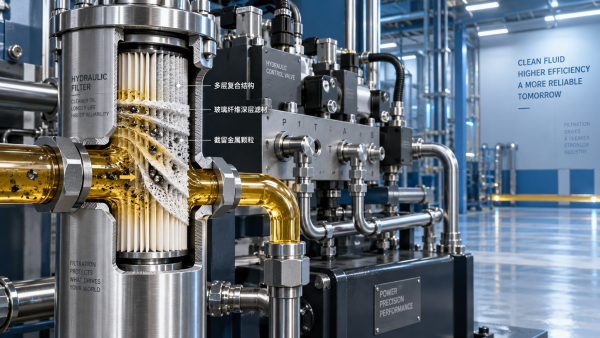
Oil filtration presents a demanding combination of protection and flow. The filter must remove harmful impurities, including carbon residue and metal particles, without creating an unnecessary restriction in the lubrication or transmission circuit. The challenge becomes more pronounced as fluids age, contamination load increases, or system operating conditions fluctuate.
Cellulose remains relevant in many liquid filtration designs because of its proven processability and natural depth-filtration characteristics. Yet applications may call for more than a conventional cellulose sheet can provide. Cellulose/synthetic blends can offer a different balance of strength, contaminant capacity, and consistency. For more specialized requirements, cellulose/synthetic/PBT constructions may be evaluated as part of the material selection process.
One example is OS320500, a filtration material designed for oil filtration, transmission oil filters, liquid filtration, and new energy liquid filtration solutions. Available material approaches include cellulose, cellulose/synthetic, and cellulose/synthetic/PBT structures, allowing buyers and filter designers to discuss the most appropriate route for their target system. The material can be supplied using acrylic non-cured or phenolic cured treatment options, supporting different converting and end-use needs.
For a buyer, the value of such options is not merely variety. It is the ability to avoid forcing a single material into every application. A transmission system exposed to fine metallic wear debris may require a different loading and strength profile from a general engine oil filter. New energy liquid filtration may introduce another set of concerns involving fluid compatibility, cleanliness expectations, and system sensitivity. A supplier able to develop differentiated media provides more room to optimize the replacement interval rather than accepting a compromise specification.
Questions worth asking before comparing quotations
Quotation comparisons frequently become distorted when suppliers are asked only for a grade name, thickness, or basis weight. Those parameters are useful, but they do not fully describe filtration behavior. A more productive RFQ asks how the material will perform in the finished element and in the specific service environment.
Procurement teams can improve comparison quality by asking the following questions:
- What contaminants are expected, and which are most damaging to the system?
- Is the priority longer life, finer particle control, lower pressure drop, or a defined balance of all three?
- What fluid chemistry, operating temperature, and pressure conditions will the element face?
- Does the media need a particular resin state for pleating, curing, bonding, or end-cap assembly?
- How stable are key material properties from batch to batch?
- Can the supplier support development samples and technical adjustment if the initial construction does not meet the target?
- What incoming inspection criteria should be agreed for rolls or sheets before production begins?
These questions shift the conversation from “lowest media price” to “lowest reasonable cost per protected operating hour.” They also help prevent a common issue in aftermarket and OEM/OES supply: a material may fit the dimensional specification but behave differently during conversion or use. That difference can create scrap, slower production, or a filter with an unpredictable service interval.
Do not confuse a longer interval with a universally better filter
Reducing filter changes should never mean extending service beyond safe operating limits. A longer replacement interval only creates value when cleanliness, flow, and equipment protection remain within the required range. In some high-risk systems, a deliberately conservative change schedule is appropriate because the consequence of contamination is severe. In others, condition monitoring and well-characterized media performance can justify longer intervals.
This is why purchasing should work closely with engineering, quality, and maintenance. Procurement may identify a material with a favorable total cost, but the final decision should reflect application testing, filter element design, bypass valve behavior where relevant, and the customer’s maintenance strategy. The media is a critical component, but it performs within a complete filtration system.
It is also important not to treat pressure drop as an isolated figure. Low initial pressure drop is attractive, yet the rate at which restriction rises during contaminant loading often matters more for service life. Likewise, high dirt-holding capacity is valuable only when the media continues to provide the retention and mechanical stability required by the application.
Why manufacturing capability affects purchasing risk
For buyers of advanced filtration materials, supplier capability is part of the product. Material performance can be influenced by fiber preparation, wet-laid formation, binder distribution, drying, curing, lamination, and quality control across the manufacturing process. A supplier that understands only the final specification may struggle when an application requires adjustment. A supplier with broader process capability can investigate the source of a problem and consider whether the solution lies in formulation, layering, treatment, or converting compatibility.
Hangzhou Chaocai Materials develops functional advanced materials with a focus on technically demanding applications. Its production platforms include fully synthetic wet-laid lines, PUR lamination, hot-melt adhesive lamination, solvent-based emulsion spray lamination, and ultrasonic lamination. This range is relevant to filtration buyers because modern media often needs more than a single homogeneous layer. It may require controlled combinations of support, filtration, protective, or functional layers to meet a defined operating target.
The company’s work across gas turbine, automotive, new energy, semiconductor, biopharmaceutical, and other specialized filtration fields also reflects the importance of application-specific development. While requirements differ greatly between sectors, the underlying purchasing principle remains consistent: dependable media performance reduces avoidable variation in the finished filter and helps make replacement planning more manageable.
A practical way to make the purchase decision
Instead of changing suppliers solely on a sample comparison or a lower quoted rate, consider a staged evaluation. Define the application and failure concerns, compare relevant media constructions, run converting trials, and review performance in the finished filter under representative conditions. Record not only retention and flow results, but also pleating behavior, bonding response, handling, scrap rate, and consistency across deliveries.
Then translate the findings into an annual cost model. Estimate element consumption at the current interval and at the proposed interval. Add labor, planned downtime, waste handling, and the inventory buffer needed to avoid stock-outs. If the proposed media improves stability but does not materially change the interval, it may still be valuable where reliability and quality consistency are critical. If it safely extends the interval, the savings can become easier to quantify.
The strongest purchasing decision is rarely the one with the lowest invoice price. It is the one that gives operations a stable filtration window, gives maintenance fewer surprises, and gives procurement a supply specification that can be evaluated clearly over time. High Performance Filter Media earns its place in that decision when it reduces unnecessary filter changes without asking the system to accept additional risk.
Recommendation
 Oct 10, 2026
How Can Air Filter Media Increase Dust Holding Capacity Without Higher Pressure Drop?
Which liquid filter media is suitable for hydraulic oil fine-particle filtration? Discover how advanced air filter media increases dust holding capacity with low pressure drop.- Oct 10, 2026
Which Liquid Filter Media Is Suitable for Fine Hydraulic Oil Filtration?
Can synthetic filter media replace glass fiber in high-humidity gas turbine intakes? Explore media choices for fine hydraulic oil filtration, balancing efficiency, moisture resistance, pressure drop, and service life. - Oct 10, 2026
Can Synthetic Filter Media Replace Glass Fiber in Humid Turbine Intakes?
Is ePTFE filter media suitable for pulse-cleaned construction equipment air filters? Explore synthetic vs. glass fiber performance in humid turbine intakes.