



When to specify a water-repellent filter media surface treatment
Specify a water-repellent filter media surface treatment when liquid water is likely to reach the filter and wetting could cause unacceptable pressure drop, reduced airflow, or unstable filtration performance. High relative humidity alone is not enough to justify it. The stronger reasons are fog, entrained droplets, intermittent splash, or condensation that exposes the media to liquid water.
The decision also depends on what happens after droplets reach the surface. A treatment that makes water bead may help resist penetration, but the filter still needs a way to shed or drain that water. Selection should therefore connect three things: the actual exposure, the behavior of the complete filter construction, and measurable performance during and after wetting.
Establish whether the problem is water vapor or liquid water
Water vapor travels with air through conventional particulate filter media. A water-repellent finish changes how liquid water interacts with the fibers or surface; it does not dehumidify the airflow or prevent condensation when temperatures fall below the dew point.
This distinction matters when investigating seasonal pressure-drop increases. A filter operating in humid air may remain dry. Another installation at the same humidity may experience wetting because a cold housing, inlet section, or filter surface allows condensation. Outdoor air intakes may also receive wind-driven rain or fog despite having weather protection.
Before selecting a treatment, identify where the liquid originates and how it reaches the filter:
- Airborne droplets: Fog, process spray, or coolant mist travels with the airstream toward the media.
- Direct splash or carryover: Water enters through an intake, leaks from upstream equipment, or escapes a separator.
- Condensation: Changes in temperature create liquid water within the housing or filter assembly.
- Moisture retained by collected dust: Hygroscopic deposits absorb moisture and can become sticky or form a restrictive layer.
The last condition deserves separate attention. Treating the underlying fibers may reduce their tendency to wet, but it does not stop collected salts or other hygroscopic particles from absorbing moisture. Once a dust layer covers the treated surface, that layer can dominate wet behavior.
Where water repellency earns its place in the specification
A treatment is most useful when occasional liquid exposure would otherwise turn a satisfactory dry filter into an operational restriction. Outdoor intake filtration, including gas turbine intake systems, is one relevant setting: fog or rain carryover can wet media and deposits, increasing airflow resistance. The value of treatment depends on the upstream weather protection, drainage, dust composition, and required downstream protection.
Industrial ventilation can present similar conditions near washing, cooling, or spraying operations. If droplets reach a dust filter intermittently, improved resistance to wetting may help preserve airflow. Continuous heavy spray, however, usually calls for source control or a suitable upstream droplet separator before relying on a surface finish.
The economic case is strongest when wetting causes a defined operational loss, such as airflow falling below the process requirement, frequent filter changes after fog events, or extended recovery after intermittent exposure. If a filter already handles its moisture conditions adequately, adding treatment may introduce cost and qualification work without a useful gain.
A water-beading demonstration does not predict filter performance
A droplet resting on a flat sample can show that the exposed surface resists wetting. It cannot establish how a pleated filter behaves under airflow, differential pressure, contamination, and repeated wetting. Surface roughness and sample preparation also affect the appearance of the droplet.
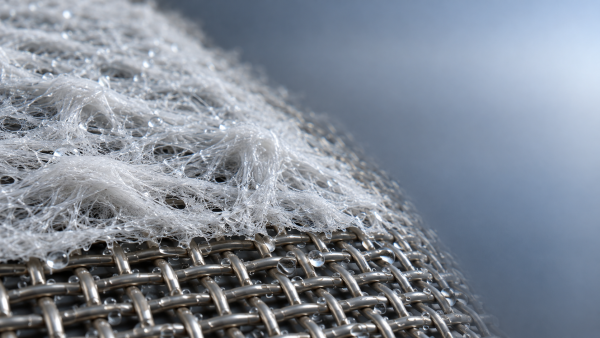
Liquid entry into porous media depends on surface chemistry, pore structure, and the pressure acting across the liquid interface. A hydrophobic surface can resist water intrusion, but that resistance has limits. Larger openings, local defects, or sufficient pressure can allow penetration even when a sample initially shows clear beading.
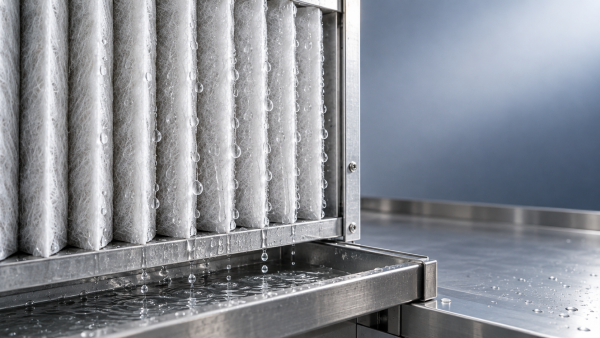
Water retained between pleats can also obstruct airflow without soaking deeply into the fibers. Closely spaced pleats, horizontal pockets, support meshes, and poorly positioned drainage paths may hold droplets. This is why a successful flat-sheet demonstration should lead to an element-level evaluation before approving the final design.
Distinguish resistance to wetting from water removal. A surface may repel water yet retain pinned droplets. Useful performance requires the assembly to handle those droplets through shedding, drainage, evaporation, or upstream separation at a rate compatible with the incoming load.
Match the surface treatment to the media and the contaminant
The same finish can behave differently on different substrates. Fiber chemistry, binder systems, pore structure, membranes, and support layers all influence how a treatment distributes and how much it changes airflow resistance. A treatment concentrated at the exposed face may behave differently from one distributed through the media thickness.
Ask whether the proposed process changes air permeability, particle capture, mechanical strength, or pleatability. Excessive coating or uneven application can restrict pores or create variable performance across the sheet. A finish must also remain compatible with adhesives, seals, and lamination interfaces used in the finished element.
For composite media, the exposed layer may already provide water resistance. An additional finish should solve an identified limitation rather than duplicate an existing function. Conversely, a water-resistant membrane does not automatically protect exposed backing layers, cut edges, or assembly joints.
Hangzhou Chaocai Materials Co., Ltd.’s synthetic wet-laid and multiple lamination platforms are relevant to this construction-level assessment. The practical question is which combination of substrate, functional layer, bonding method, and surface modification maintains the required filtration behavior after conversion into a working element.
Oil mist changes the treatment requirement
Hydrophobic and oleophobic properties are different. A surface that repels water may still be wetted by oil. Coolant formulations add another complication because surfactants can change how droplets spread and penetrate. A clean-water test may therefore give an overly favorable picture of performance in a machining workshop.
For CNC machining and mixed dust-and-oil environments, Industrial Dust & Oil Mist Filtration Solutions provides a relevant direction for evaluation through PTFE composite and high-density fine-fiber media options, with oil-repellent modification and surface anti-adhesion treatment. These features address a different selection problem from water repellency alone. Suitability should be assessed against the actual coolant or lubricant, dust mixture, airflow, and drainage arrangement.
Mixed contamination can also change during service. Oil deposits may alter the original surface behavior, while dust can create liquid-retaining layers. Where these pollutants coexist, qualify the combined exposure rather than treating water, dust, and oil as unrelated tests.
Validate the conditions that cause failure
A useful comparison starts with untreated and treated versions of the same base construction wherever practical. This helps show whether the treatment improves wet operation and what it costs in dry performance. Comparisons between substantially different media can still guide selection, but they cannot isolate the contribution of the surface finish.
Testing should reproduce the mechanism of concern closely enough to support the decision. Soaking a sample may reveal one type of weakness, but it does not represent every fog-exposure condition. Spraying water onto stationary media also misses the effect of airflow on droplet transport and retention.
- Establish the dry baseline. Measure pressure drop and relevant particle-filtration performance at the intended airflow. Include mechanical properties needed for converting and service.
- Apply representative liquid exposure. Define the fluid, droplet delivery, exposure duration, temperature, humidity, and filter orientation. Include realistic fluid chemistry where additives or contamination are present.
- Monitor operation during wetting. Track pressure-drop growth, airflow stability, and downstream liquid carryover. Measure particle performance under relevant conditions where wetting could affect it.
- Measure recovery. Observe whether pressure drop returns toward its initial level after exposure ends and whether residual deposits or damage remain.
- Repeat after relevant aging. Include wet-dry cycling, dust loading, cleaning, temperature exposure, or handling where these occur in service.
Durability should reflect the maintenance method. A pulse-cleaned dust filter needs evaluation after representative cleaning cycles because abrasion and repeated flexing can affect the surface or construction. A disposable intake element may require greater emphasis on prolonged environmental exposure and loaded performance.
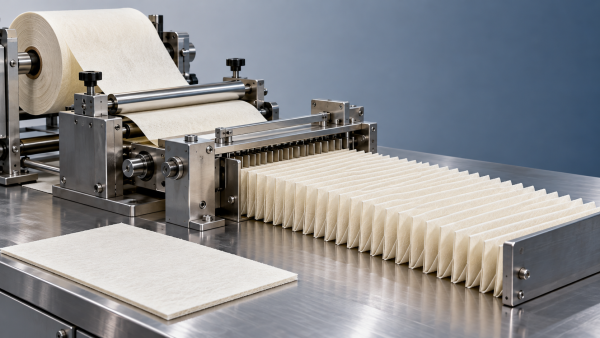
Evaluate the complete element before release. Pleating, bonding, sealing, and handling can introduce pathways or damage absent from a laboratory sheet. Downstream moisture may come through a seam or bypass a gasket, so its location matters when interpreting results.
Write requirements around operating limits
A purchase specification that says only “water-repellent media” leaves the acceptance criteria unclear. Even a contact-angle requirement describes only part of the behavior. The specification should identify the exposure to be resisted and the filtration performance that must remain acceptable.
Use project-specific limits for dry pressure drop, maximum wet pressure drop, allowable downstream water, particle-filtration performance, and recovery after exposure. State the airflow and test configuration alongside those limits. Without these conditions, two reported results may describe very different operating demands.
Document the treatment location, substrate construction, relevant temperature and chemical exposure, and expected maintenance. Define which characteristics must remain within limits after aging. Where downstream cleanliness matters, include requirements for shedding or release of treatment-related material during operation.
Acceptance evidence should also identify whether results come from flat media or finished elements. Both have value: sheet tests help compare formulations, while element tests reveal drainage, pleat geometry, seals, and manufacturing effects. Supplier qualification should connect the two.
Before approving water repellency, establish the source of liquid exposure, the operational consequence of wetting, and the route by which captured water leaves the assembly. When those are defined, treatment can be specified as a measurable functional requirement. If persistent water loading or poor drainage remains unresolved, address that system condition before expecting a surface finish to deliver stable filtration.
Recommendation
 Oct 26, 2026
Why pleating trials belong early in filter media development
Filter Media Development benefits from early pleating trials. Discover how to spot cracking, improve pleat stability, and define a reliable process window before specifications are locked.- Oct 26, 2026
When to specify a water-repellent filter media surface treatment
Filter Media Surface Treatment: Learn when water repellency helps protect airflow, how to assess wet performance, and what to specify for reliable industrial filtration. - Oct 26, 2026
How fiber dispersion affects wet-laid nonwoven pore uniformity
Wet-Laid Nonwoven Technology: Discover how fiber dispersion shapes pore uniformity and which process controls and tests can improve filtration consistency.