Why pleating trials belong early in filter media development
Why pleating trials belong early in filter media development
A filter medium can meet laboratory targets yet crack, delaminate, or lose pleat stability during converting. By then, material specifications may already be approved, tooling decisions made, and qualification samples scheduled. A problem that could have prompted a small formulation adjustment becomes a project change affecting several suppliers.
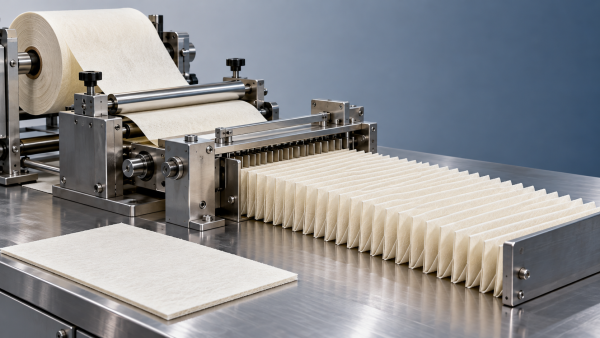
In Filter Media Development, early pleating trials connect flat-sheet performance with manufacturing reality. They show how stiffness, layer bonding, resin condition, and processing settings interact before specifications are locked. The objective is not to qualify an unfinished material prematurely. It is to identify whether the proposed construction has a workable converting window—and what must change if it does not.
Flat-sheet results do not describe the folded structure
Permeability, tensile strength, thickness, and filtration efficiency provide essential information. None, on its own, establishes that a medium will survive repeated folding at the intended pleat geometry. Pleating introduces localized bending and compression, while web transport adds tension. In multilayer media, adjacent layers may respond differently to these loads.
A relatively stiff construction may hold its shape well after forming but suffer damage at the fold apex. A more flexible construction may fold cleanly yet spring back, lean, or crowd during assembly. Strong flat-sheet tensile results can therefore coexist with poor converting behavior. The engineering question is not simply whether the medium is strong enough, but whether it deforms in the right way.
Pleat geometry also affects the finished filter. Uneven spacing or deformation can alter flow distribution and usable filtration area. Visible cracks deserve investigation, but an apparently neat pleat pack is not proof of retained filtration performance. Inspection and functional testing need to address different failure modes.
Start when the construction is credible, not when it is frozen
The useful starting point is usually a representative candidate with a defined fiber blend, binder or resin system, and layer arrangement. Waiting for every laboratory target to be finalized defeats much of the purpose. Conversely, testing a hand-built sample that bears little resemblance to the intended production material can create false confidence—or reject a viable concept for the wrong reason.
An initial trial should answer a limited question: can this construction form the required pleats without unacceptable damage or instability? Later trials can establish the operating window, assess production variability, and support qualification. This staged approach keeps early screening proportionate while avoiding the assumption that one successful run proves manufacturing readiness.
For project planning, put the first pleating review before material specification freeze. Allow time afterward for a formulation or bonding revision and a repeat trial. If that loop is absent from the schedule, an “early trial” may identify risk without leaving any practical opportunity to resolve it.
Make the trial representative enough to support a decision
Equipment matters. A result from one pleating method should not automatically be transferred to another. Blade and rotary systems can impose different forming conditions; tooling geometry, heating arrangements, and web handling also influence the result. A laboratory folder is useful for screening, but production-relevant equipment is needed before committing to a manufacturing route.
The trial record should make the material and process traceable. At minimum, capture:
- Material batch, layer orientation, machine direction, and measured thickness.
- Sample conditioning, moisture-related controls where relevant, and resin or cure state.
- Pleating method, tooling configuration, target pleat height, and pitch.
- Line speed, web tension, and applicable heating settings or measured temperatures.
- Defect location, frequency, inspection method, and behavior after forming and assembly.
Use the intended geometry where possible. A material that survives a shallow laboratory fold may behave differently at a tighter radius or greater pleat height. If production tooling is unavailable, document the mismatch and identify which conclusions remain provisional.
Do not change the formulation, temperature, tension, and speed together and then attribute improvement to one factor. A controlled comparison is more useful than a collection of attractive samples. Start with a baseline, vary selected conditions deliberately, and retain samples—including failures—with their corresponding settings.
Use defects to distinguish material problems from process problems
A crack at the apex is a symptom, not a complete diagnosis. Possible contributors include insufficient foldability, an unsuitable resin condition, excessive forming severity, or tooling damage. Examine where the defect begins and whether it follows one layer, one web direction, or one machine setting. Magnified inspection can help distinguish surface marking from a fracture extending through the medium.
Delamination requires a different investigation. Check whether separation occurs within a layer or at the bonding interface. Then compare bonding conditions, adhesive distribution, and the relative bending response of the layers. Simply increasing adhesive application may change permeability, stiffness, or processing behavior without resolving the underlying mismatch.
Springback and pleat lean also need context. They may reflect material recovery, uneven tension, asymmetric construction, or inadequate stabilization. Measure the pack at defined intervals rather than only immediately after forming. Where downstream curing or heat setting is part of the intended process, assess the final condition as well as the intermediate one.
This is where manufacturing capability becomes relevant to development. Hangzhou Chaocai Materials Co., Ltd. develops functional advanced materials using platforms that include fully synthetic wet-laid production, PUR lamination, hot-melt adhesive lamination, solvent-based emulsion spray lamination, and ultrasonic lamination. These routes offer different construction options; early converting evidence helps determine which options merit further development rather than assuming one bonding method suits every application.
Resin condition and service exposure belong in the same discussion
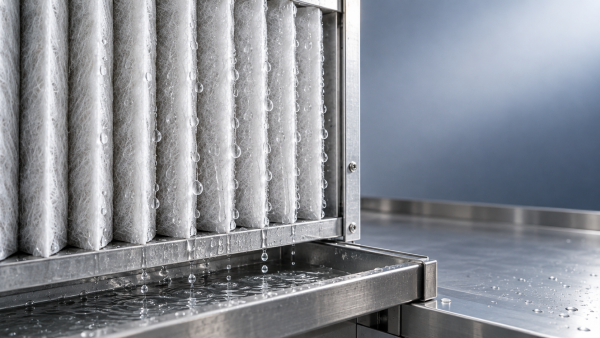
Liquid filtration illustrates why “pleatable” needs a defined context. A medium must survive converting, but it must also retain suitable behavior in the working fluid and operating environment. Dry fold quality alone cannot establish resistance to oil exposure, temperature, or pressure-driven deformation.
For example, OS320500 is offered for oil and liquid filtration applications, with material options including cellulose, cellulose/synthetic, and cellulose/synthetic/PBT. Acrylic non-cured and phenolic cured material options are available. For a development team, these are reasons to define the exact supplied construction and processing sequence—not grounds to assume that different variants will share the same pleating settings.
Clarify whether any further curing or thermal treatment is required, and when it occurs relative to pleating and assembly. Then evaluate representative formed samples after relevant fluid and thermal conditioning. Media intended to remove carbon residue and metal particles from engine oil still need application-specific evidence that the folded structure preserves the required filtration and mechanical performance.
Define acceptance criteria without inventing a universal standard
There is no single pleating acceptance rule that covers every filter medium, converting machine, and end application. The trial protocol should separate three questions: was the material formed consistently, did forming damage its function, and does the assembled element satisfy its intended duty?
Agree on measurable criteria before the run. These may include permitted pleat-height variation, spacing consistency, a defined inspection approach for cracks and delamination, and limits on shape change after conditioning. Numerical limits should come from the element design, customer requirements, and validated manufacturing capability—not from an unrelated material datasheet.
Functional verification should follow the applicable application specification and agreed test methods. Air-filter and liquid-filter qualification requirements are not interchangeable. Nor should a flat-sheet test be presented as proof of finished-element performance. Where appropriate, compare formed material with unformed controls, then test representative assembled elements to capture geometry, sealing, and support effects.
A useful development report states the test conditions, observations, acceptance basis, and unresolved limitations. “Passed pleating” is too vague if it omits the machine, speed, geometry, conditioning, and inspection scope. It can turn a narrow screening result into an unsupported production claim.
Release a process window, not just a successful sample
Before release, establish whether acceptable results depend on unusually gentle settings or a narrowly selected roll. A candidate that works only at one carefully tuned condition may remain vulnerable to normal variation in moisture, thickness, bonding, or machine setup. Repeat trials across representative material lots and relevant operating conditions should be planned according to project risk.
The material supplier, converter, and element designer should leave the review with shared limits and responsibilities. Record which material characteristics require incoming control, which machine settings must be maintained, and which changes trigger renewed testing. A change in resin system, layer construction, or bonding process may justify another pleating assessment even when headline datasheet values remain similar.
Early pleating trials earn their place in Filter Media Development because they expose interactions that flat-sheet specifications cannot resolve. Before freezing the design, confirm that representative media can be formed, assembled, and conditioned within an agreed operating window. If that evidence is missing, the specification is describing a material—not yet a dependable manufacturing solution.
Recommendation
 Oct 26, 2026
Why pleating trials belong early in filter media development
Filter Media Development benefits from early pleating trials. Discover how to spot cracking, improve pleat stability, and define a reliable process window before specifications are locked.- Oct 26, 2026
When to specify a water-repellent filter media surface treatment
Filter Media Surface Treatment: Learn when water repellency helps protect airflow, how to assess wet performance, and what to specify for reliable industrial filtration. - Oct 26, 2026
How fiber dispersion affects wet-laid nonwoven pore uniformity
Wet-Laid Nonwoven Technology: Discover how fiber dispersion shapes pore uniformity and which process controls and tests can improve filtration consistency.