




How Moisture-Resistant Is Hangzhou Super Material Filter Media?
How Moisture-Resistant Is Hangzhou Super Material Filter Media?
Moisture can challenge gas turbine filtration by increasing pressure drop, weakening media, and affecting operational reliability. When evaluating Hangzhou Chaocai Materials Co., Ltd. gas turbine filter media, the key question is how the selected material performs under humidity, condensation, and liquid-water exposure—not simply whether it is labeled moisture-resistant.
The practical answer is grade-specific. A material may retain strength in humid air yet allow water penetration during sustained fog exposure. Another may repel droplets effectively but develop excessive resistance when moisture combines with accumulated dust. Without a defined construction and supporting test results, “moisture-resistant” describes a design objective, not a verified operating limit.
The title’s “Hangzhou Super Material” wording does not identify a technical grade. For a purchasing or engineering decision, the reference needs to be tied to a specific supplier product code, laminate structure, and test report. That is where a useful assessment begins.
Humidity, Condensation, and Water Carryover Are Different Problems
High relative humidity does not automatically mean that liquid water is passing through a filter. However, moisture absorption can alter some fibers, binders, or surface treatments. When a surface falls below the local dew point, condensation introduces a different challenge: liquid can form within the filter assembly rather than arrive as droplets from outside.
Fog and wind-driven rain add liquid loading. Water may collect on the media face, bridge pores, or travel through defects and interfaces. Whether it drains, remains trapped, or penetrates depends on the media construction and the complete inlet system. A water-repellent surface is helpful, but it does not replace weather protection, drainage, or upstream droplet separation where those measures are needed.
Coastal environments introduce another complication. Deposited salts can absorb atmospheric moisture, depending on salt composition and conditions, creating a wet deposit even without visible rain. Fine dust can also form a more restrictive cake when wetted. For these installations, testing clean media with water alone may miss the dominant operating problem.
What the Material Must Actually Resist
Moisture resistance is better treated as several related properties. None should be used as a shortcut for all the others.
Surface wetting and through-media penetration
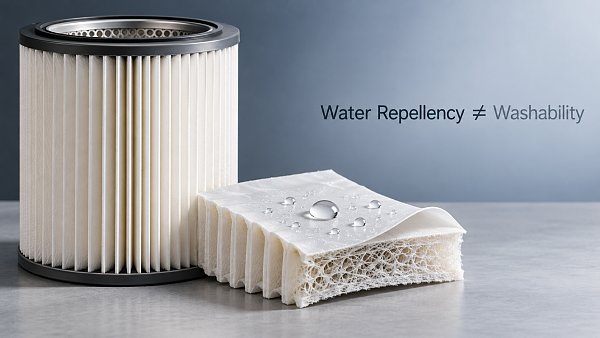
Hydrophobicity describes resistance to wetting. A droplet that beads on a surface provides evidence about surface behavior, but not necessarily about water entry under airflow, sustained exposure, or pressure. Pore structure, surface-treatment uniformity, and local defects also influence penetration.
Water-entry or hydrostatic-resistance measurements can provide additional information when the method is suitable for the material. Results still need their test conditions: exposure side, conditioning, pressure application, and failure definition. Comparing numbers obtained through different procedures can lead to the wrong material choice.
Wet strength and dimensional stability
A medium that sheds water can still fail mechanically if its supporting structure loses integrity. Wet tensile strength, elongation, and dimensional stability help indicate whether the web can maintain its form after exposure. Both machine-direction and cross-direction behavior matter because processing and pleating place different demands on the sheet.
Fully synthetic webs can avoid some moisture-related weaknesses associated with water-sensitive fibers. That does not make every synthetic construction suitable for prolonged wet service. Fiber bonding, additives, support layers, and laminate interfaces remain part of the assessment.
Filtration performance during and after wetting
The operational question is not only whether the sheet survives. It is whether particle capture and airflow resistance remain acceptable while wet and after drying. Water can temporarily obstruct airflow pathways; wet deposits can redistribute or compact. Depending on the construction, repeated exposure may also affect treatments or layer adhesion.
A filter that looks intact after drying has therefore passed only a visual check. Its pressure-drop recovery and particle-removal performance still require measurement.
What Chaocai’s Manufacturing Capabilities Tell Buyers—and What They Do Not
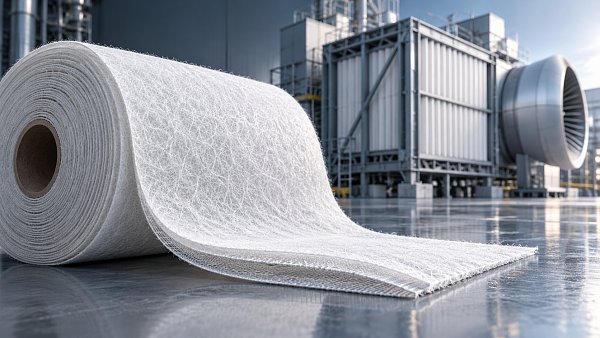
Hangzhou Chaocai Materials Co., Ltd. develops and manufactures functional advanced materials, with an emphasis on differentiated formulations and technically demanding processes. Its production platforms include fully synthetic wet-laid lines, PUR lamination, hot-melt adhesive lamination, solvent-based emulsion spray lamination, and ultrasonic lamination. These capabilities support filtration-material development for gas turbines and other specialized applications.
For moisture-resistant filter media, this manufacturing range provides options for combining filtration layers with reinforcing or protective structures. Wet-laid processing offers a route for controlling fiber distribution and web formation. Lamination can bring different functions into one composite, provided the bonding approach preserves the necessary airflow and mechanical properties.
The trade-offs deserve attention. Adhesive coverage can affect permeability and stiffness. Bond chemistry influences resistance to heat and moisture aging. Ultrasonic bonding can join compatible materials without an added adhesive layer, but bond pattern and process settings still influence strength and usable filtration area. No bonding method is automatically superior for every turbine inlet.
These platforms establish development and manufacturing capability; they do not establish a particular moisture rating. The information available here does not specify a grade’s water-entry resistance, wet-strength retention, or pressure-drop behavior under fog loading. Those claims need product-specific evidence.
A Test Report Should Reproduce the Failure You Want to Avoid
A useful qualification program starts with site exposure rather than a preferred laboratory number. An inland installation with occasional condensation may need a different evaluation from a coastal facility facing persistent fog and salt-bearing aerosol. Airflow, temperature cycling, contamination, and filter arrangement all shape the test.
The following evidence helps separate a credible moisture assessment from a simple water-beading demonstration:
- A defined baseline: clean pressure drop and particle-removal performance at the intended media velocity or element airflow.
- Controlled exposure: humidity, temperature, water-loading method, duration, and whether exposure includes representative contaminants.
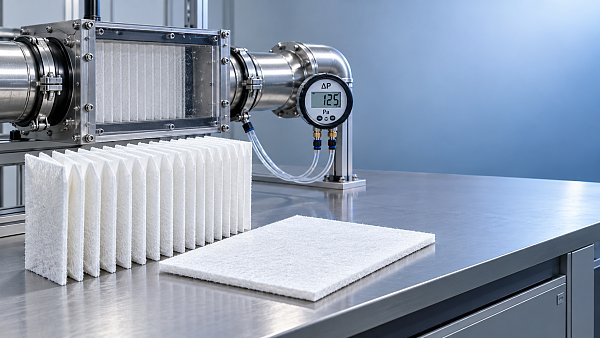
- Measurements during wetting: differential-pressure progression, evidence of downstream water passage, and filtration performance where the method allows.
- Recovery and durability: performance after drying, wet mechanical strength, and inspection for delamination or permanent distortion.
- Repeatability: results from enough samples and relevant production lots to distinguish normal variation from an unusually good specimen.
For gas turbine intake filter elements, the ISO 29461 series is a relevant reference framework. The applicable part and edition should be confirmed against the property being assessed. A general reference to the series is not proof that every moisture-related characteristic has been tested, and a flat-sheet result should not be presented as an assembled-element result.
Acceptance criteria should be agreed before testing. Otherwise, “passed” may mean only that the sample did not visibly rupture, while the operator expected stable pressure drop and no unacceptable water carryover. The report needs to state what failure means.
The Finished Filter Can Behave Differently from the Sheet
Media selection cannot compensate for every element-design weakness. Pleat spacing, support geometry, seals, end-cap bonding, and installation orientation influence what happens when water arrives. Closely packed pleats can retain water or wet deposits, restricting effective airflow area even when the underlying material remains mechanically sound.
Conversion can also change performance. Pleating stresses a laminate; handling can damage a thin functional layer; bonding at the element edge introduces another interface. Qualification should therefore progress from flat-sheet screening to prototype elements and, where justified, representative inlet-system evaluation.
If pulse cleaning is planned, wet-conditioned pulse testing deserves separate attention. Moisture can change dust-cake release, and the forces applied during cleaning may expose weaknesses that a static wet-strength test does not reveal. Suitability for a static inlet should not be assumed to establish suitability for pulse-cleaned service.
Making a Defensible Selection
When comparing candidate materials, keep filtration duty constant. A lower-resistance sheet is not necessarily a better option if it provides a different particle-removal level. Likewise, greater water resistance may involve a trade-off in permeability, stiffness, or converting behavior. Compare complete performance profiles rather than isolated headline values.
For development discussions with Chaocai, a useful brief includes the installation environment, expected contaminants, airflow, temperature range, filtration requirement, element geometry, and cleaning method. Specify the problem to prevent: transient pressure spikes, sustained restriction, downstream moisture, mechanical damage, or some combination. This gives the supplier a basis for selecting a construction and proposing relevant verification.
Production consistency belongs in that discussion too. Ask which characteristics are controlled during manufacture, how changes to fibers or bonding systems are managed, and whether qualification samples represent the intended production route. Development capability matters most when the approved structure can be reproduced.
So, how moisture-resistant is the material? The available manufacturing information supports evaluating Chaocai as a potential development and supply partner, but it does not justify assigning an unverified moisture rating. A defensible answer requires a named grade, documented wet-performance results, and confirmation in the finished filter under relevant exposure. Until those are aligned, treat “moisture-resistant” as a claim to investigate—not an operating guarantee.
Recommendation
 Oct 30, 2026
What Gas Turbine Filter Media Does Hangzhou Super Material Offer?
Explore Ltd. filter media reviews and Hangzhou Super Material’s gas turbine filtration capabilities. Learn what specifications and test results to request before buying.- Oct 30, 2026
How to Evaluate Reviews of Hangzhou Super Material's Filter Media
Evaluate Hangzhou Super Material Co. filter media reviews with confidence. Learn what to check for efficiency, pressure drop, service life, and application fit. - Oct 28, 2026
Can PTFE laminated cellulose filter media tolerate wet cleaning?
Can PTFE Laminated Cellulose Filter Media withstand wet cleaning? Learn the risks, approved cleaning options, and when to replace cartridges to protect airflow and filtration performance.