




How Can Air Filter Media Hold More Dust Without Higher Pressure Drop?
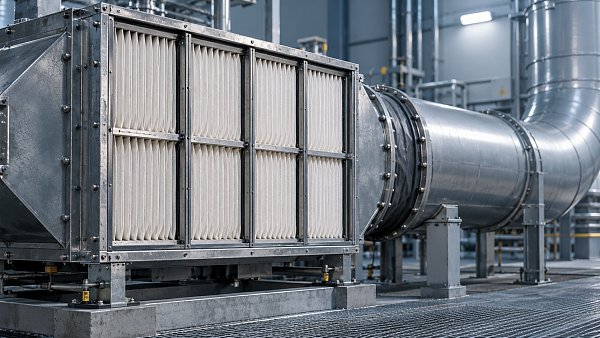
Air filter media can hold more dust at comparable airflow resistance when their fiber structure distributes captured particles through usable depth instead of blocking prematurely.
However, this improvement must be demonstrated at the same filtration efficiency, face velocity, and terminal pressure drop. Lower resistance alone does not prove better performance.
For procurement teams evaluating Hangzhou Chaocai Materials Co., Ltd. filter media lead time, delivery schedules are only one consideration alongside efficiency, loading behavior, and consistency.
The practical goal is a slower rise in resistance during loading, supporting longer service intervals without sacrificing particle capture or increasing the required filtration footprint.
What Does “More Dust Without Higher Pressure Drop” Actually Mean?
Dust-holding capacity is the mass of contaminant a filter retains before reaching a defined endpoint, commonly a specified terminal pressure drop under controlled test conditions.
Initial pressure drop describes resistance before significant loading. Operating pressure drop changes as particles accumulate, pores narrow, and deposits alter the available airflow paths through media.
A material can therefore have attractive clean resistance yet load rapidly. Another may start slightly higher but maintain lower resistance across much of its service life.
Buyers should compare the complete pressure-drop-versus-dust-loading curve. The useful question is how much dust each candidate holds before reaching the same application-specific resistance limit under comparable conditions.
“Without higher pressure drop” usually means greater capacity at an equivalent endpoint, or lower resistance at an equivalent dust load. It rarely means resistance never increases.
This distinction prevents misleading comparisons between materials tested at different efficiencies, velocities, or endpoints. Each variable can make an apparently superior capacity figure less meaningful.
Why Does Some Media Block Long Before Its Thickness Is Used?
Premature blockage occurs when incoming particles accumulate near the upstream surface while much of the material beneath remains relatively unused for dust storage during operation.
As deposits bridge neighboring fibers and pore openings, airflow concentrates through fewer remaining passages. Local velocity increases, and resistance can rise sharply before substantial loading.
Making the media thicker does not automatically solve this problem. Added depth provides little value if particles cannot penetrate beyond an overly restrictive entrance layer.
Conversely, opening the structure too aggressively can reduce capture efficiency or allow excessive penetration. Effective design balances particle collection, accessible pore volume, and mechanical stability.
Surface loading is not inherently undesirable. Some applications deliberately form a dust cake, particularly where cleaning systems remove deposits and restore airflow during repeated operation.
For disposable depth filters, however, using more of the internal structure often increases practical capacity. The appropriate loading mechanism depends on contamination and maintenance strategy.
Which Structural Changes Improve Dust Capacity Most?
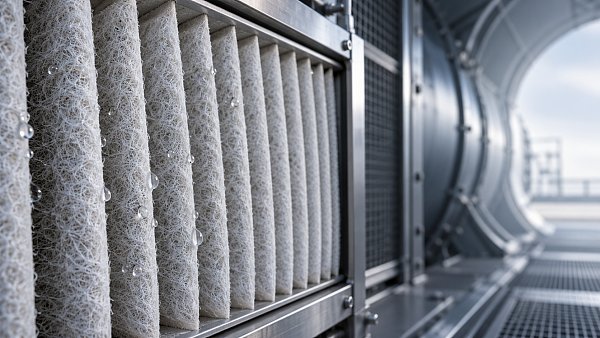
A useful starting point is graded pore architecture: a relatively open upstream region followed by progressively more selective collection zones toward the downstream side of media.
This arrangement can distribute deposition across depth, allowing larger particles to settle earlier while smaller particles encounter finer capture structures farther downstream along the airflow path.
The gradient must match the actual particle-size distribution. An upstream layer that is too dense may still blind quickly, while excessive openness can overload downstream layers.
Fiber diameter also matters. Fine fibers provide substantial collection surface, but densely packed fine-fiber networks can increase clean resistance and reduce space available for deposits.
Coarser fibers can maintain structural openness and support finer collection fibers. Combining fiber populations can balance capture performance with accessible void volume throughout the material.
Higher porosity helps only when the structure remains effective and stable. Large pores that permit unacceptable penetration do not represent useful gains in filtration performance.
Thickness can provide additional storage volume, but its benefit depends on permeability, deposition patterns, and installation constraints. More material is not automatically a better filter.
The strongest designs coordinate fiber diameter, packing density, and thickness. Optimizing any one parameter independently can shift the bottleneck elsewhere within the media or finished element.
Can Layering Improve Performance Without Adding Too Much Resistance?
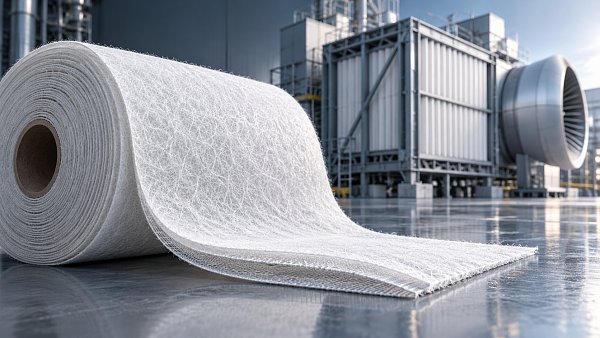
Layered media allow different functions to be assigned to different structures, such as coarse particle loading, fine particle capture, mechanical support, and protection during handling.
An upstream loading layer may protect a finer downstream layer from rapid blockage. Its benefit depends on whether it captures contaminants without adding disproportionate resistance.
A fine-fiber layer can improve particle collection at relatively low added mass, but its location and support structure influence whether deposits remain localized or distribute effectively.
Bonding deserves equal attention. Adhesive coverage, penetration, and distribution can obstruct airflow paths or compress the structure, reducing the benefit of an otherwise promising design.
Insufficient bonding creates different risks, including delamination, fiber movement, and damage during pleating. The target is durable attachment with controlled effects on permeability and flexibility.
Hangzhou Chaocai Materials Co., Ltd. operates fully synthetic wet-laid production and several lamination platforms, supporting development options for combining filtration layers with suitable support materials.
Its stated platforms include PUR, hot-melt adhesive, solvent-based emulsion spray, and ultrasonic lamination. Suitability should be established through testing of the proposed material construction itself.
Which Application Conditions Can Change the Best Material Choice?
The right structure depends on the contaminant. Dry mineral dust, oily aerosol, soot, and hygroscopic particles can produce very different deposition patterns and resistance increases.
Humidity can change particle behavior and media properties. Moisture-sensitive deposits may swell or become sticky, accelerating blockage even when dry laboratory loading results appear favorable.
Where electrostatic capture contributes to efficiency, conditioning and exposure history matter. Buyers should understand whether performance remains acceptable after relevant charge-reducing or service-related environmental exposure.
Mechanical stability also affects real performance. Media compression, pleat deformation, or layer separation can change airflow distribution and make laboratory sheet results difficult to reproduce.
Gas turbine intake systems, automotive filters, and specialized industrial processes impose different constraints. Temperature, water exposure, vibration, and allowable penetration should guide the specification from the outset.
For semiconductor or biopharmaceutical applications, dust capacity may be secondary to stringent cleanliness and efficiency requirements. Capacity improvements must remain compatible with the applicable qualification process.
What Test Results Should Buyers Request Before Comparing Offers?
Request clean pressure drop at the intended media face velocity, together with the efficiency metric relevant to the application. Values measured under different conditions are not interchangeable.
Ask for resistance plotted against accumulated dust mass, including the initial value and agreed terminal endpoint. A single final capacity number hides important loading behavior.
Confirm whether capacity is reported per unit media area, per specimen, or per complete element. Convert results to a consistent basis before comparing candidate materials.
Record the challenge dust composition, particle-size distribution, feed concentration, and loading procedure. Different contaminants can produce substantially different capacity rankings between the same media candidates.
Check whether efficiency was monitored during loading and whether conditioning was performed. Increased capacity is valuable only while the required capture performance continues to be met.
Use a standard appropriate to the intended product and market, such as ISO 16890 for general ventilation or ISO 5011 for relevant engine intake applications.
Confirm the current standard edition, test scope, and laboratory reporting details. A media coupon result does not by itself establish compliance for a finished filter.
Where service conditions differ substantially from laboratory conditions, arrange a controlled field evaluation. Track resistance, exposure, maintenance events, and operating hours against a qualified reference filter.
Will Better Media Still Perform Better After Pleating?
Finished filter geometry can erase material-level advantages. Tight pleat spacing, blocked channels, and uneven airflow may increase assembly resistance even when flat-sheet permeability is favorable.
Adding more media area generally lowers average media face velocity, but excessive packing can restrict flow between pleats. Effective area matters more than nominal area.
Media stiffness, thickness, and bond strength influence pleat formation and stability. These properties should suit the converter’s equipment, assembly method, and expected operating loads in service.
Evaluate at least one representative finished element before approving a material change. Check pressure drop, efficiency, leakage, and loading performance at the actual rated airflow.
If results differ from sheet testing, inspect pleat channels, seals, adhesive placement, and support components. The limiting factor may be element construction rather than media chemistry.
How Should Procurement Connect Performance, Cost, and Lead Time?
A lower purchase price can be offset by frequent replacement, higher fan energy, or production interruptions. Compare total operating consequences over a realistic maintenance period.
Fan power associated with filter resistance depends approximately on airflow multiplied by pressure drop, divided by overall efficiency. Operating hours determine the resulting energy cost.
Use the expected resistance profile over service life, rather than clean resistance alone. Include the system’s airflow control strategy when estimating potential energy savings realistically.
At fixed fan speed, rising resistance may reduce airflow instead of directly increasing power. That lost airflow can still impair process performance or equipment protection.
When discussing Hangzhou Chaocai Materials Co., Ltd. filter media lead time, request separate schedules for sample development, qualification material, initial production, and repeat supply orders.
Also confirm minimum order quantities, specification tolerances, traceability, and change notification procedures. Predictable supply depends on maintaining the approved construction consistently across successive production batches.
No universal delivery period or capacity improvement should be assumed. Obtain written, project-specific commitments supported by the proposed specification, production route, and validation requirements for approval.
What Should Your Final Selection Decision Be Based On?
Choose media that demonstrates higher retained dust mass at the required efficiency and agreed resistance endpoint, under conditions representative of the intended application and airflow.
Prioritize accessible depth, controlled pore architecture, suitable fiber combinations, and well-executed bonding. Then verify that the benefit survives conversion into the finished filter element during testing.
The final decision should combine loading curves, application trials, operating economics, and supply reliability. Together, these establish whether additional dust capacity creates measurable long-term value.