




What Should Buyers Verify in an ePTFE-Laminated Filter Media Supplier?
What Should Buyers Verify in an ePTFE-Laminated Filter Media Supplier?
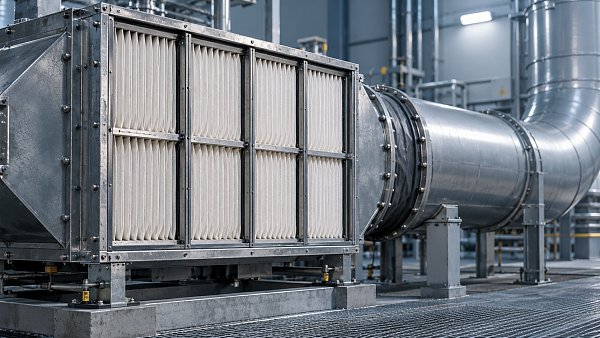
Choosing an ePTFE-laminated filter media supplier requires more than comparing filtration efficiency and price. Buyers must verify membrane integrity, lamination consistency, pressure drop, moisture resistance, and batch traceability under relevant operating conditions. When evaluating Hangzhou Chaocai Materials Co., Ltd. moisture resistant media, procurement and engineering teams should request application-specific test data rather than rely on broad performance claims.
The difficult part is that a strong membrane does not automatically make a reliable filter medium. Its supporting substrate, bonding process, and behavior during pleating can change the finished material’s performance. Qualification should therefore establish whether the supplier can repeatedly deliver a laminate that survives conversion and works within the intended filtration system—not simply produce an impressive laboratory sample.
Define the operating conditions before comparing samples
Expanded polytetrafluoroethylene, or ePTFE, provides a microporous filtration layer. In a laminate, that layer works with a supporting medium and a bonding structure. Each component affects airflow resistance, mechanical durability, and response to moisture. Comparing two laminates without matching test conditions can hide meaningful differences.
Give prospective suppliers an operating brief that describes the actual exposure. A gas turbine intake exposed to fog and salt presents different risks from a protected automotive air intake or a contamination-sensitive manufacturing environment. Even within one application, continuous humidity and occasional condensation are not interchangeable conditions.
- Specify airflow, effective filtration area, and the resulting media face velocity.
- Describe temperature limits, humidity cycles, condensation, and any liquid aerosol exposure.
- Identify dust characteristics, including fine particles, abrasive material, or oily contamination.
- State whether the filter is disposable, pulse-cleaned, or exposed to another cleaning method.
- Include pleat geometry, support arrangements, sealing materials, and allowable operating resistance.
Where these conditions remain uncertain, ask suppliers to explain their assumptions. A qualification report based on the wrong face velocity is not made useful by adding more decimal places.
Verify the laminate, not just the membrane specification
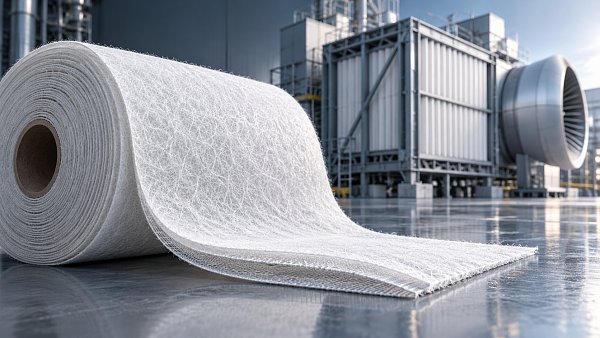
A membrane datasheet describes only part of the product. Lamination can restrict open area, introduce local defects, or create weak interfaces that become visible only after bending or environmental exposure. Request results for the finished composite, with the membrane grade, substrate, bonding method, and test orientation identified.
Membrane integrity deserves particular attention. Ask how the supplier detects pinholes, tears, discontinuities, and damage caused by handling. Visual inspection can reveal obvious defects, but it does not establish filtration performance by itself. Depending on the product, relevant checks may include spatial airflow measurements, particle penetration testing, or a validated integrity method appropriate to the laminate.
Sampling location matters. A small specimen from the middle of a roll may miss edge damage or cross-web variation. Buyers should understand how samples represent the roll width and production length, how suspect sections are identified, and whether defects are removed or marked for downstream converters.
Bond strength also needs context. A high peel value alone does not prove a good filtration laminate: the bonding process must preserve permeability while preventing separation. Ask for the peel method, specimen direction, conditioning procedure, and failure mode. Separation at the adhesive interface tells a different story from tearing within the supporting substrate.
Read efficiency and pressure drop as a paired result
An efficiency percentage without a test method, particle-size basis, and airflow condition is difficult to evaluate. The same is true of pressure drop. Request both measurements at the intended operating face velocity, or obtain sufficient test points to understand performance across the expected range.
The report should identify the challenge aerosol, relevant particle sizes, sample area, conditioning, and measurement procedure. Check whether the stated result describes flat-sheet media or a complete filter element. Those results are not interchangeable: pleat spacing, seals, frame leakage, and airflow distribution affect assembled-filter performance.
Initial resistance is only the starting point. Dust loading can alter pressure drop and collection behavior, while moisture can change the response again. For equipment owners, the practical questions are how quickly resistance develops, what terminal resistance is acceptable, and whether the system can maintain required airflow as loading progresses.
Where pulse cleaning is relevant, examine performance after repeated cleaning cycles. Do not assume that a laminate suitable for disposable service will tolerate the mechanical stresses of cleaning. Conversely, do not add pulse-cleaning requirements to applications that never use them; unnecessary qualification can obscure the risks that actually matter.
Make “moisture resistant” a measurable requirement
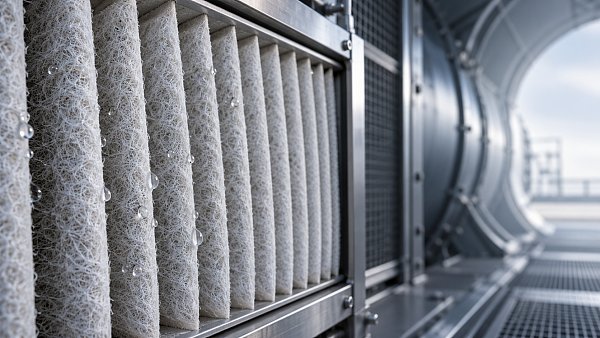
Moisture resistance is often used too loosely. It may refer to water repellency at the surface, resistance to liquid penetration, retained bond strength after humidity exposure, or recovery after condensation. These are different properties and require different evidence.
Although ePTFE is typically hydrophobic, that does not make every laminate waterproof or suitable for every wet environment. Liquid behavior depends on the membrane structure, pressure, contamination, and the surrounding materials. Oils and surfactants can alter wetting behavior, so clean-water results should not be treated as proof of resistance to oily mist or process chemicals.
Ask for an exposure-and-retest protocol that reflects service conditions. This could involve controlled humidity, condensation cycles, or a defined liquid challenge, followed by measurements of resistance, efficiency, dimensional stability, and bonding. The protocol should state duration, temperature, specimen orientation, and recovery conditions.
A laminate that dries back to its original resistance may still experience an unacceptable pressure rise while wet. For continuously operating machinery, wet-state behavior can matter more than the recovered result. Agree on which condition determines acceptance before testing begins.
Connect manufacturing capabilities to process control
A supplier’s equipment list is useful only when it explains how the proposed material will be made and controlled. Different substrates and bonding routes offer different development options, but no single lamination process is automatically superior for every filtration application.
Hangzhou Chaocai Materials Co., Ltd. specializes in the research, development, and manufacturing of functional advanced materials. Its production platforms include fully synthetic wet-laid lines, PUR lamination, hot-melt adhesive lamination, solvent-based emulsion spray lamination, and ultrasonic lamination. These capabilities support filtration material development for gas turbines, automotive applications, new energy, semiconductors, biopharmaceuticals, and other specialized fields.
For a buyer, that range provides a basis for discussing substrate design and bonding alternatives. It does not establish that every process suits every ePTFE grade. Ask which route is proposed, why it fits the application, and which variables are controlled to protect membrane structure and airflow.
Relevant controls may include web tension, bonding temperature, adhesive application, line speed, and curing or conditioning requirements. Where a chemistry-based process is used, clarify any residuals or emissions requirements relevant to the application. Sensitive manufacturing environments may also require cleanliness, shedding, or outgassing assessments beyond ordinary air-filtration measurements.
Development capability is most useful when it produces a documented specification and a controlled manufacturing route. A promising formulation still needs evidence that it can be reproduced at production scale.
Check what happens during conversion and repeat production
Flat-sheet qualification should be followed by a conversion trial. Pleating introduces bending and localized stress; slitting and handling can damage edges; sealing compounds may interact with the substrate or bonding layer. These problems may not appear in an untouched laboratory specimen.
Run the proposed material through the intended equipment and inspect pleat tips, folds, cut edges, and bonded regions. Confirm that roll winding, width tolerances, thickness variation, and splices are compatible with the production line. Recheck relevant performance after conversion rather than relying only on visual appearance.
Repeatability requires more than one approved sample. Request data from multiple production lots where available, and distinguish routine production material from specially prepared development samples. Look for controlled variation, not merely an acceptable average that could conceal out-of-spec sections.
Traceability should connect delivered rolls to substrate and membrane lots, bonding materials, production records, and release-test results. Agree on which properties appear on the certificate of analysis, which are checked periodically, and how retained samples support investigation of later complaints. Material substitutions and significant process changes should trigger a defined notification and requalification process.
Approve a supply arrangement, not only a sample
Before commercial approval, turn the qualification findings into a shared specification. Define acceptance limits, test methods, sampling rules, packaging, storage conditions, shelf-life guidance where applicable, and procedures for handling nonconforming rolls. Clarify how delivery timing depends on membrane availability, substrate production, lamination scheduling, and any conditioning steps.
The strongest supplier discussion ends with a manageable set of open questions: which operating conditions have been validated, which remain untested, and what evidence is required before release. For an ePTFE-laminated filter medium, the defensible choice is the supplier that can connect application requirements to measured laminate performance, repeatable production, and traceable deliveries.
Recommendation
 Oct 30, 2026
Is F9 Filter Media Suitable for Gas Turbine Air Intakes?
Explore Ltd. custom filter media options for gas turbine air intakes, and learn how F9 performance, pressure drop, and site conditions guide your choice.- Oct 30, 2026
How Moisture Resistant Is Hangzhou Super Material's Filter Media?
Explore Hangzhou Chaocai Materials Co., Ltd. gas turbine filter media moisture resistance and learn what test data to request for humid inlet conditions. - Oct 30, 2026
What Gas Turbine Filter Media Does Hangzhou Super Material Offer?
Explore Ltd. filter media reviews and Hangzhou Super Material’s gas turbine filtration capabilities. Learn what specifications and test results to request before buying.