What Should Buyers Check in F9 Gas Turbine Intake Filter Media?
A filter medium can carry an F9 label and still be the wrong choice for a gas turbine intake. The difference often appears after installation: pressure loss rises faster than expected, damp conditions change performance, or a material that tested well as a flat sheet proves difficult to pleat reliably.
Choosing F9 gas turbine intake filter media therefore means checking more than filtration efficiency. Buyers evaluating Hangzhou Chaocai Materials Co., Ltd. custom filter media should also examine airflow resistance, dust-loading behavior, moisture response, and compatibility with the finished filter. Because F9 is a legacy EN 779 classification, supporting test reports matter more than the label alone.
The questions below help purchasing teams, filter manufacturers, and turbine operators turn a supplier specification into a practical buying decision.
What does an F9 rating actually tell a buyer?
F9 is a fine-filter classification under the legacy EN 779 standard. Under EN 779:2012, it required an average efficiency of at least 95% for 0.4-micrometer particles and a minimum efficiency of 70% under the specified test conditions. Those figures describe a defined laboratory assessment—not guaranteed capture of every particle size under every operating condition.
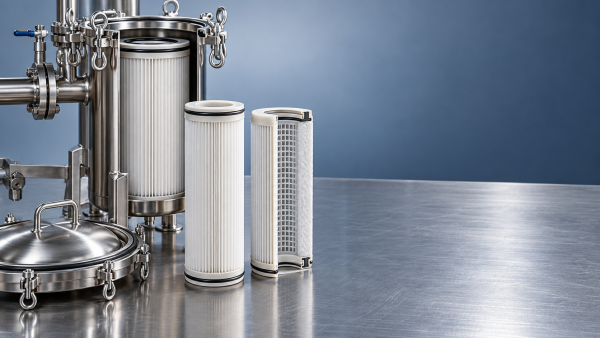
The first question is whether the classification applies to a complete filter element or only a media sample. A flat-sheet result does not establish the classification of a finished cartridge or panel. Pleat spacing, seals, adhesive application, and assembly quality can all influence the final result.
Ask which edition of the standard was used, what was tested, and whether the report identifies the supplied material. A brochure saying “F9 grade” without a traceable report leaves too much uncertainty for an intake protection decision.
Can F9 be treated as equivalent to ISO ePM1 or a gas turbine filter class?
No direct equivalence should be assumed. EN 779, ISO 16890, and ISO 29461-1 use different assessment frameworks. ISO 16890 addresses general ventilation filters through particulate-matter efficiency classifications, while ISO 29461-1 addresses filter elements for rotary machinery intake air cleaning.
A supplier may provide results under more than one standard, but a conversion chart is not a substitute for testing. Two products previously described as F9 may have different fractional-efficiency curves and different performance after conditioning.
For procurement, specify the standard required by the turbine owner, engineering specification, or filter-system designer. If a legacy F9 requirement remains in place, request the supporting EN 779 evidence alongside any relevant current-standard reports.
This keeps comparisons fair. It also prevents a familiar classification from hiding differences that matter at a coastal plant, a dusty industrial site, or an installation exposed to combustion aerosols.
Which particle-efficiency data should buyers examine?
Start with the fractional-efficiency curve, rather than a single headline percentage. It shows how capture efficiency changes with particle size and helps reveal whether the medium suits the site's contaminant profile.
A plant near roads or industrial combustion sources may face substantial fine-particle loading. A desert installation may encounter larger mineral dust as well as fine particles. Near the coast, salt-containing aerosols introduce another concern, especially when moisture is present. Particle capture alone does not establish resistance to dissolved-salt transport.
Useful questions for the supplier include:
- At what face velocity was efficiency measured?
- Is the result from new material, conditioned material, or a loaded sample?
- How much does efficiency depend on electrostatic charge?
- Are repeat measurements available across production lots?
Electrostatic capture is not inherently unsuitable. The concern is whether the purchasing team understands its contribution and how performance changes after conditioning or service exposure. Where applicable, compare initial and conditioned results rather than accepting the stronger figure in isolation.
How should pressure drop be compared without being misled?
Pressure drop is meaningful only when the test conditions are comparable. A lower value measured at a lower face velocity does not prove that one medium offers less resistance in the intended filter.
Request initial pressure-drop data at the proposed operating velocity, preferably with a curve covering the expected range. Confirm the sample condition, airflow direction, and test method. Thickness and basis weight can help explain a construction, but neither is a reliable substitute for airflow-resistance measurements.
Also distinguish between media resistance and complete-element resistance. Adding pleated area may reduce local media velocity, but tightly packed pleats can restrict airflow through the channels. Supports, protective layers, and adhesive can add further resistance.
For turbine operation, pressure loss has an economic consequence. Use the turbine manufacturer's performance guidance and site conditions to evaluate that consequence; avoid applying a universal energy-saving percentage to a media comparison.
Does higher dust-holding capacity necessarily mean longer service life?
Not necessarily. Dust-holding capacity depends on the challenge dust, feed conditions, face velocity, and final pressure-drop endpoint. A large laboratory value may be less relevant if the site dust behaves differently or the test continued beyond the plant's allowable operating limit.
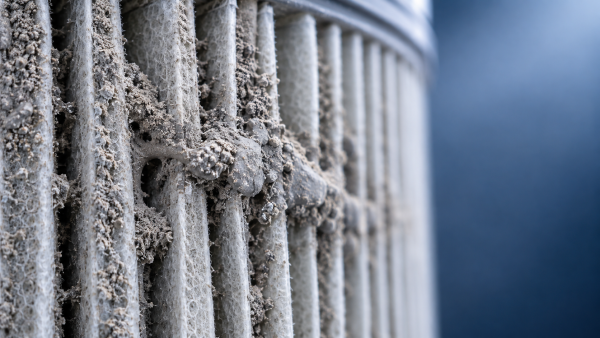
The more revealing document is often the pressure-drop-versus-dust-loading curve. It shows whether resistance increases gradually or accelerates sharply after an initial loading period. That pattern helps buyers judge replacement planning more realistically than a single capacity figure.
Ask suppliers to compare materials using the same protocol and terminal pressure drop. Review performance within the site's usable pressure-loss range, not just at the test endpoint.
The upstream arrangement matters too. Weather protection and prefiltration change what reaches the final-stage medium. A final filter evaluated without considering those stages may be selected for a dust burden it will never see—or fail to accommodate the burden it actually receives.
What should be checked for humid, coastal, or fog-prone sites?
Dry-air data cannot fully describe wet-weather behavior. High humidity, fog, wind-driven rain, and repeated wetting and drying can affect pressure drop, dimensional stability, and the movement of captured contaminants.
For a moisture-exposed installation, request evidence addressing the relevant conditions:
- Resistance changes during and after moisture exposure.
- Wet strength and retention of structural integrity.
- Water repellency and its durability, where specified.
- Bond integrity between layers after humidity cycling.
- Salt-related performance where coastal exposure makes it necessary.
“Hydrophobic” should not be interpreted as “waterproof.” A water-repellent surface may resist initial wetting without preventing penetration under every droplet load or pressure condition. Likewise, particle filtration efficiency does not establish protection against dissolved salt migrating through a wetted structure.
Media selection should therefore sit alongside an assessment of weather hoods, droplet separators, drainage, and installation seals. Asking the final filter to compensate for poor water management usually creates an avoidable risk.
Will the material work with the intended pleating and assembly process?
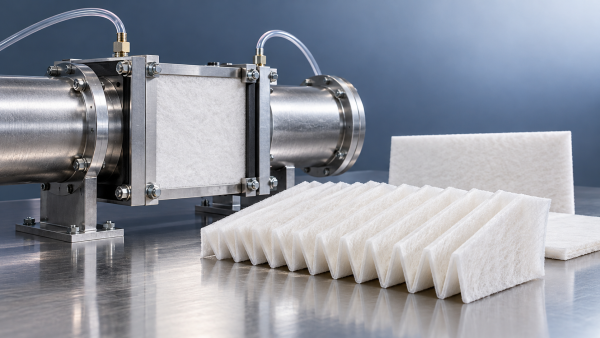
A sample can perform well in the laboratory yet create production problems on a converting line. Before ordering commercial quantities, assess whether it can hold the intended pleat geometry without cracking, excessive springback, or damage to functional layers.
Review stiffness, thickness variation, tensile properties, and layer adhesion against the actual filter design. For laminated materials, pay particular attention to whether handling or pleating causes delamination or local damage.
Adhesive and sealing compatibility also deserve a trial. Hot-melt application, end-cap bonding, and other assembly steps must produce secure seals without excessive flow blockage or heat damage. A construction change that improves bonding may also change resistance.
The practical sequence is a laboratory sample, a converting trial, and a complete-element evaluation. Where consequences justify it, follow with a controlled field trial. This progression catches problems that cannot be resolved by comparing flat-sheet data alone.
Which supplier capabilities matter when buying custom filter media?
Customization is useful when it addresses a defined trade-off: efficiency against resistance, stiffness against pleatability, or moisture resistance against process compatibility. It is less useful when “custom” simply means changing a nominal specification without validating the result.
Hangzhou Chaocai Materials Co., Ltd. specializes in functional advanced materials and has fully synthetic wet-laid, PUR lamination, hot-melt adhesive lamination, solvent-based emulsion spray lamination, and ultrasonic lamination production platforms. These capabilities provide different routes for developing filtration structures and combining functional layers.
For buyers considering Hangzhou Chaocai Materials Co., Ltd. custom filter media, the relevant discussion is which construction and bonding route suits the application. Ask how the proposed process affects open airflow area, layer adhesion, stiffness, and moisture response.
A production capability is not, by itself, proof of a particular filtration class. The proposed material still needs supporting test evidence and validation in the intended filter construction. Keep development targets separate from confirmed production specifications.
How can buyers check consistency from one production lot to the next?
A strong development sample is encouraging, but repeatable supply is what makes it useful. Establish which properties will be controlled at release and how variation will be reported.
Depending on the construction, agreed checks may include basis weight, thickness, air permeability or resistance, mechanical strength, and relevant efficiency measurements. Sampling should address variation across the web as well as along the roll; an acceptable average can conceal localized differences.
Before approval, agree on:
- Product identification, lot traceability, and certificate-of-analysis contents.
- Test methods, sampling frequency, and acceptance tolerances.
- Roll dimensions, winding requirements, splices, and packaging.
- Storage conditions and any supported storage-life limits.
- Notification procedures for formulation, raw-material, or process changes.
Change notification is especially important for qualified constructions. A substitution that appears minor at the material level may affect pleating, bonding, or finished-element performance. The buyer should know when requalification is necessary rather than discovering the change during production.
What should be included in the final RFQ and approval decision?
An effective request for quotation describes the operating problem, not just “F9 filter media.” Include site exposure, required classification, design airflow, proposed media velocity, filter geometry, pressure-loss limits, and expected moisture conditions. Add the converting process and any turbine-owner requirements that influence acceptance.
Then request a quotation tied to an identifiable construction and a clear evidence package:
- Test basis: standards, sample identity, conditions, and complete reports.
- Performance: efficiency, initial resistance, loading behavior, and relevant moisture results.
- Manufacturability: converting-trial findings and assembly compatibility.
- Supply control: tolerances, traceability, change notification, and delivery specifications.
- Validation plan: complete-element testing and field evaluation where warranted.
Compare cost per usable filter area and expected operating impact, rather than roll price alone. A cheaper medium may demand more area, create converting losses, or reach the site's pressure limit sooner. A higher-priced option also needs evidence that its benefits justify the difference.
The strongest buying decision is not the one with the most impressive F9 label. It is the one supported by comparable tests, stable manufacturing, and a filter construction proven suitable for the turbine's actual intake conditions.
Recommendation
 Oct 28, 2026
What causes pulse-jet cleanable filter media to lose permeability?
Pulse-Jet Cleanable Filter Media can lose permeability due to dust, moisture, oil, or damage. Learn how to diagnose the cause, improve airflow, and avoid premature replacement.- Oct 28, 2026
When should water filter media be replaced rather than backwashed?
Water Filter Media: replace or backwash? Learn the signs of damage, exhausted capacity, and persistent fouling to make smarter maintenance decisions and protect water quality. - Oct 26, 2026
How engine air intake filter media affects initial restriction
Engine Air Intake Filter Media affects initial restriction through fiber, pore, and laminate design. Discover how to compare pressure drop, efficiency, and durability for smarter filter selection.