



What Should Buyers Look for in an ePTFE Laminated Filter Media Supplier?
An ePTFE laminated filter media supplier should be able to demonstrate how its material performs after lamination, converting, moisture exposure, and repeated operation. Initial filtration efficiency matters, but it does not reveal whether the membrane will remain bonded, whether airflow resistance will rise during wet conditions, or whether production rolls will match the approved sample.
When evaluating moisture resistant media, begin with the operating environment and the finished filter design. A material suitable for a sheltered air intake may behave differently in fog, oily aerosols, or a pulse-cleaned dust collector. The strongest supplier proposals connect material specifications to those conditions and support them with comparable test data, defined production controls, and practical processing guidance.
What should you tell a supplier before requesting a quotation?
A useful quotation starts with a clear application description. Without it, suppliers may offer technically different laminates that appear interchangeable on a price sheet.
Provide the operating airflow, available filtration area, acceptable pressure drop, temperature range, and expected contaminants. Describe moisture precisely: high humidity, occasional condensation, wind-driven rain, and direct liquid contact create different challenges. Include startup, shutdown, and cleaning conditions, which may be more demanding than steady operation.
The filter construction also matters. Pleated cartridges, panel filters, and supported filter assemblies place different demands on stiffness, thickness, bonding, and handling. Explain how the material will be pleated, sealed, and installed, along with any cleaning method.
If an existing filter is failing, describe the failure instead of requesting only a matching efficiency grade. Water carryover, rising resistance, membrane damage, and poor dust release may require different changes. A capable supplier should use that information to narrow the material options before proposing a trial.
What does “moisture resistant” actually mean for ePTFE media?
Expanded polytetrafluoroethylene, or ePTFE, forms a microporous membrane that can capture airborne particles while allowing air to pass. Its hydrophobic surface resists wetting by water, but this does not make every ePTFE laminate waterproof under every operating condition.
Liquid resistance depends on membrane structure, surface condition, supporting layers, and applied pressure. Water vapor can pass through a breathable structure, and condensation can still form when local conditions reach the dew point. A hydrophobic membrane therefore cannot, by itself, prevent condensation throughout a filter assembly.
Ask the supplier to distinguish between three performance questions:
- Does the laminate resist liquid penetration? The test should define the liquid, exposure conditions, and pressure applied.
- Does it maintain usable airflow during moisture exposure? Droplets or wet dust can obstruct airflow even when water does not penetrate the membrane.
- Does it recover after drying? Persistent resistance increases, bond damage, or dimensional changes can affect continued operation.
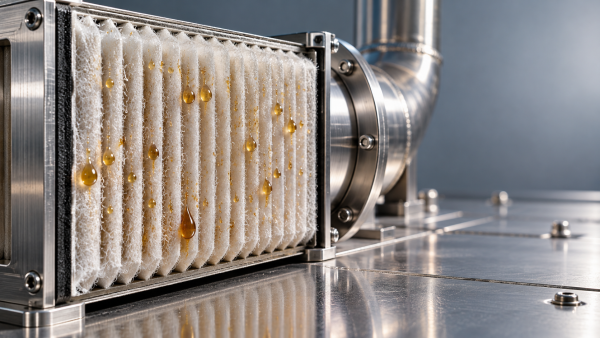
Oil creates another distinction. Water repellency does not establish resistance to oil or low-surface-tension liquids. If compressor oil mist, process aerosols, or surfactants may reach the filter, request evidence relevant to those contaminants. A water-only demonstration cannot answer that question.
Which filtration and pressure-drop data are worth comparing?
Compare results obtained under equivalent conditions. An efficiency percentage has limited value without the test method, particle size information, airflow conditions, and sample condition. Pressure drop is equally dependent on how the measurement was taken.
Face velocity—the airflow passing through a given area of media—is particularly important. A low resistance value measured at a lower face velocity may offer no advantage at the intended operating airflow. Ask suppliers to report efficiency and pressure drop together at conditions relevant to the design.
Also establish whether the results describe a flat media sample or a finished filter. Pleat spacing, usable surface area, supports, seals, and assembly leakage influence finished-filter performance. A media report supports material selection; it does not establish the performance of the completed element.
The following comparisons help separate useful evidence from incomplete claims:
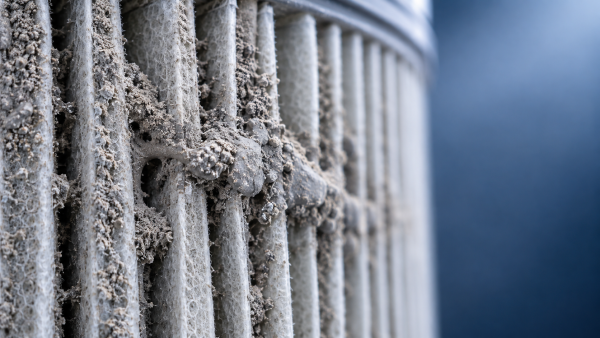
For dust-loaded applications, ask how resistance develops as dust accumulates. For pulse-cleaned filters, examine resistance recovery and performance after repeated cleaning. A low initial pressure drop is useful, but it should be considered alongside the behavior that determines replacement frequency.
How can you judge membrane integrity and laminate durability?
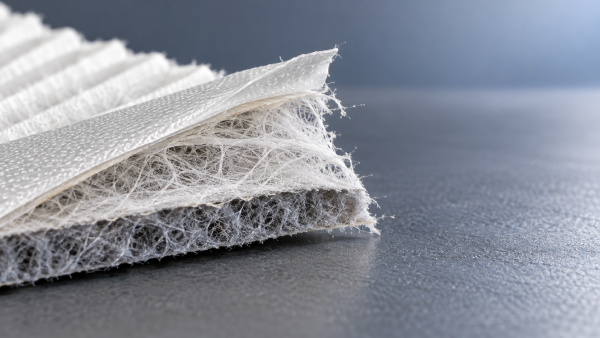
An ePTFE laminate combines a functional membrane with supporting materials and a bonding process. Its durability depends on how those elements work together. A strong membrane can still deliver an unreliable product if bonding is uneven or the support deforms during processing.
Ask how the supplier controls membrane damage, wrinkles, bonding uniformity, and defects across the roll width. Inspection methods should suit the defects being controlled. Visual inspection can identify some surface problems, while other integrity issues require performance-based checks.
Bond durability deserves particular attention. Too little bonding can allow separation during pleating, handling, or cleaning. Excessive adhesive coverage can restrict airflow or affect flexibility. The appropriate balance depends on the membrane, support, adhesive system, and process settings.
Request bond-strength results with the test conditions explained. A dry, unaged peel measurement alone does not describe performance after humidity, heat, or repeated mechanical stress. Where those exposures are relevant, compare conditioned samples and examine how they fail. Separation at an interface and tearing within a support layer point to different limitations.
During converting trials, inspect pleat tips and other stressed areas for cracking, lifting, or abrasion. Check which surface should face the airflow and whether rollers, guides, or packaging can damage the membrane. These handling details can determine whether a promising laboratory sample becomes a dependable filter.
Does the supplier’s manufacturing capability fit the application?
Production capability matters when it gives the supplier practical options for balancing permeability, strength, temperature tolerance, and process compatibility. The number of available manufacturing methods is less useful than a clear explanation of why a particular construction suits the application.
Hangzhou Chaocai Materials Co., Ltd. lists fully synthetic wet-laid production and PUR, hot-melt adhesive, solvent-based emulsion spray, and ultrasonic lamination platforms. These capabilities provide relevant discussion points when assessing its proposed moisture resistant media. Ask which platform would be used for the proposed laminate, why it fits the selected materials, and which properties require validation.
Different lamination routes involve different tradeoffs. Adhesive systems introduce questions about coverage, chemical compatibility, and temperature exposure. Ultrasonic bonding depends on the compatibility of the materials and the bonding pattern. No process name alone establishes superior filtration performance.
The support layer needs equal attention. It contributes stiffness, dimensional stability, and resistance to processing damage. In sensitive applications, its cleanliness, fiber release, or compatibility with downstream processes may also matter. Evaluate the complete laminate rather than relying on the properties of PTFE alone.
What quality controls indicate reliable production?
The approved sample should represent material the supplier can manufacture repeatedly. Ask how trial samples relate to normal production, especially if they were made on a development line or under different processing conditions.
A practical quality agreement defines the properties that matter to filter performance and converting. Depending on the construction, these may include air permeability or pressure drop, filtration performance, thickness, basis weight, bond strength, width, and visible defect limits. Tolerances should reflect functional needs: unnecessary restrictions add cost, while loose limits can create processing variation.
Request an example of the documentation supplied with each lot. It should distinguish measured results from nominal descriptions and identify the material sufficiently for traceability. Agree which properties are checked on every lot and which are verified through periodic qualification.
Change control is also essential. Changes to the membrane, support, adhesive, or manufacturing process can affect an approved construction. Establish which changes require notification and whether they trigger additional testing. If a problem appears later, retained samples and traceable production records help narrow the cause.
How should samples and production trials be approved?
Use a staged approval process, with each stage answering a different question. Start with media testing to assess basic suitability. Then use a converting trial to check handling and assembly, followed by finished-filter evaluation under representative conditions.
A small hand-cut sample can support early screening, but it cannot establish roll consistency or production behavior. Request enough production-representative material to assess pleating, sealing, winding, and handling. Where variation across the roll could matter, agree how trial material will be sampled.
Define acceptance criteria before testing begins. Include the conditions most likely to cause failure, such as humid shutdowns, repeated wetting and drying, or pulse cleaning. Record the exposure procedure and the properties measured afterward so that results remain comparable.
If a finished element fails, investigate the assembly as well as the media. Seal leakage, pleat crowding, installation damage, and inadequate support can undermine an otherwise suitable laminate. Clear responsibility for examining those interfaces makes technical support more useful.
How much weight should price and supply terms carry?
Compare prices only after the candidates meet the essential technical requirements. Material cost per square meter can hide differences in converting yield, usable roll width, splice frequency, and scrap. Operating resistance and replacement frequency may also affect the eventual cost of using the filter.
Avoid accepting a precise lifetime or energy-saving claim without application-specific support. Instead, compare the measurable factors behind those costs and identify what the production trial must establish.
Supply discussions should cover minimum order quantities, normal lead times, capacity for repeat orders, packaging, storage guidance, and the handling of nonconforming rolls. Agree splice rules, roll identification, and membrane protection where they affect converting. A technically suitable material still needs a dependable delivery and support arrangement.
Before placing a production order, bring the decision back to three items: an agreed material specification, a passed application-relevant trial, and documented controls for repeat supply. Those provide a practical basis for choosing an ePTFE laminated filter media supplier and for judging future deliveries against the material originally approved.
Recommendation
 Oct 28, 2026
What causes delamination in multilayer composite filter media?
Why does Multilayer Composite Filter Media delaminate? Discover key bonding failures, practical tests, and prevention strategies to improve filter reliability and reduce downtime.- Oct 28, 2026
When is oleophobic filter media needed for oil-mist exposure?
Oleophobic Filter Media may help when oil mist causes premature filter wetting. Learn when to use it, what to test, and when dedicated mist separation is the better choice. - Oct 28, 2026
What causes pulse-jet cleanable filter media to lose permeability?
Pulse-Jet Cleanable Filter Media can lose permeability due to dust, moisture, oil, or damage. Learn how to diagnose the cause, improve airflow, and avoid premature replacement.